IRS Issues Definitive Guidance: Professional Judgment Remains Paramount in the Age of AI
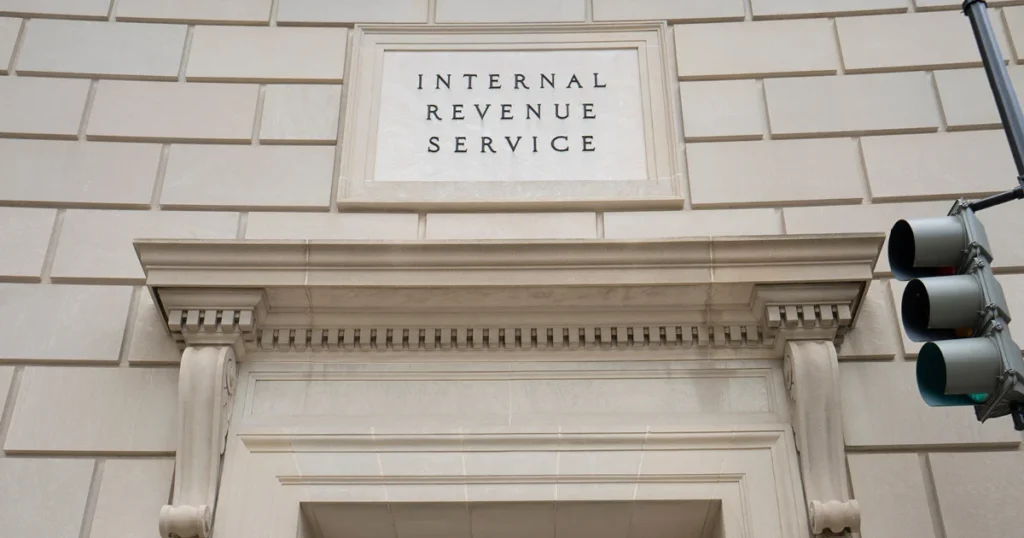
As artificial intelligence (AI) rapidly integrates into the workflows of accounting firms and tax practices, the Internal Revenue Service (IRS) has issued a critical advisory clarifying the intersection of emerging technology and long-standing professional ethics. In a bulletin released this week, the IRS Office of Professional Responsibility (OPR) reaffirmed that while AI offers unprecedented efficiencies, it does not absolve practitioners of their fundamental duties under Treasury Circular 230.
The core mandate is clear: AI is to be utilized as a sophisticated instrument of augmentation, not a replacement for the nuanced, human-driven professional judgment required in tax law.
Main Facts: The Intersection of Circular 230 and AI
The OPR, which enforces the Regulations Governing Practice Before the Internal Revenue Service (31 C.F.R. Part 10), has made it clear that existing ethical standards are "technology-neutral." Whether a tax return is prepared via a traditional software platform or an advanced generative AI model, the burden of accuracy and compliance remains entirely on the practitioner.
The IRS bulletin outlines four non-negotiable pillars for practitioners using AI:
- Due Diligence: Practitioners must verify the accuracy of all facts, citations, and calculations generated by AI.
- Competence: Professionals must possess a working knowledge of the AI tools they employ, including an understanding of how those systems generate content and their inherent limitations.
- Confidentiality: Practitioners must ensure that client data is not exposed to public or unsecured AI models, which could violate privacy laws.
- Billing Integrity: Cost savings generated by AI efficiencies must be appropriately managed and, where applicable, reflected in client billing to avoid "unconscionable fee" designations.
A Chronology of Regulatory Evolution
The release of this guidance arrives at a pivotal moment for the IRS as it undergoes a major organizational shift.
- Early 2023: As generative AI tools like ChatGPT entered the mainstream, the accounting industry began an informal trial-and-error phase, with firms testing AI for document summarization and basic research.
- June 2024: The IRS announced a strategic restructuring, confirming it would merge the OPR with the Return Preparer Office. This consolidation is intended to create a unified "Tax Professional Management Office," signaling a more cohesive approach to overseeing the tax preparer community.
- Mid-2024: Following a surge in reports of "hallucinated" legal citations in courts—where attorneys were sanctioned for submitting AI-generated briefs containing fake case law—regulatory bodies across the U.S. government began prioritizing AI oversight.
- Present Day: The OPR’s latest bulletin codifies the IRS’s stance, formally warning practitioners that the "hallucination" risks documented in the legal sector are now a direct concern for the tax profession.
Supporting Data and Technical Risks
The IRS bulletin does not dismiss the utility of AI; rather, it highlights a dual-sided reality. On one hand, generative AI offers transformative benefits, including rapid data analysis, high-speed document drafting, and the potential for enhanced fraud detection and audit risk assessment.
However, the agency underscored that these benefits are inseparable from well-documented technical risks:
- Fabricated Outputs: AI models are prone to generating plausible-sounding but entirely false citations or tax law interpretations.
- Bias and Lack of Transparency: Algorithms trained on historical data may inherit biases, leading to skewed outcomes that could result in discriminatory or incorrect filings.
- Security Vulnerabilities: Publicly available generative AI models often retain input data for training purposes. If a practitioner uploads a client’s sensitive tax return information into a public LLM (Large Language Model), they may be inadvertently committing an unauthorized disclosure, triggering both civil and criminal penalties under the Internal Revenue Code.
Official Responses and Firm Obligations
The OPR bulletin explicitly places the onus on firm leadership to establish robust internal controls. "Final decisions must always rest with qualified professionals who understand the complexities of tax law and ethical standards," the agency noted.
Implementation of Firm Procedures
The IRS expects firms to move beyond ad-hoc AI usage. Specifically, firms must:
- Formalize Training: Staff must be educated on the specific risks of AI, including the "black box" nature of machine learning algorithms.
- Secure Infrastructure: Firms must mandate the use of enterprise-approved, secure AI environments that prohibit the transmission of sensitive taxpayer information to public servers.
- Validation Protocols: Every output generated by AI must undergo a rigorous, human-led "sanity check" to ensure it aligns with current tax statutes and factual reality.
- Documentation: Firms should maintain records demonstrating that they have vetted third-party AI tools for accuracy and security, providing a paper trail for potential OPR audits.
Implications for the Profession
The implications of this guidance are far-reaching. The IRS is signaling that "I didn’t know the AI was wrong" will not be a valid defense in a disciplinary hearing.
The Financial and Legal Repercussions
The bulletin explicitly draws parallels between the accounting profession and the legal sector, where courts have already begun issuing severe sanctions—ranging from public censure to heavy financial penalties—against professionals who failed to verify AI-generated work.
A cautionary tale cited in the guidance involves a report prepared for the Australian government by an accounting firm. The report, which included invented quotes and erroneous citations, led to immediate professional fallout and a partial fee refund. The IRS warns that similar consequences await tax professionals who prioritize efficiency over accuracy.
Ethical Billing
The OPR’s stance on billing is particularly notable. If AI reduces the time required to complete a project from ten hours to two, charging the client for ten hours may be viewed as an "unconscionable fee" under Circular 230. Practitioners are urged to be transparent about their use of AI and ensure that the cost-saving benefits of the technology are passed on to the client, or at the very least, that billing remains reflective of actual human effort and professional oversight.
The Future of Competence
Ultimately, the IRS is redefining what it means to be a "competent" tax practitioner in the 21st century. Competence now requires a dual mastery: the traditional mastery of the Internal Revenue Code and a new, technical mastery of digital tools. As the OPR stated, "Lack of technological competence could lead to improper advice or flawed filings."
For tax professionals, the path forward is one of cautious integration. AI is an asset to be leveraged, but it is not a partner to be trusted blindly. By maintaining a human-in-the-loop requirement, the IRS ensures that the integrity of the tax system remains protected against the potential volatility of automated systems. As the profession moves toward the new Tax Professional Management Office, practitioners should expect continued scrutiny of how they balance these high-tech tools with the high-stakes responsibility of their role.