Crypto Super PAC Fairshake Targets Sherrod Brown with $30 Million War Chest Following Clarity Act Defeat
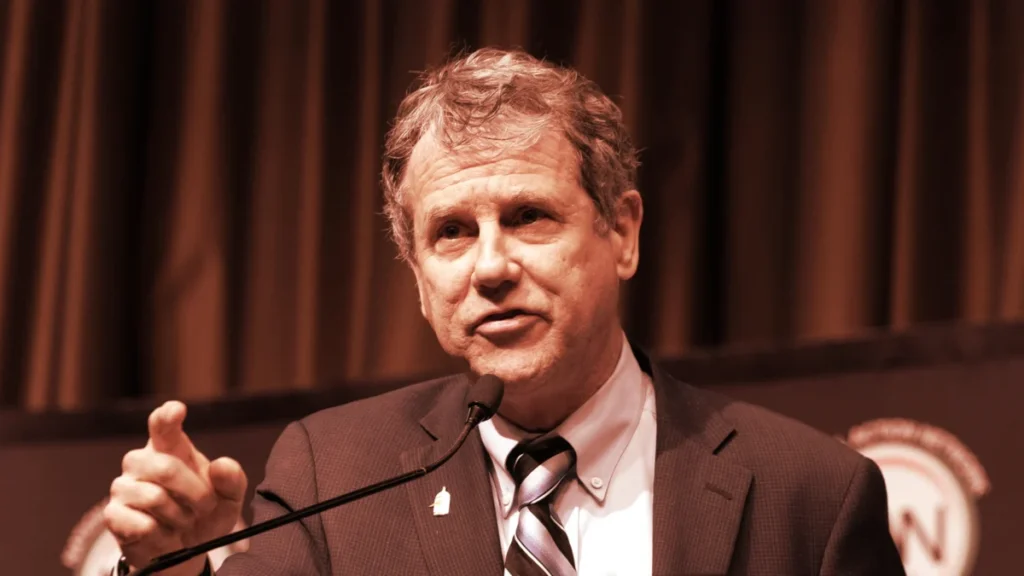
WASHINGTON — In a staggering escalation of digital asset industry influence in American politics, the cryptocurrency super political action committee (PAC) Fairshake has announced a massive $30 million spending blitz. The target: former Democratic Senator Sherrod Brown and his high-stakes bid to return to Congress.
The announcement, first reported by Politico, lands mere days after the United States Senate narrowly blocked the passage of the landmark Digital Asset Market Clarity Act. It sets the stage for a bruising, exceptionally expensive electoral showdown in Ohio that could ultimately tip the balance of power in the United States Senate.
Main Facts: The Battle Lines in Ohio
The $30 million campaign against Brown represents a continuation of an ongoing political war between the digital asset sector and progressive lawmakers who have long advocated for stringent financial regulations. Brown, a prominent populist progressive, is mounting a comeback campaign to reclaim a seat in Congress by challenging incumbent Republican Senator Jon Husted.
Husted, a former Ohio lieutenant governor, was originally appointed to the Senate in January 2025. He filled the vacancy left by JD Vance following Vance’s inauguration as Vice President of the United States. With the Senate currently sitting on a razor-thin partisan knife-edge, the Ohio race has emerged as one of the most critical battlegrounds of the 2026 midterm cycle, drawing national attention and staggering sums of outside money.
Fairshake’s reentry into the Ohio fray is personal for the crypto industry. The PAC previously deployed roughly $40 million during the 2024 election cycle to successfully help Republican Bernie Moreno unseat Brown. During that cycle, Brown’s vocal skepticism toward cryptocurrencies and his powerful platform as the Chairman of the Senate Banking Committee made him Public Enemy Number One for major blockchain developers, exchanges, and venture capitalists. Now, despite not currently holding the seat, Brown remains a prime target for an industry determined to eliminate institutional resistance to digital assets.
Chronology: From the 2024 Electoral Bloodbath to the Clarity Act Stall
To understand the weight of Fairshake’s latest financial deployment, it is necessary to examine the rapid escalation of crypto lobbying over the past two years:
- November 2024: Armed with an unprecedented war chest, Fairshake and its affiliated PACs injected tens of millions of dollars into key congressional races. Their efforts successfully ousted crypto-skeptical lawmakers, most notably unseating Sherrod Brown in Ohio and dealing a blow to progressive financial oversight.
- January 2025: Following the 2024 elections, Fairshake reported a jaw-dropping $116 million raised for the 2026 midterms. Simultaneously, Jon Husted was sworn into the U.S. Senate, replacing JD Vance.
- Late August 2025: Financial disclosures revealed that despite months of early political maneuvering and primary season investments, Fairshake still commanded a formidable war chest of approximately $108 million.
- Mid-September 2026: The legislative showdown over the Digital Asset Market Clarity Act reached a climax in the Senate. The chamber ultimately voted 49-50 against cloture on a motion to proceed, falling short of the 60-vote threshold required to advance the bill.
- Days Later (September 2026): In direct response to the legislative roadblock, Fairshake confirmed its plans to deploy $30 million to explicitly oppose Sherrod Brown’s political comeback.
Supporting Data: The Numbers Behind the Super PAC and the Senate Vote
The scale of modern cryptocurrency political spending is historically unprecedented, and Fairshake sits comfortably at the center of this financial ecosystem.
The Super PAC’s Financial Muscle
Fairshake is primarily funded by three heavyweights of the Web3 and venture capital landscape:
- Coinbase: The largest publicly traded U.S. cryptocurrency exchange.
- Ripple Labs: The enterprise blockchain firm behind XRP.
- Andreessen Horowitz (a16z): A premier Silicon Valley venture capital titan heavily invested in decentralized technologies.
By January 2025, these entities and other industry stakeholders had helped Fairshake amass $116 million. Even after funding primary victories earlier in the year and various political operations, the super PAC reported a staggering $108 million remaining at the close of August, proving that its financial ammunition remains virtually unmatched by traditional single-issue interest groups.
The Clarity Act Vote Breakdown
The catalyst for Fairshake’s latest multi-million-dollar expenditure was the dramatic failure of the Digital Asset Market Clarity Act in the Senate. The bill—designed to establish comprehensive federal regulations for digital asset markets and cleanly divide regulatory oversight between the Securities and Exchange Commission (SEC) and the Commodity Futures Trading Commission (CFTC)—died on a 49-50 cloture vote.
The breakdown of the vote revealed deep partisan and procedural divides:
- The Opposition: Every single Democratic senator present voted against advancing the legislation. They were joined by Republican Senators Susan Collins, Josh Hawley, and Jerry Moran.
- The Strategic Retreat: In a tactical maneuver, Republican Senator Thom Tillis switched his vote to "no" at the eleventh hour for procedural reasons. This parliamentary step preserved the right to bring the legislation back to the floor at a later date.
However, with the November 3 midterms rapidly approaching, the failed vote effectively slammed the window shut on any realistic chance of reviving the bill during the current congressional session.
Official Responses and Stakeholder Reactions
The collision between Wall Street, Silicon Valley, and Capitol Hill has generated sharp retorts from both sides of the aisle.
The Crypto Industry Strikes Back
Major advocacy groups wasted no time signaling that lawmakers would face severe electoral consequences for blocking regulatory clarity. Stand With Crypto, a grassroots advocacy group backed heavily by Coinbase, announced that it would incorporate the senators’ votes on the Clarity Act directly into its public lawmaker scorecards. The group is actively utilizing these scorecards to mobilize millions of digital asset holders and enthusiasts ahead of the November 3 elections.
The Progressive Counteroffensive
Unsurprisingly, Sherrod Brown’s campaign rejected the super PAC’s heavy-handed interference, framing the $30 million expenditure as a desperate attempt by corporate elites to buy an election and silence a champion of the working class.
"Of course the special interests are panicking; they know Sherrod will fight the rigged system they’re feasting on to stand up for working Ohioans," said Patrick Eisenhauer, Brown’s campaign manager, in a blistering official statement.
Brown’s camp aims to leverage the massive influx of Silicon Valley and Wall Street money against Husted, portraying his opponent as a vehicle for billionaire crypto executives seeking to bypass consumer protections and regulatory guardrails.
Implications: The Future of U.S. Crypto Regulation and Electoral Politics
Fairshake’s $30 million deployment against Sherrod Brown carries profound implications that stretch far beyond the borders of Ohio or the immediate fate of the Senate seat.
1. The Playbook for Future Elections
Fairshake has perfected a highly effective, albeit controversial, electoral strategy. While the super PAC is funded overwhelmingly by corporate entities with a direct financial stake in cryptocurrency regulation, its television and digital advertisements rarely mention blockchain, tokens, or decentralized finance. Instead, Fairshake tailors its messaging to focus on broader, kitchen-table economic issues that resonate deeply with average voters—a strategy it deployed successfully during the 2024 cycle and fine-tuned during the 2026 congressional primaries. This allows the industry to mask single-issue lobbying behind mainstream political narratives.
2. Regulatory Gridlock in Washington
The defeat of the Clarity Act, followed immediately by Fairshake’s massive retaliation against Brown, virtually guarantees that comprehensive crypto legislation will remain stalled in Washington. Traditional financial regulators like the SEC will likely continue a strategy of regulation-by-enforcement, while frustrated innovators and investors increasingly look to the ballot box to reshape the composition of Congress.
3. The Battle for the Senate Majority
Ohio’s Senate race is no longer just a local contest; it is a proxy war for the future of American financial policy. If Fairshake’s $30 million investment succeeds in neutralizing Brown’s political comeback and securing a victory for Jon Husted, it will send an unmistakable message to every sitting member of Congress: crossing the digital asset industry carries a catastrophic political price. Conversely, if Brown manages to weather the financial storm and defeat Husted, it could signal the limits of super PAC influence and embolden populist lawmakers to double down on aggressive oversight of the crypto sector.
As November 3 approaches, all eyes are locked on Ohio as the definitive battleground where the future of digital finance and American politics intersect.