Congressional Inquiry Challenges Goldman Sachs Leadership Amidst Lingering Ties to Jeffrey Epstein
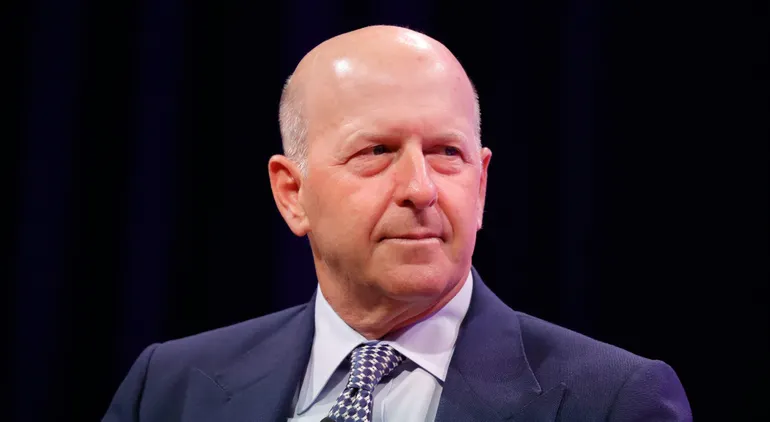
In a pointed escalation of corporate governance scrutiny, two prominent Democratic lawmakers have launched a blistering inquiry into Goldman Sachs CEO David Solomon. The investigation centers on the bank’s decision to retain outgoing Chief Legal Officer Kathryn Ruemmler in an advisory capacity beyond her formal resignation date, a move that has reignited public and political outrage over her documented history with the late convicted sex offender Jeffrey Epstein.
Senator Elizabeth Warren (D-MA) and Representative Raja Krishnamoorthi (D-IL) addressed a formal letter to Solomon on Wednesday, demanding transparency regarding the nature of Ruemmler’s continued association with the firm. The lawmakers’ intervention arrives at a volatile moment for the banking giant, as the intersection of executive personnel decisions and historical reputational liabilities threatens to undermine the leadership credibility of one of Wall Street’s most storied institutions.
The Genesis of the Controversy: Ruemmler and the "Uncle Jeffrey" Files
The controversy surrounding Kathryn Ruemmler—who has served as Goldman Sachs’ top lawyer—dates back to the Justice Department’s January disclosure of extensive files related to the late financier Jeffrey Epstein. These documents, which illuminated the dark corners of Epstein’s social and financial network, revealed a surprisingly intimate connection between the disgraced financier and the future Goldman executive.
The files contain email correspondence in which Ruemmler, then a high-profile attorney, referred to Epstein as "Uncle Jeffrey." The evidence presented a pattern of proximity that extended far beyond professional boundaries. According to the records, the pair met frequently for private meals, and Epstein regularly showered Ruemmler with gifts, including luxury handbags and an Apple Watch. Furthermore, the documents detailed that Epstein facilitated personal services for Ruemmler, covering the costs of massages, facial appointments, and professional hair styling.
While Epstein passed away in federal custody in 2019—a full year before Goldman Sachs appointed Ruemmler to lead its legal division—the revelation of these ties shattered the firm’s attempts to distance itself from the toxic legacy of the Epstein era. In February, under mounting public pressure, Ruemmler announced her resignation, with an effective departure date set for June 30.
Chronology of a Corporate Crisis
To understand the gravity of the current situation, one must examine the timeline of events that have led to this legislative showdown:
- Pre-2020: Kathryn Ruemmler maintains a personal and professional relationship with Jeffrey Epstein, including the receipt of various gifts and services, which she later claims to have disclosed to Goldman Sachs upon hiring.
- 2020: Goldman Sachs appoints Ruemmler as Chief Legal Officer. During her tenure, she takes on critical oversight roles, including chairing the bank’s conduct committee and serving as co-vice chair of the reputational risk committee.
- January 2026: The Department of Justice releases 35 million pages of "Epstein files," exposing the depth of Ruemmler’s association with Epstein.
- February 2026: Following a firestorm of negative media coverage and public backlash, Ruemmler resigns from her post, effective June 30.
- March 2026: Goldman Sachs discloses in its annual proxy statement that Ruemmler received an 11.1% compensation increase, bringing her annual pay to $25 million.
- June 2026: Reports emerge that CEO David Solomon has "pressed" Ruemmler to remain with the firm as an adviser after her June 30 resignation.
- June 10, 2026: Senator Warren and Representative Krishnamoorthi demand that Solomon justify the retention of Ruemmler and explain the firm’s vetting process, setting a deadline of June 26 for his response.
The Question of Executive Judgment
The core of the lawmakers’ complaint is not merely that Ruemmler had a past relationship with Epstein, but that Goldman Sachs’ leadership may have either ignored the implications of that relationship or viewed it as a non-issue.
"The information uncovered in recent months not only raises serious questions as to whether Goldman Sachs either failed to conduct proper due diligence or viewed Ruemmler’s relationship with Epstein as appropriate when appointing her as the firm’s top lawyer," the lawmakers wrote to Solomon, "but now calls into question your professional judgment and fitness to continue leading one of the largest banks in the United States."
The inquiry demands that Solomon provide, by June 26, a comprehensive accounting of the firm’s internal investigation into Ruemmler. Specifically, they are asking for:
- A list of questions: What exactly did the bank ask Ruemmler about her relationship with Epstein during the hiring process?
- The full disclosure: What did she disclose regarding her role in advising Epstein on how to discredit one of his accusers?
- The gift registry: Did the firm know about the tens of thousands of dollars in gifts she accepted?
- Regulatory transparency: Was the Federal Reserve or the Office of the Comptroller of the Currency (OCC) notified of these ties prior to her appointment?
Internal Dissent and Financial Implications
The crisis at the top of Goldman Sachs is not limited to external political pressure. Recent reports from the Financial Times and other outlets suggest that the firm’s internal hierarchy is fractured over how to handle the Ruemmler exit.
Internal tension reached a boiling point when reports surfaced that the firm’s outgoing Chief of Staff, Russell Horwitz, actively opposed Solomon’s push to keep Ruemmler on as an adviser. This internal resistance highlights a growing perception within the firm that the CEO’s loyalty to his legal chief is creating an unnecessary reputational liability for the entire institution.
Furthermore, the financial cost of this saga is becoming a point of contention. The lawmakers have explicitly asked Solomon to calculate how much capital the firm could have saved had the resignation been effective in February rather than allowing for a transition into an advisory role. With Ruemmler’s compensation package sitting at $25 million for 2025, any extension of her tenure—even in a reduced capacity—carries significant financial weight in the eyes of shareholders and critics alike.
Broader Implications for Corporate Governance
The scrutiny facing Goldman Sachs serves as a case study for the evolving expectations of corporate governance in the post-Epstein era. The "reputational risk" committees that Ruemmler once co-chaired are now, ironically, the very entities that are being questioned by Congress. If a firm’s chief legal officer can have such deep, undisclosed, or poorly vetted ties to a figure as notorious as Epstein, it raises fundamental questions about the efficacy of Wall Street’s internal control mechanisms.
By keeping Ruemmler in the fold, Solomon is making a strategic bet that her institutional knowledge is worth more than the potential reputational damage caused by her continued presence. However, as the congressional inquiry makes clear, that bet is becoming increasingly expensive.
As of this writing, Goldman Sachs has maintained that Ruemmler "disclosed her association with Epstein before joining the firm." Yet, the lawmakers are challenging the veracity and completeness of that disclosure. The June 26 deadline will force Solomon to either provide a detailed, perhaps embarrassing, account of the firm’s past oversights or risk an even more aggressive legislative and regulatory backlash.
For David Solomon, the situation is a high-stakes test of his ability to manage both the bank’s public image and its internal culture. Whether the firm chooses to cut ties completely with Ruemmler or attempts to weather the political storm, the episode has already cast a long shadow over the bank’s decision-making processes. As the investigation unfolds, the financial sector will be watching closely to see if the pressure from Capitol Hill forces a change in the way the world’s most powerful banks vet their most powerful people.