Balancing Ambition and Reality: A Financial Deep Dive into a Connecticut Couple’s Journey Toward Stability

In the heart of Connecticut, Brian and Michael, both 34, find themselves at a common, yet deeply personal crossroads. Together since 2013 and preparing to celebrate their 10th anniversary, the couple represents the modern American struggle: balancing professional achievement, the desire for home ownership, and the weight of consumer debt.
While they have secured stable employment—Brian as a quality assurance manager for a state-run hospital and Michael as a project coordinator for a state behavioral health agency—they feel their progress is being stifled by financial anxiety. They have invited the community to examine their balance sheet, offering a transparent look at their lives, their two kittens, and their aspirations for a future that includes owning land and building a lasting legacy.

A Tale of Two Careers: The Current Landscape
Brian and Michael are high-functioning professionals. Brian’s career trajectory, which has taken him from the corporate sector to the public sector, has provided him with robust benefits, including a pension and comprehensive healthcare. Michael, a brain injury survivor and advocate for disability leadership, balances his primary role with a side career in public speaking and consulting.
Despite their combined gross annual income of approximately $167,544, the couple reports a net annual income of roughly $109,455 after significant pre-tax deductions for retirement and insurance. Their current lifestyle—residing in a spacious, industrial-style apartment in a refurbished mill—provides them with a comfortable home office and a library, but the cost of living in Connecticut, coupled with the lingering effects of a difficult move in 2022, has left them feeling "behind" their peers.

Chronology of Challenges: From Stability to Scramble
The couple’s current financial anxiety is rooted in a turbulent 2022. Having lived in a modest $945-a-month studio apartment for eight years, they were forced into a high-demand rental market. The transition to their current, more expensive housing, compounded by significant, unexpected veterinary bills for their two new kittens, disrupted their planned timeline for entering the housing market.
Brian, who successfully paid off $58,000 in student loans in previous years, finds himself grappling with the psychological weight of new consumer debt. He views his current lack of real estate as a vulnerability, fearing that his "exorbitant" consumer spending habits and lack of liquid savings will prevent him from achieving his long-term dreams. This sentiment of "shame" is shared by Michael, who admits that the isolation of working from home has occasionally led to impulsive spending—a cycle they are now determined to break.

Financial Snapshot: Debt, Assets, and Expenditures
The couple’s financial data reveals a household that is far from destitute but lacks the disciplined structure required to hit their ambitious goals.
The Debt Portfolio
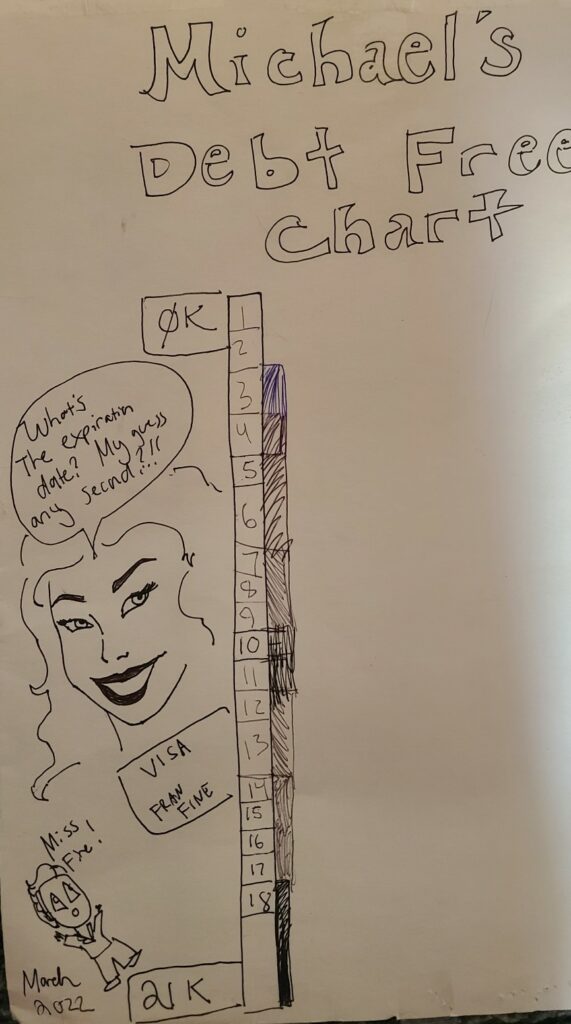
The couple holds $28,259 in consumer debt across three credit cards.

- Brian’s Visa (SCU): $16,057 (0% interest until November 2023, 17.99% thereafter).
- Michael’s Visa Platinum: $9,700 (10.99% interest).
- Brian’s Visa Platinum (Navy Federal): $2,503 (0.99% interest until November 2023, 17.74% thereafter).
Assets and Retirement
They have built a respectable base of $91,250 in total assets, primarily through retirement accounts. With access to a 401(k), 403(b), 457(b), and a pension, they have the tools for a comfortable retirement. However, these assets are under-optimized, and Brian’s old 401(k) remains a point of concern that needs consolidation.
Monthly Expenditures
Their current monthly outlays total $8,035. A significant portion of this is directed toward debt repayment ($2,000) and essential costs. However, discretionary spending on gifts, personal care, and home goods has contributed to their feeling of financial stagnation.
Expert Analysis: The Path to Financial Autonomy
Financial expert Liz Frugalwoods, who facilitated this case study, notes that the couple is in a far better position than they realize. She argues that their "spreadsheet problems" are solvable with a shift in mindset and behavior.
Tracking: The First Line of Defense
The fundamental issue identified is a lack of rigorous tracking. By implementing an expense tracking system—whether via a tool like Empower or a simple spreadsheet—the couple can identify the "hidden" leaks in their budget. The data shows they have a surplus of over $13,000 per year, which, if directed correctly, could eliminate their consumer debt in roughly six months.

The "No-Spend" Detox
To curb the cycle of debt, the expert recommends a temporary, radical shift in spending. By categorizing expenses into "Fixed," "Reduceable," and "Discretionary," the couple can create a lean budget. The proposed recommendation is to eliminate discretionary spending on items like dining out, new home goods, and non-essential travel until the debt is cleared. This austerity, while uncomfortable, is framed as a "detox" rather than a permanent lifestyle change.
Implications for Long-Term Goals
The couple’s ultimate desire for a home, marriage, and potential graduate education must be viewed through the lens of priority.

Prioritizing Home Ownership and Education
The expert advises against prioritizing a master’s degree unless it provides a guaranteed, direct, and significant increase in salary. In the current economic climate, the return on investment for graduate education is often questionable. Similarly, buying a home is classified as a secondary goal. Before entertaining a down payment, the couple must:
- Eliminate all consumer debt.
- Fully fund an emergency reserve that accounts for at least 3-6 months of their lean living expenses.
- Optimize retirement contributions to take advantage of their workplace tax-advantaged accounts.
The Power of the "Triple Crown"
Brian’s access to a 403(b), 457(b), and a state pension is described as a "triple crown" of retirement security. By maximizing these contributions, the couple can reduce their tax liability while simultaneously building a robust safety net. This foundation, combined with the eventual, albeit uncertain, support of Social Security, puts them in a strong position for the future, provided they maintain their commitment to low-fee, long-term investments.

Conclusion: A Shift in Perspective
The journey for Brian and Michael is not one of lack, but one of management. By transitioning from a cycle of "feast and famine" to a strategy of consistent, mindful living, they can reach a point of stability. The goal is not to live in perpetual deprivation, but to define what truly brings value to their lives.
As they approach their 10-year anniversary, the focus remains on transforming their current anxiety into actionable progress. With the right adjustments, they are well-positioned to clear their debts within the year, allowing them to redirect their significant income toward their long-term dream of owning land and building a legacy. The path forward requires discipline, but the structure is already in place. They have the salaries, they have the benefits, and now, they have the roadmap. All that remains is the consistent, day-to-day execution of a plan that aligns their spending with their deepest values.