A Shift in Strategy: Brian Johnson Nominated to Lead the Consumer Financial Protection Bureau
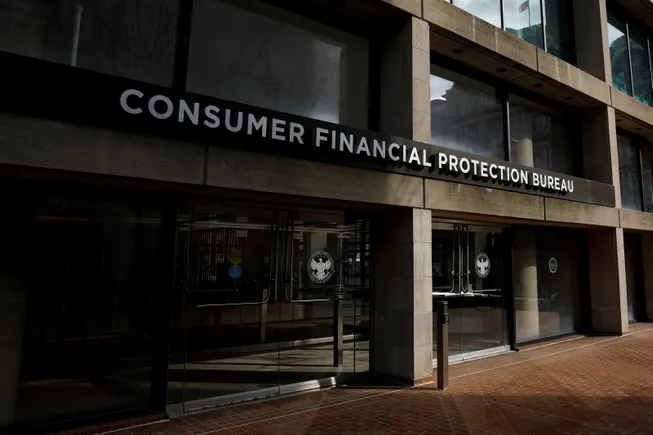
In a move that signals a potential strategic pivot for the Consumer Financial Protection Bureau (CFPB), President Donald Trump has officially nominated Brian Johnson, a seasoned financial regulatory veteran and former deputy director of the agency, to serve as its next permanent leader. The nomination, sent to the U.S. Senate on Wednesday, marks a pivotal moment for an agency that has been at the center of intense ideological friction since the start of the current administration.
If confirmed, Johnson would take the reins of the consumer watchdog for a five-year term, stepping in to replace Russ Vought. Vought, who has served as acting director since February 2025, became a lightning rod for controversy after openly pursuing an agenda to dismantle the agency from within. Johnson’s appointment suggests that the White House may be shifting from a posture of total institutional destruction to one of traditional, albeit industry-friendly, regulatory governance.
The Nominee: A Familiar Face Returns to the Bureau
Brian Johnson is no stranger to the inner workings of the CFPB. He served as the agency’s No. 2 official during the 2018–2020 period, a tenure defined by efforts to foster industry collaboration and innovation. Currently a senior executive at Capital One, Johnson’s background is rooted in both the private financial sector and conservative legal circles. His biography, hosted by the Federalist Society—a prominent conservative and libertarian legal organization—highlights his instrumental role in establishing several key programs during his previous stint at the Bureau.
Among his notable accomplishments were the creation of the Office of Innovation, the Taskforce on Federal Consumer Financial Law, and the "Start Small, Save Up" emergency savings program. His work with the Office of Innovation, in particular, established a "sandbox" environment where financial companies could apply for "no-action letters," allowing them to test and develop new products under a safe harbor from certain regulatory enforcement actions.
Chronology: From Innovation to Institutional Uncertainty
The trajectory of the CFPB over the last decade illustrates the stark divide between opposing political philosophies regarding financial oversight.
- 2018–2020: During his previous tenure, Johnson emphasized deregulation and industry-led innovation. The Office of Innovation was his flagship project, designed to streamline the adoption of new financial technologies.
- 2021–2024: Under the leadership of former Director Rohit Chopra, the agency underwent a significant transformation. The Office of Innovation was recast as the "Office of Competition and Innovation," shifting its focus away from industry "sandboxes" and toward promoting market competition and curbing the dominance of large financial players.
- February 2025: Russ Vought assumed the role of acting director. His tenure was characterized by a concerted effort to scale back the Bureau’s influence, leading to widespread speculation about the agency’s potential closure or complete systemic overhaul.
- June 2026: President Trump nominates Brian Johnson, effectively ending the Vought era and triggering a new round of debate regarding the future mission of the agency.
Supporting Data and the "Traditional" Republican Approach
Observers of the financial sector are attempting to decipher what a "Johnson CFPB" would look like. Todd Baker, a senior fellow at the Richman Center for Business, Law & Public Policy at Columbia University, categorized the nomination as "unexpected" in the current political climate.
"Johnson is a pretty normal type of Republican financial regulator," Baker noted in a recent assessment. "He distinguishes himself from the more ideological Trump 2.0-era figures like Russell Vought. A traditional Republican financial regulator looks to use the power granted by Congress in a manner generally friendly to the concerns of the regulated industry and less friendly to consumer advocates, but without taking steps to dismantle the agency he leads or fundamentally pervert its mission."
According to Baker, while the era of aggressive enforcement is likely over, Johnson is expected to handle the "mandatory" business of the agency with a degree of continuity. This includes moving forward with technical regulatory requirements, such as the finalization of Dodd-Frank Section 1033 rules—the regulatory framework governing open banking and consumer financial data rights.
The Broader Regulatory Landscape
While Johnson may be viewed as a moderate compared to his predecessor, his administration would not exist in a vacuum. He is expected to align the Bureau with the broader administrative priorities of the current White House.
Industry experts suggest that any director under the current administration would be tasked with specific policy mandates, regardless of their personal regulatory philosophy. These include:
- The Dismantling of DEI Measures: A broader mandate across federal agencies to quash Diversity, Equity, and Inclusion (DEI) initiatives within the workplace and regulatory oversight.
- Crypto-Friendly Policy Shifts: The promotion of a more permissive environment for digital assets and blockchain-based financial products, aligning the CFPB with the broader push to make the U.S. a hub for cryptocurrency innovation.
"In that respect, he would be no different from the current heads of the OCC, the FDIC, the SEC, and the CFTC," Baker explained. "All of these leaders have moved quickly on Trump’s key political priorities while maintaining a reasonable amount of continuity with past GOP financial regulatory priorities."
Stakeholder Reactions: A Divided Response
The reaction to Johnson’s nomination has been as polarized as the political environment he is set to enter.
The Industry Perspective
The Consumer Bankers Association (CBA) expressed a cautious sense of optimism. CEO Lindsey Johnson stated that her organization is eager to engage with the nominee on policies that "provide certainty" and foster a "durable, stable CFPB." She emphasized that the industry desires an agency that meets its congressional mandate while maintaining transparency and accountability. "A transparent, accountable CFPB focused on its core mission will strengthen outcomes for consumers, financial institutions, and the U.S. economy," she added.
The Consumer Advocacy Perspective
Conversely, the nomination has drawn sharp condemnation from progressive lawmakers and consumer advocates. Senator Elizabeth Warren (D-MA), a primary architect of the Bureau, did not mince words regarding the nomination. Warren labeled Johnson "the next hatchet man," arguing that his primary goal would be to finish the work Vought began.
"This is an attempt to gut an agency that has returned more than $21 billion to cheated consumers," Warren said in a statement. Her concerns reflect a broader fear among consumer advocacy groups that even a "traditional" Republican regulator will effectively neuter the Bureau’s enforcement powers, leaving consumers vulnerable to predatory lending and deceptive financial practices.
Implications: What Lies Ahead?
As the Senate prepares to review Johnson’s nomination, several critical questions remain regarding the future of the CFPB.
The Future of Enforcement
If confirmed, the most immediate impact will likely be a significant cooling of enforcement actions. Under the previous administration, the Bureau pursued a "regulation by enforcement" strategy, frequently litigating against large financial institutions. Under Johnson, the agency is expected to favor guidance, settlements, and industry dialogue over high-profile legal battles.
Institutional Stability vs. Mission Creep
The central tension of the upcoming term will be whether Johnson can satisfy the administration’s desire for a smaller, less intrusive government without triggering a total collapse of the Bureau’s regulatory authority. While he is unlikely to attempt the total "shuttering" of the agency that Vought sought, his efforts to redirect the agency’s resources—away from consumer protection and toward competition and innovation—will fundamentally redefine what the "core mission" of the Bureau is.
The Legislative Tug-of-War
The battle for the CFPB’s soul will continue on Capitol Hill. With the agency’s funding structure and independence frequently under attack, Johnson will have to navigate a delicate balance between fulfilling the President’s directives and maintaining the institutional legitimacy required to keep the Bureau functional in the eyes of the courts and the public.
In conclusion, Brian Johnson’s nomination represents a transition from "scorched earth" tactics to a more tactical, industry-aligned strategy. Whether this shift will stabilize the agency or merely complete the transformation of the CFPB into a significantly weakened watchdog remains the defining question of his potential tenure. As the Senate confirmation process begins, the outcome will provide a clear window into the future of consumer finance regulation in the United States.