A Regulatory Showdown: State Attorneys General Challenge Fintech-Bank Mergers
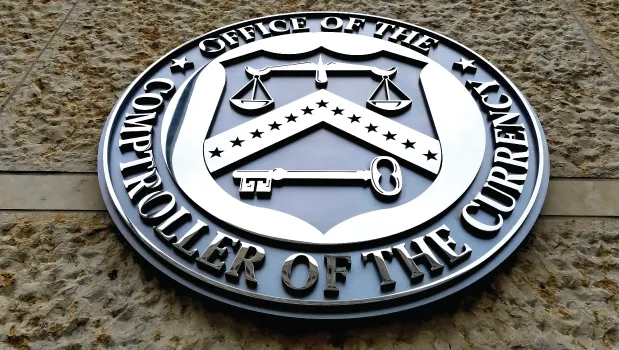
In an assertive move to curb the influence of high-cost lending models, a bipartisan coalition of 20 state attorneys general has issued a stern warning to federal banking regulators. The group, spearheaded by Illinois Attorney General Kwame Raoul, is demanding that the Office of the Comptroller of the Currency (OCC), the Federal Reserve, and the Federal Deposit Insurance Corp. (FDIC) block proposed acquisitions that would see prominent fintech lenders absorb established banks.
At the heart of the controversy are two high-profile deals: Opportunity Financial’s (OppFi) $130 million bid for an Arizona bank and Enova International’s $369 million acquisition of Grasshopper Bank. The attorneys general argue that these acquisitions are not merely business expansions, but strategic efforts to bypass state-level consumer protections, specifically interest-rate caps that have been established to prevent predatory lending.
The Core Conflict: Rent-a-Charter and Usury Evasion
The central tension in this dispute revolves around the concept of "interest rate exportation." Under federal law, national banks are generally permitted to export the interest rate laws of their home state to borrowers in other states, effectively preempting the stricter usury laws that individual states enact to protect their residents.
State attorneys general contend that fintech firms are engaging in "rent-a-charter" arrangements, where they partner with compliant banks to issue loans at triple-digit interest rates that would be illegal if the lender were operating under state jurisdiction. By acquiring these banks directly, the fintech firms seek to cement their ability to bypass state interest-rate caps—often set at 36% for small loans—under the guise of federal banking authority.
"We urge you to prohibit such access to entities that have a track record of brazenly attempting to evade state law and disregarding consumer protections," the coalition wrote in their formal letter to federal regulators.
Chronology: A History of Regulatory Friction
The current standoff is the culmination of years of escalating tension between state regulators and the rapidly evolving fintech sector.
- 2008 Financial Crisis: The coalition invokes the memory of the subprime mortgage crisis, reminding regulators that state-level officials were among the first to flag the dangers of predatory lending practices before they caused systemic collapse. They argue that history is repeating itself.
- The Rise of Fintech Partnerships: Over the last decade, nonbank lenders began aggressively partnering with banks in states like Utah and South Dakota, which lack stringent usury caps. These "fintech-bank" partnerships became the standard model for national subprime lending.
- The Shift to Acquisition: As regulatory scrutiny on third-party partnerships increased, fintech companies began shifting strategy. Instead of renting a charter, firms like Enova and OppFi moved to acquire the banks themselves, seeking to internalize the regulatory shield.
- July 2026 Letter: The coalition of 20 attorneys general formally petitioned the OCC, FDIC, and the Fed to block the OppFi and Enova acquisitions, signaling a new, more aggressive phase in the regulatory battle.
Supporting Data: The Will of the People vs. The Fintech Model
The coalition’s argument is rooted in the legislative consensus across the United States. Nearly every state has enacted interest-rate caps, reflecting a deep-seated public mandate to protect vulnerable consumers from cycles of debt that often accompany high-cost credit products.
"This unequivocally demonstrates the will of the people—regardless of political party—to prevent unaffordable lending," the letter states. The attorneys general emphasize that these products are not merely "high-cost" but are designed to extract wealth from individuals in desperate financial circumstances.
The coalition includes representation from a broad geographical cross-section of the U.S., including:
- West: Arizona, California, Colorado, Hawaii, Nevada, Oregon, Washington.
- Midwest: Illinois, Michigan, Minnesota.
- East/Northeast: Connecticut, Maine, Maryland, Massachusetts, New Jersey, New York, Rhode Island, Vermont.
- District of Columbia.
Corporate Defense: The Fintech Counter-Narrative
In response to the accusations, both OppFi and Enova have pushed back, arguing that their operations provide essential credit to the "underbanked" and that federal oversight would actually enhance consumer safety.
OppFi’s Position
An OppFi spokesperson defended the company’s product, labeling it "highly compliant" and "legally robust." The spokesperson argued that moving their business model into a regulated banking infrastructure would subject them to more—not less—federal oversight. "This will enable us to pair our proven product with extensive federal oversight, further strengthening our commitment to transparent and fair consumer lending," the company stated.
Enova’s Position
Enova Chief Strategy Officer Kirk Chartier pointed to a shifting legal landscape, noting that 21 state attorneys general recently filed an amicus brief in a federal appellate court defending the rights of state-chartered banks to export their interest rates. Enova’s defense hinges on the argument that once they operate as a national bank, they would fall under the direct supervision of federal agencies, ensuring compliance with federal lending guidance and consumer protection laws.
The "Race to the Bottom" and the Crypto Parallel
The attorneys general also cast a wider net, criticizing the OCC’s recent willingness to grant national trust charters to cryptocurrency firms. The coalition warned that allowing crypto-native businesses to embed themselves into the traditional banking system would "amplify risk and instability" and trigger a "race to the bottom" regarding regulatory standards.
This concern is shared by various bank trade groups, which have long argued that non-bank entities—whether they are fintech lenders or crypto firms—should not be afforded the same privileges as traditional, deposit-taking institutions.
Regulatory Philosophy: Oversight or Ostrich?
Federal regulators remain caught in a delicate balancing act. On one side, they face intense pressure from state officials to preserve the integrity of state consumer laws. On the other, they face the reality of a financial system that is moving toward digital-first models.
In an October interview, Comptroller of the Currency Jonathan Gould articulated a philosophy of engagement rather than exclusion. Gould suggested that the "ostrich approach"—ignoring the evolution of fintech—is not viable. "It’s better for it to be done within the banking system, if it’s legally permissible and can be done in a safe and sound manner, so that we can see it and monitor it," Gould argued.
Implications for the Financial System
The outcome of these pending acquisition requests will have profound implications for the future of American banking:
- Legal Precedent: If the regulators approve these acquisitions, it could provide a roadmap for other high-cost lenders to seek full banking charters, potentially rendering state-level usury caps obsolete.
- Federal vs. State Authority: A decision in favor of the fintech companies would likely ignite a protracted legal battle between the states and the federal government, further straining the dual-banking system.
- Consumer Protection Standards: If the acquisitions are blocked, fintech firms may be forced to curtail their interest rates to comply with individual state laws, significantly altering their business models and profit margins.
- Systemic Stability: The concerns raised by the attorneys general regarding "risky business models" being embedded into the financial system suggest that regulators must weigh the benefits of modernization against the dangers of systemic contagion.
As the letter from the 20 attorneys general makes clear, the states do not intend to go quietly. By invoking the memory of the 2008 crisis, they are framing this not just as a debate over interest rates, but as a fight for the structural integrity of the nation’s financial safety net. For the OCC, the Fed, and the FDIC, the decision is no longer just about the merits of two corporate mergers; it is a test of their commitment to protecting the public from the next wave of potential financial instability.