The Collapse of Washington’s Hemispheric Strategy: What Lula’s Return Means for US Foreign Policy
RIO DE JANEIRO — For years, a cornerstone of Donald Trump’s grand geopolitical vision was the consolidation of the Western Hemisphere into an ideologically aligned bloc. As Washington sought to disentangle itself from complex, costly entanglements in Europe, the Middle East, and Asia, the strategy for Latin America was intended to serve as a manageable cornerstone. By cultivating partnerships with right-wing, populist, and "iron-fist" (mano dura) leaders across the region, the White House hoped to secure a compliant, controllable backyard insulated from the shifting tides of global multilateralism.
Yet, this ambitious hemispheric containment and alignment project now lies in tatters. Following a dramatic political realignment in South America’s geopolitical anchor, Brazil, the entire architecture of Washington’s regional strategy has collapsed.
Main Facts
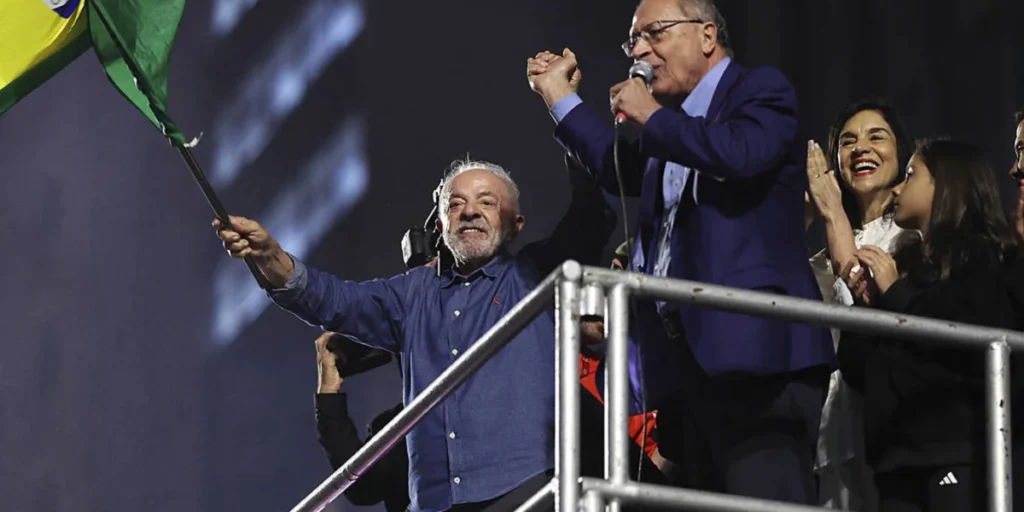
The turning point occurred when Luiz Inácio Lula da Silva secured a decisive victory in Brazil’s high-stakes presidential election, defeating the incumbent far-right leader. This political earthquake dealt a fatal blow to Donald Trump’s Latin America playbook.
- The Ideological Pivot: Until the Brazilian ballot boxes closed, the White House enjoyed a favorable alignment of regional counterparts who mirrored Washington’s commercial nationalism and hardline security rhetoric. Lula’s return fundamentally shifts the diplomatic weight of the continent.
- The Monroe Doctrine Reshaped: Trump’s strategy relied heavily on bilateral cajoling, economic coercion, and ideological affinity with leaders willing to marginalize traditional liberal democratic norms. Brazil, under a progressive administration committed to a multipolar world order, rejects this subordinate role.
- Geopolitical Isolation: With Brazil—the region’s largest economy and demographic giant—pivoting away from Washington’s orbit, the remaining right-wing client states in the hemisphere are left isolated, lacking the critical mass required to sustain a unified, US-led regional bloc.
Chronology: The Rise and Fall of the Hemispheric Strategy
To understand the magnitude of the recent political shift in Rio de Janeiro and Brasília, it is necessary to trace the trajectory of U.S.–Latin American relations over the preceding decade.
1. The Rightward Surge (2018–2022)
- The Alignment of Ideologies: The election of right-wing populists across key Latin American nations created a rare window of opportunity for Washington. Leaders in Brasília and other capitals adopted sharp rhetorical postures against multilateral institutions, mirroring U.S. grievances.
- Transactional Diplomacy: Washington shifted away from traditional institution-building (such as the Organization of American States or regional trade pacts) in favor of transactional, leader-to-leader diplomacy. The focus narrowed strictly to border security, immigration containment, and countering Chinese commercial expansion through strong-arm pressure rather than cooperative economic investment.
2. The Fracturing of the Bloc (2023–2025)
- Democratic Resurgences: Across the region, voter fatigue with economic stagnation and heavy-handed governance sparked a "pink tide" resurgence. Left-of-center governments returned to power in several key nations, signaling a rejection of the Washington-aligned conservative agenda.
- Brazil as the Final Bastion: As other nations drifted away from the U.S. sphere of influence, Brazil remained the ultimate test case for the viability of Trump’s hemispheric project. The incumbent far-right administration in Brasília was viewed by Washington strategists as indispensable to maintaining a conservative majority in South America.
3. The Electoral Watershed (October 2026)
- The Ballot Box Defeat: In a fiercely contested election, Brazilian voters rejected the continuation of far-right governance. Lula da Silva’s victory signaled not only a domestic course correction for Brazil but also a definitive regional referendum against American regional hegemony.
- Strategy in Tatters: Within hours of the certified results, foreign policy analysts in Washington and academic centers alike acknowledged that the foundational premise of the administration’s Latin America policy—a compliant, right-wing southern tier—was defunct.
Supporting Data & Regional Dynamics
The failure of the hemispheric strategy is underscored by structural economic and diplomatic realities across Latin America. Quantitative and qualitative metrics illustrate the profound disconnect between Washington’s ambitions and ground-level facts:
- Economic Gravity vs. Political Coercion: While Washington attempted to restrict Chinese trade and investment in the region through political arm-twisting, Beijing remains the primary trading partner for South America’s largest economies, including Brazil, Chile, and Argentina. Lula’s administration has already signaled a pragmatic return to independent trade diversification, prioritizing infrastructure investments from Asia over ideological alignment with the West.
- Institutional Deficits: The reliance on personalist diplomacy alienated multilateral partners. Data from regional polling organizations indicate that public trust in U.S.-led hemispheric initiatives plummeted by over 35% during the tenure of the conservative alignment, as citizens perceived these policies as self-serving rather than mutually beneficial.
- Security and Migration Realities: The mano dura approach failed to stem structural migration or transnational crime. Instead, militarized borders and transactional deals frequently exacerbated human rights crises, alienating moderate democratic partners who favored judicial reform and institutional strengthening over populist crackdowns.
Official Responses and Diplomatic Fallout
The reverberations of the Brazilian election have triggered urgent reassessments in foreign ministries across the Americas and inside the Washington beltway.
- From Washington: Official statements from the White House and the State Department have offered guarded, diplomatic congratulations to the Brazilian president-elect, emphasizing the enduring importance of institutional ties between the two democracies. However, behind closed doors, diplomatic corps are scrambling to rewrite containment and cooperation frameworks. Critics of the administration’s foreign policy have seized on the result as proof of the bankruptcy of "isolationist-hegemony," arguing that abandoning liberal partnerships has left the U.S. diplomatically isolated in its own hemisphere.
- From Brasília and Regional Capitals: President-elect Lula da Silva struck a tone of strategic autonomy in his victory address. He emphasized that Brazil will pursue an independent foreign policy, engaging constructively with the United States, Europe, and the Global South alike. "Brazil is back," Lula declared, signaling a revival of traditional Brazilian multilateralism that resists subservience to any single superpower.
- Reactions from the Left and Right: Regional conservative leaders expressed dismay, warning of a leftist resurgence that could destabilize hemispheric security. Conversely, progressive movements across Latin America celebrated the result as a triumph of democratic resilience and a rejection of authoritarian populism.
Implications for Global and Regional Order
The collapse of Donald Trump’s Latin America strategy carries profound implications that extend far beyond the borders of Brazil and the United States.
1. The End of the "Hemispheric Fortress" Dream
The notion that the United States could wall itself off within a cooperative, ideologically uniform Western Hemisphere is no longer viable. Latin America is too pluralistic, economically diverse, and politically complex to be managed through bilateral bullying and ideological litmus tests. Washington must now confront a continent of sovereign nations charting independent courses.
2. Opening for Alternative Global Powers
With Brazil asserting its traditional role as an autonomous global player—particularly through its engagement with BRICS and other multilateral frameworks—the vacuum left by retreating U.S. influence will likely be filled by other actors, notably China. Beijing’s economic footprint will face fewer political obstacles, allowing it to deepen technological, agricultural, and infrastructural ties across South America.
3. A Return to Pragmatic Diplomacy?
For U.S. foreign policy, the failure of the mano dura strategy forces a moment of reckoning. Long-term stability in the Americas cannot be achieved by backing strongmen or attempting to rollback democratic outcomes. Future U.S. administrations will be compelled to rebuild traditional diplomatic bridges, invest in cooperative economic frameworks, and respect the democratic sovereignty of Latin American nations if Washington hopes to remain a preferred partner in its own hemisphere.
Ultimately, Lula’s victory in Brazil is more than a domestic political milestone; it is the definitive epitaph for an era of heavy-handed, isolationist regional management. As the dust settles in Brasília, Washington is forced to wake up to a multipolar reality it sought desperately to avoid.