The Great Housing Stall: Why the Road to Market "Normalcy" Is Longer Than You Think
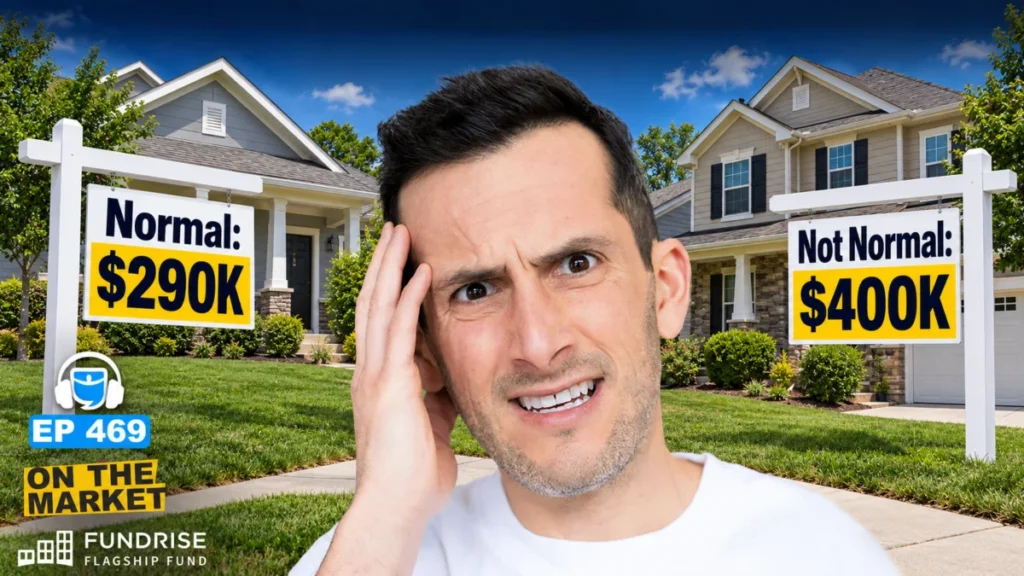
The American housing market has entered a period of unprecedented stagnation, a "Great Stall" that is testing the patience of buyers, the resolve of sellers, and the optimism of market analysts. With mortgage rates hovering stubbornly near 7.5% and median home prices anchored around the $400,000 mark, the fundamental math of homeownership has broken. For the average American, whose wage growth has failed to keep pace with the meteoric rise in housing costs, the dream of buying a home feels increasingly out of reach.
Dave Meyer, Chief Investment Officer at BiggerPockets and host of the On the Market podcast, recently crunched the numbers to determine when—or if—the market will return to a state of historical normalcy. His conclusion is as sobering as it is data-driven: there is no quick fix. Without a significant, and perhaps painful, shift in the economic landscape, the housing market will remain in its current state of dysfunction for years to come.
The Anatomy of a Broken Market: Main Facts
To understand why the market is currently "sluggish," one must look at the three pillars of housing affordability: home prices, mortgage rates, and real wages. Historically, these three variables have balanced each other out. Today, however, they are misaligned to a historic degree.
Since 2019, the last year before pandemic-fueled inflation fundamentally altered the housing landscape, home prices have surged by approximately 63%. Over that same period, family income has only grown by 37%. When you factor in the dramatic climb in interest rates, the average monthly mortgage payment for a typical home has skyrocketed by 116% in just five years.
In 2019, Americans spent roughly 15.6% of their household income on mortgage payments. Today, that figure has ballooned to nearly 25%—or even higher depending on current daily rate fluctuations. This disparity is the primary engine behind the current market freeze.
A Chronology of the Affordability Crisis
The current crisis did not happen overnight; it is the culmination of long-term economic shifts and immediate post-pandemic shocks.
- The Pre-2019 Era: This period was characterized by relatively low interest rates and a balance between wage growth and home appreciation. It serves as the "Gold Standard" for many prospective buyers.
- The 2020–2022 Surge: The pandemic triggered a massive spike in housing demand coupled with a supply shortage. Low interest rates fueled a home-buying frenzy, pushing prices to record highs.
- The 2022 Interest Rate Shock: To combat rampant inflation, the Federal Reserve began aggressively raising the federal funds rate. This pushed mortgage rates from historical lows into the 7% range, effectively killing buyer purchasing power.
- The 2023–2024 "Great Stall": We are currently in a stalemate. Sellers with low-interest-rate mortgages are refusing to list their homes (the "lock-in effect"), while buyers are being priced out by high rates and elevated prices. Inventory remains tight, and transactions have plummeted.
Supporting Data: The Math of Normalcy
To determine the timeline for recovery, analysts use the "Payment-to-Income" ratio. Looking at data dating back to 1989, the long-term average for this ratio is 18.5%. To return to this level, or even the 2019 level of 15.6%, one of the three levers—wages, rates, or prices—must move significantly.
The Wage Lever
For wages to restore affordability without any other changes, real (inflation-adjusted) wages would need to rise by 33% to reach the 18.5% long-term average, or 57% to return to 2019 levels. Given that real wage growth has averaged just 0.8% annually since 1968, achieving this through income growth alone would take decades. Currently, real wage growth is effectively stagnant or negative due to the lingering effects of inflation.
The Interest Rate Lever
Many market observers point to a potential drop in mortgage rates as the "savior" of the housing market. However, the math suggests otherwise. To return to 2019 affordability levels through interest rate cuts alone, rates would need to fall to approximately 2.7%. Given the current inflationary environment and the Federal Reserve’s reluctance to return to a zero-interest-rate policy, a drop to 2.7% is considered highly improbable. Even a drop to 4%—often cited as a "target" by hopeful buyers—would require a level of economic deflation that has not been seen in the modern era.
The Price Lever
If we rely on home price correction to restore affordability, the numbers are equally stark. A 25% to 35% drop in home prices would be required to return to historical norms. For context, the 2008 Great Financial Crisis saw a national decline of roughly 20-22%. A decline of 35% would be unprecedented and would likely require a severe national economic recession, which would bring its own set of catastrophic consequences.
Official Perspectives and Expert Analysis
Market experts generally agree that the "crash" scenario is unlikely. The current market is protected by the "lock-in effect," where 80% of current mortgage holders have rates below 6%. Unlike the 2008 crisis, where homeowners were saddled with adjustable-rate mortgages and negative equity, current homeowners are generally in strong financial positions.
There is no "flood" of inventory on the horizon. Distress markers, such as foreclosure rates, remain at historically low levels. While some regional markets—particularly in the Sunbelt like Austin and parts of Florida—are experiencing price corrections, the national market remains buoyed by a chronic lack of supply.
Implications for Investors and Homeowners
The primary takeaway for those navigating the current market is to abandon the idea of a quick "snap-back" to 2019 conditions. The "Great Stall" is expected to last for at least another five to seven years unless there is a major, and likely negative, economic catalyst.
For Potential Homebuyers
The era of "easy" buying is over. Prospective buyers should not wait for interest rates to hit 3% or for prices to drop 30%—those outcomes are statistically improbable. Instead, buyers must focus on their own financial stability and look for "value-add" opportunities where they can improve the property themselves.
For Real Estate Investors
The playbook has shifted. Because appreciation will likely be muted in the near term, investors cannot rely on market-wide value increases to turn a profit. Success now depends on:
- Buying below current market comps: Securing properties at a 15-20% discount is the only way to insulate against potential short-term price stagnation.
- Value-Add Strategies: Renovations and forced appreciation are the only reliable ways to generate returns in a low-growth environment.
- Long-Term Positioning: Real estate remains a powerful vehicle for wealth, but it requires a long-term horizon. Investors who enter the market today with a disciplined, "buy-low" approach are positioning themselves to capture significant gains when the market eventually recalibrates years from now.
Ultimately, the housing market is a complex ecosystem that resists simple solutions. Whether it is through a slow, decade-long normalization of wages or a painful economic contraction, the path to affordability will be a marathon, not a sprint. For those involved in the market, the message is clear: proceed with caution, rely on the math, and prepare for a long, slow climb.