The Solar Solidarity Network: How a Federal Legal Battle Exposed the Fragility of Civic Infrastructure
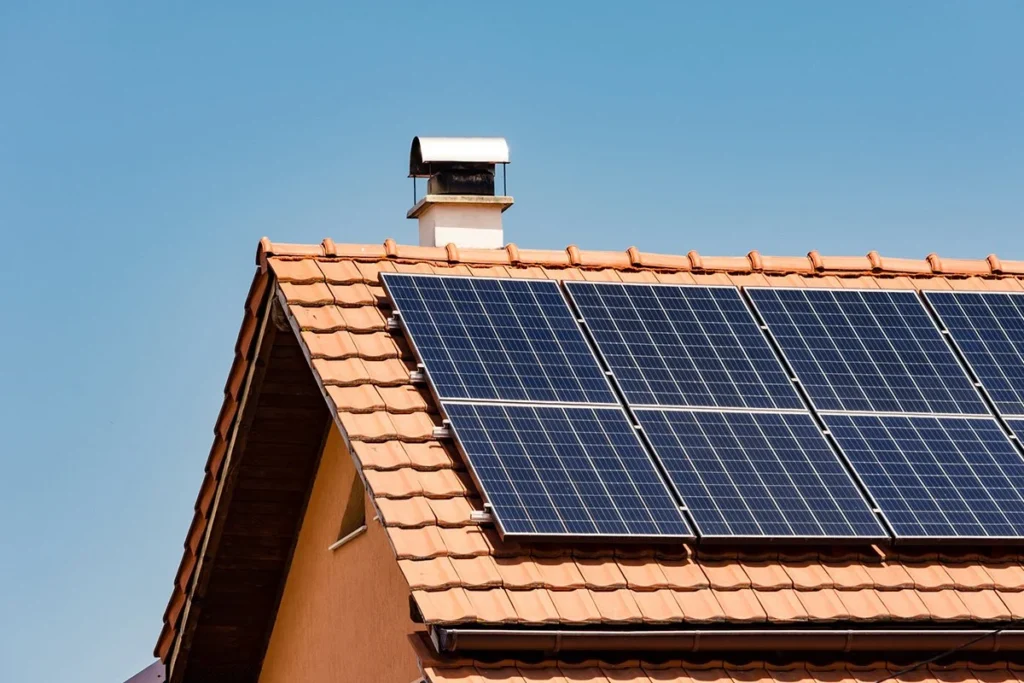
When Anh Nguyen, an Atlanta homeowner, submitted her application for a no-cost solar installation through Georgia BRIGHT, she was looking for a pragmatic solution to rising energy costs. She envisioned a cleaner, more affordable future for her household. She did not, however, envision herself as a named plaintiff in a high-stakes federal lawsuit against the Environmental Protection Agency (EPA).
Yet, Nguyen’s journey from a residential applicant to a pivotal figure in a landmark legal battle reflects a much deeper reality: the "Solar for All" initiative was never merely a subsidy program. It was the foundation of a sophisticated, localized civic infrastructure—a delicate ecosystem of nonprofits, labor unions, legal advocates, and small businesses that had spent years intertwining their operations with the promise of federal support. When that support was abruptly severed, the resulting collapse revealed just how much of our modern social safety net relies on the connective tissue of civil society, and how vulnerable that tissue is to the whims of federal administrative shifts.
The Chronology of a Disrupted Program
To understand the scale of the crisis, one must look at the timeline of the "Solar for All" initiative, a $7 billion program designed to bring distributed solar energy to 900,000 low-income households.
- The Foundation (2024): Capital Good Fund, a nonprofit Community Development Financial Institution (CDFI), secured a $156 million award under the program. This funding was intended to catalyze the Georgia BRIGHT Communities program, which sought to democratize access to rooftop solar for households earning 80 percent or less of the area’s median income.
- The Freeze (February 2026): Following an executive order by President Donald Trump, the program’s funding was abruptly frozen, sending shockwaves through the network of grantees and contractors who had already ramped up operations.
- The Resumption (March 2026): The funds were temporarily unfrozen, allowing for a brief period of optimism before a more permanent threat emerged.
- The Termination (August 2026): EPA Administrator Lee Zeldin formally announced the end of the $7 billion program, dismissing it as a "boondoggle" and claiming the agency lacked the authority to administer the funds.
- The Litigation (September 2026): A coalition of plaintiffs—including the Rhode Island AFL-CIO, the Rhode Island Center for Justice, Anh Nguyen, and several solar installers—challenged the EPA’s decision.
- The Ruling (September 18, 2026): Federal Judge Mary McElroy ruled in favor of the plaintiffs, declaring the EPA’s termination unlawful under the Administrative Procedure Act, noting that while Congress had rescinded unobligated funds, it had not granted the EPA the authority to unilaterally cancel obligated grants.
The Hidden Architecture of "Solar for All"
The significance of this legal victory lies not just in the restoration of funds, but in the exposure of the network that the program fostered. Looking at the list of plaintiffs in the lawsuit—which included legal advocacy groups, labor unions like the Rhode Island AFL-CIO, and private solar companies like 2KB Energy Services and Energy Independent Solutions—reveals a reality that a simple grant award document cannot capture.
This was not a collection of lobbyists, but a working, functional supply chain. These institutions had spent years translating federal dollars into local capacity. Solar development companies had invested in personnel, specialized equipment, and software. Nonprofits had developed community outreach strategies and advisory boards. In Georgia, for instance, the Georgia BRIGHT program had convened a 40-member Community Advisory Board, which included residents like Nguyen, who were tasked with shaping resource allocation and program strategy.
This "civic infrastructure" acts as the connective tissue between federal policy and local reality. When the EPA moved to terminate the program, they were not just canceling a line item in a budget; they were effectively dismantling an entire institutional network that had been organized around the expectation of sustained support.
Supporting Data and Economic Impact
The financial stakes of this disruption were immense. The solar installers involved in the lawsuit provided evidence that they had already begun scaling their operations in direct reliance on the awarded funds. When the program was paused, these businesses faced immediate liquidity crises, forced to carry the costs of new hires and inventory without the revenue streams the grant program was intended to facilitate.
The "Solar for All" initiative was projected to provide solar access to 900,000 households. The ripple effects of this extend beyond energy bills:
- Workforce Development: The program was designed to create thousands of "green-collar" jobs, particularly in disadvantaged communities.
- Economic Resilience: By lowering energy burdens, the program intended to keep more disposable income within low-income families, acting as a form of community-wide economic stimulus.
- Institutional Capacity: The involvement of CDFIs like the Capital Good Fund meant that local organizations were building the financial systems necessary to manage complex, long-term environmental projects.
When the EPA terminated the program, these economic engines stalled. The "pause" in Georgia BRIGHT’s operations served as a microcosmic example of the broader disruption: a sudden cessation of installation schedules, a freeze in community outreach programs, and the potential layoff of the very workers hired to transition the state to renewable energy.
Official Responses and Legal Ambiguity
The EPA’s stance, as articulated by Administrator Lee Zeldin, rested on a strict interpretation of administrative authority. By characterizing the program as a "boondoggle," the administration attempted to frame the legal battle as one of fiscal restraint. However, Judge McElroy’s ruling exposed a significant legal gap in this argument: the distinction between "unobligated" funds (which Congress has the power to rescind) and "obligated" funds (which have already been contractually committed to grantees).
Despite the court victory, the legal landscape remains treacherous. The EPA continues to signal that it may appeal the decision, creating a cloud of uncertainty for the organizations that rely on these grants. This uncertainty is, in itself, a form of damage. Even if the money eventually flows, the time, momentum, and organizational capacity lost during these periods of legal limbo cannot be easily reclaimed. For the nonprofits involved, the risk of "losing the thread" of community trust is just as dangerous as the risk of losing the funding itself.
Implications for the Nonprofit Sector
The lesson for the non-profit sector and civil society is stark and urgent. The "Solar for All" saga illustrates the inherent risks of building long-term civic infrastructure on the foundation of federal funding.
1. The Vulnerability of "Connective Tissue"
Nonprofits often act as the primary interface between the federal government and the public. When the government shifts its priorities, it is these organizations—and the communities they serve—that bear the brunt of the instability. The "connective tissue" that makes programs effective is also the most vulnerable to tearing when the federal partner retreats.
2. The Limits of Legal Recourse
While the lawsuit succeeded, litigation is a reactive and expensive tool. It cannot act as a substitute for stable, bipartisan, or long-term policy commitments. The victory in court restored the right to the funds, but it did not restore the months of stalled progress or the eroded morale of the community participants who had been told their programs were being canceled.
3. Diversification as Survival
The most critical takeaway is the need for "funding resilience." Organizations involved in large-scale federal programs must ask: If this grant disappears tomorrow, does our infrastructure collapse? The answer to this question must be "no." Building civic infrastructure requires a blend of federal, private, and local philanthropic support. Dependency on a single federal stream creates a single point of failure that can be exploited by shifting political winds.
Conclusion: Lessons for the Future
As the dust settles on the "Solar for All" litigation, the case stands as a cautionary tale for the future of environmental and social policy in the United States. We are living in an era where the divide between the state and civil society is increasingly blurred by federal grants. While this model is capable of achieving massive, rapid change, it also makes the local organizations that do the heavy lifting susceptible to the volatility of federal power.
For Anh Nguyen and the thousands of households she represents, the goal remains simple: lower energy costs and a sustainable future. But for the coalition of nonprofits and workers who stood by her side, the goal has become more complex. They have learned that in the current political climate, building the program is only half the battle. The other half is ensuring that the infrastructure they build is sturdy enough to survive the storms of federal bureaucracy. The victory in court was a triumph of the law, but the true test of this civic infrastructure will be its ability to weather the next period of political uncertainty without needing to head back to the courthouse.