The Long Road to Normal: Why the Housing Market’s Recovery Will Be a Marathon, Not a Sprint
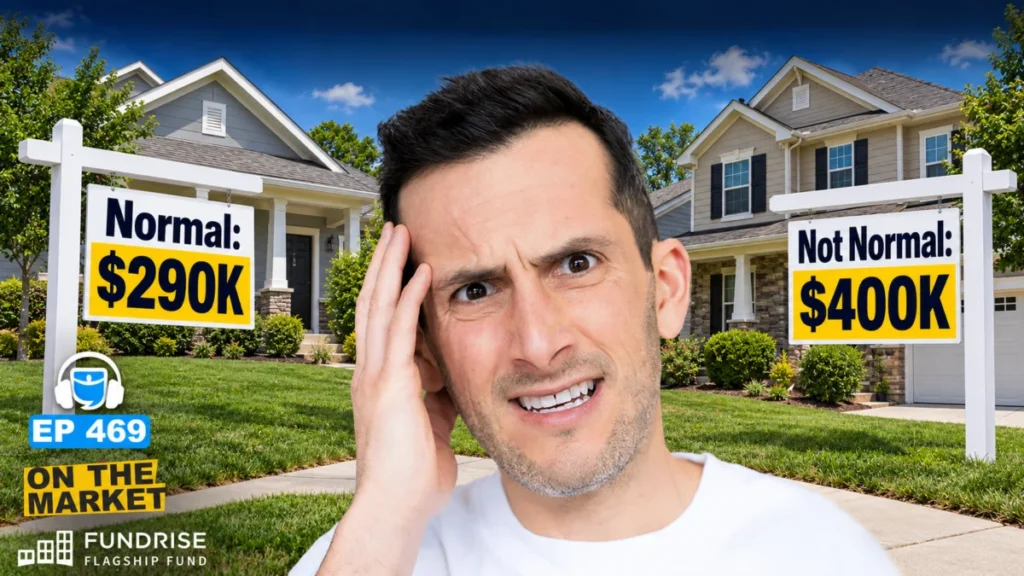
The dream of a "return to normal" in the American housing market is increasingly looking like a mirage. For millions of prospective homebuyers, renters, and real estate investors, the persistent hope has been that the turbulent, high-interest-rate environment of the post-pandemic era would eventually subside. However, according to recent data-driven analysis by housing experts, the structural reality of the current market suggests that affordability is not merely suffering from a temporary bout of volatility—it is trapped in a deep, prolonged misalignment that will take years, not months, to correct.
With mortgage rates hovering near 7.5% and median home prices stubbornly anchored around the $400,000 mark, the gap between home costs and stagnant wage growth has created a "Great Stall." While many analysts have relied on anecdotal "vibes" to predict a near-term recovery, the raw mathematical reality points toward a much more sobering timeline.
The Three Pillars of Affordability
To understand why the housing market is currently paralyzed, one must examine the "affordability stool"—the three critical levers that dictate whether a household can comfortably purchase a home. These are home prices, mortgage interest rates, and real wage growth.
According to the National Association of Realtors (NAR) and other leading analysts, the most accurate metric for gauging this health is the "payment-to-income ratio." This ratio measures what percentage of a household’s gross monthly income is required to cover a mortgage payment.
Historically, dating back to 1989, the average American household has spent approximately 18.5% of its income on housing. In 2019, the last year of relative stability before the pandemic, that figure sat at a comfortable 15.6%. Today, that number has ballooned to nearly 25%—and by some estimates, as high as 27% given recent rate hikes. This 10-point jump from 2019 levels is the primary culprit behind the current sluggishness in transaction volume.
Chronology of a Market Disconnect
The current crisis did not emerge in a vacuum; it is the result of a rapid collision between economic policy and market demand.
- 2019 (The Benchmark): The market functioned with a healthy balance of interest rates and prices. Homeownership was accessible for a broad segment of the middle class.
- 2020–2021 (The Pandemic Spike): Low-interest-rate policies intended to stimulate a locked-down economy led to a frenzy of buying. Home prices surged by 63% on average, while wages struggled to keep pace, rising only 37%.
- 2022–2023 (The Interest Rate Shock): To combat record inflation, the Federal Reserve initiated a series of aggressive rate hikes. While the intent was to cool inflation, it effectively froze the housing market by doubling monthly mortgage payments for new buyers.
- 2024 and Beyond (The Great Stall): We have entered a period where the traditional levers—wages, rates, and prices—are no longer moving in synchronization, leading to an extended period of low inventory and low transaction volume.
Supporting Data: Why "Quick Fixes" Won’t Work
The temptation for many observers is to hope for a singular "silver bullet" to fix the market. However, when the math is applied to each of the three levers, the solutions appear largely unreachable in the near term.
The Wage Growth Fallacy
If we were to rely solely on wage growth to restore affordability, the numbers are daunting. To return to the 1989-average affordability level of 18.5%, real (inflation-adjusted) wages would need to increase by 33%. To reach the 2019 benchmark, they would need to jump 57%.
Historical data shows that real wage growth in the U.S. has averaged a meager 0.8% annually since 1968. At that rate, it would take roughly 40 to 60 years to bridge the current gap. With real wage growth currently turning negative due to the lingering effects of inflation, it is clear that earnings cannot be expected to "bail out" the housing market.
The Myth of Returning to 3% Interest Rates
Many buyers are waiting on the sidelines for mortgage rates to return to the 3% levels seen in 2021. Experts argue this is unlikely. To restore 2019 affordability solely through rate cuts, mortgage rates would need to drop to 2.7%.
Given that rates are tethered to the 10-year Treasury yield—which is influenced heavily by persistent inflation—a return to sub-3% rates would require a level of economic deflation that is neither predicted nor necessarily healthy. Even a return to 4% mortgage rates would require inflation to drop below 1%, a scenario that remains highly improbable under current economic forecasts.
The Price Crash Scenario
The final lever is home prices. For prices to return to 2019 levels, they would need to drop by roughly 36% nationally. A correction of this magnitude would exceed the devastation of the 2008 Great Financial Crisis.
However, unlike 2008, today’s market is protected by the "lock-in effect." Approximately 80% of current mortgage holders have rates below 6%, and 50% are below 4%. These homeowners are incentivized to stay put, creating a massive shortage of supply. Without a surge in forced selling or a massive spike in inventory, a national price crash is mathematically unlikely.
Official Perspectives and Market Implications
The consensus among analysts is that the housing market has entered a structural shift. The era of "cheap money" is likely over, and the market is adjusting to a "new normal."
The Implications for Buyers
For those looking to enter the market, the strategy must change. Buying in the current environment requires moving away from the expectation of short-term appreciation. Instead, investors and homeowners alike are being advised to:
- Focus on Value-Add: Look for properties where forced appreciation (renovations) can increase value.
- Buy Below Market: Because capital appreciation will be muted, the "profit" must be made at the point of purchase by securing a price significantly below current market comps.
- Long-term Horizon: Real estate remains a viable path to wealth, but only for those who can afford to hold through a five-to-seven-year period of flat or slow growth.
The Role of Recession
Some economists suggest that the only "fast track" to affordability is a severe recession. A major economic contraction would likely force the Federal Reserve to cut rates aggressively, potentially lowering mortgage rates to the 4-5% range. However, this is a "double-edged sword," as such a recession would likely coincide with high unemployment, making it even harder for the average American to secure a mortgage or maintain homeownership.
Conclusion: Setting Realistic Expectations
The housing market is not heading for an imminent, easy recovery. When modeling the most likely outcomes—assuming mortgage rates settle near 6%, wage growth resumes at a moderate pace, and home prices see a gradual, localized correction—it will take approximately five to seven years for the market to reach a point of "sustainable" affordability.
This is a sobering reality for those in the real estate industry, particularly agents and loan officers who depend on high transaction volume. Yet, for the disciplined investor, this period offers a different kind of opportunity. By abandoning the hope for a rapid recovery and instead focusing on smart acquisition, value-add opportunities, and long-term holding strategies, participants can still navigate the current "Great Stall."
Ultimately, the market is not "broken" in the traditional sense; it is undergoing a painful, slow-motion rebalancing. Recognizing that this cycle will last years rather than months is the first step toward making informed decisions in an unpredictable economy.