The Hidden Thirst: Why the AI Boom’s Water Footprint Extends Far Beyond the Server Room
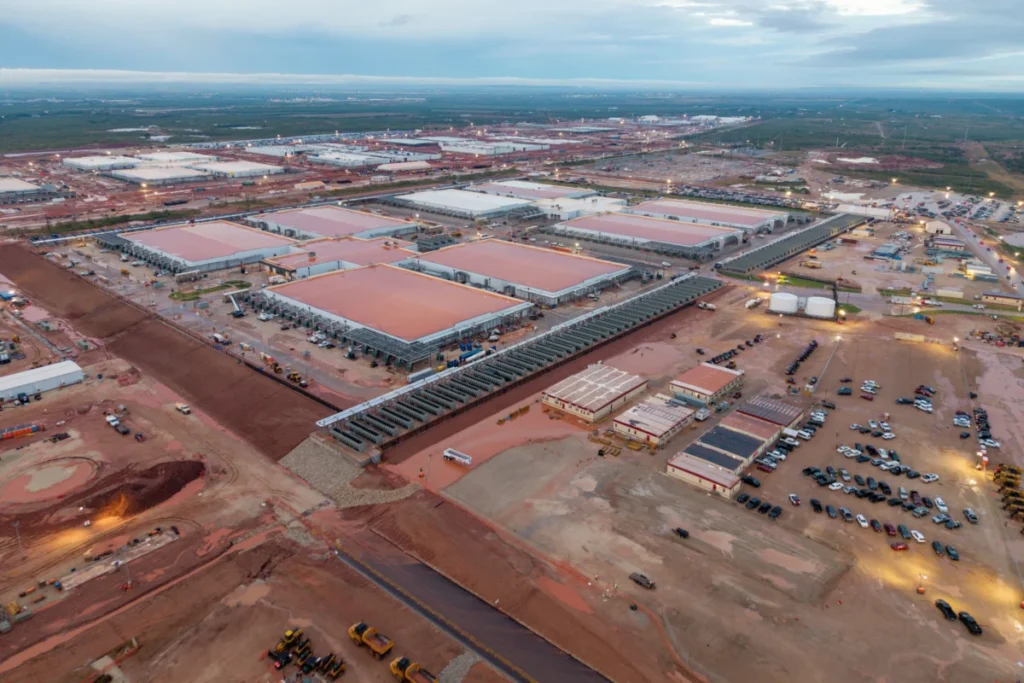
As the artificial intelligence revolution accelerates, Silicon Valley’s tech giants have spent the better part of two years marketing a greener vision for their infrastructure. In drought-stricken landscapes like Arizona, developers tout state-of-the-art, air-chilled cooling systems and closed-loop liquid designs as the pinnacle of environmental stewardship. By minimizing the water guzzled on-site to keep thousands of high-performance GPUs from overheating, these companies argue they are becoming responsible neighbors.
However, a growing body of research suggests that this focus on on-site efficiency is a tactical distraction. While the industry fixates on the water evaporated by cooling towers at the data center gate, it largely ignores the colossal "indirect" water footprint required to generate the massive amounts of electricity powering those very machines. Far from the climate-controlled server halls, coal, natural gas, and nuclear power plants are pulling billions of gallons of water from local watersheds to produce the steam needed to spin the turbines that keep the AI engine running.
The Invisible Calculus of Indirect Consumption
The discrepancy between what is reported and what is actually consumed is staggering. According to a recent study by researchers at the University of Michigan, the indirect water use associated with just three planned AI data centers in Arizona is projected to boost total annual water consumption by 14 billion gallons.
"There has been much less attention to this indirect water usage, even though that oftentimes is significantly higher than the direct water usage and has impacts on watersheds and regional water resources," explains Shaolei Ren, a professor at the University of California at Riverside who specializes in data center sustainability.
For most corporations, this "Scope 3" water usage remains an opaque black box. Meta Platforms Inc. is a rare exception in an industry that prefers to keep its environmental data close to the vest. In its 2024 sustainability report, Meta disclosed that 96% of the 21 billion gallons of water attributed to its operations was consumed indirectly—largely through the power grid. That figure represents a 120% surge from 2021, highlighting that as the company’s AI ambitions have scaled, so too has its hidden dependence on water-intensive energy.
Chronology: A Crisis of Scaling Infrastructure
The current tension between AI growth and resource management has not happened overnight.
- 2021-2022: The industry begins a rapid pivot toward massive, AI-heavy computing. Early sustainability reports focus almost exclusively on "Power Usage Effectiveness" (PUE) and direct water evaporation, leading to the adoption of "water-neutral" cooling technology.
- 2023: Researchers begin to highlight the correlation between AI training workloads and electricity-related water strain. The concept of "indirect water footprint" enters the public discourse.
- 2024: A major study by the Lawrence Berkeley National Laboratory estimates that US data centers are indirectly responsible for over 210 billion gallons of water consumption annually. Environmental nonprofit Ceres releases an even more alarming analysis, suggesting the figure could be as high as 4 trillion gallons.
- 2025-2026: Public backlash intensifies. Local communities and utilities, facing record-breaking heat and drought, begin to push back against new facility permits. Data from Data Center Watch indicates that at least 45 major projects, representing $68 billion in investment, have been delayed or canceled due to regulatory and community resistance.
The Technical Trade-Off: Efficiency Paradoxes
The industry’s push toward "water-free" cooling, such as air-chilled systems, creates an ironic and dangerous paradox. To avoid the direct, on-site consumption of water for cooling, developers use fans and heat exchangers that consume significantly more electricity.
Because the power grid is inherently water-intensive, this strategy often results in a net increase in total regional water consumption. A 2025 study co-authored by Kerri Hickenbottom, an associate professor of engineering at the University of Arizona, found that air-cooled chillers in the Phoenix area could result in indirect water consumption more than 2.5 times higher than that of water-cooled systems.
"Demand for data centers is just skyrocketing," says Hickenbottom. "And the truth of the matter is that the power and water facilities won’t be able to keep up."
The Industry Defense: A Call for Standardization
Tech giants are quick to point out that they are operating in a regulatory vacuum. Currently, there is no industry-wide, standardized protocol for calculating indirect water use. Without a common framework, companies argue that any self-reported data would be apples-to-oranges, making it difficult to hold the sector accountable.
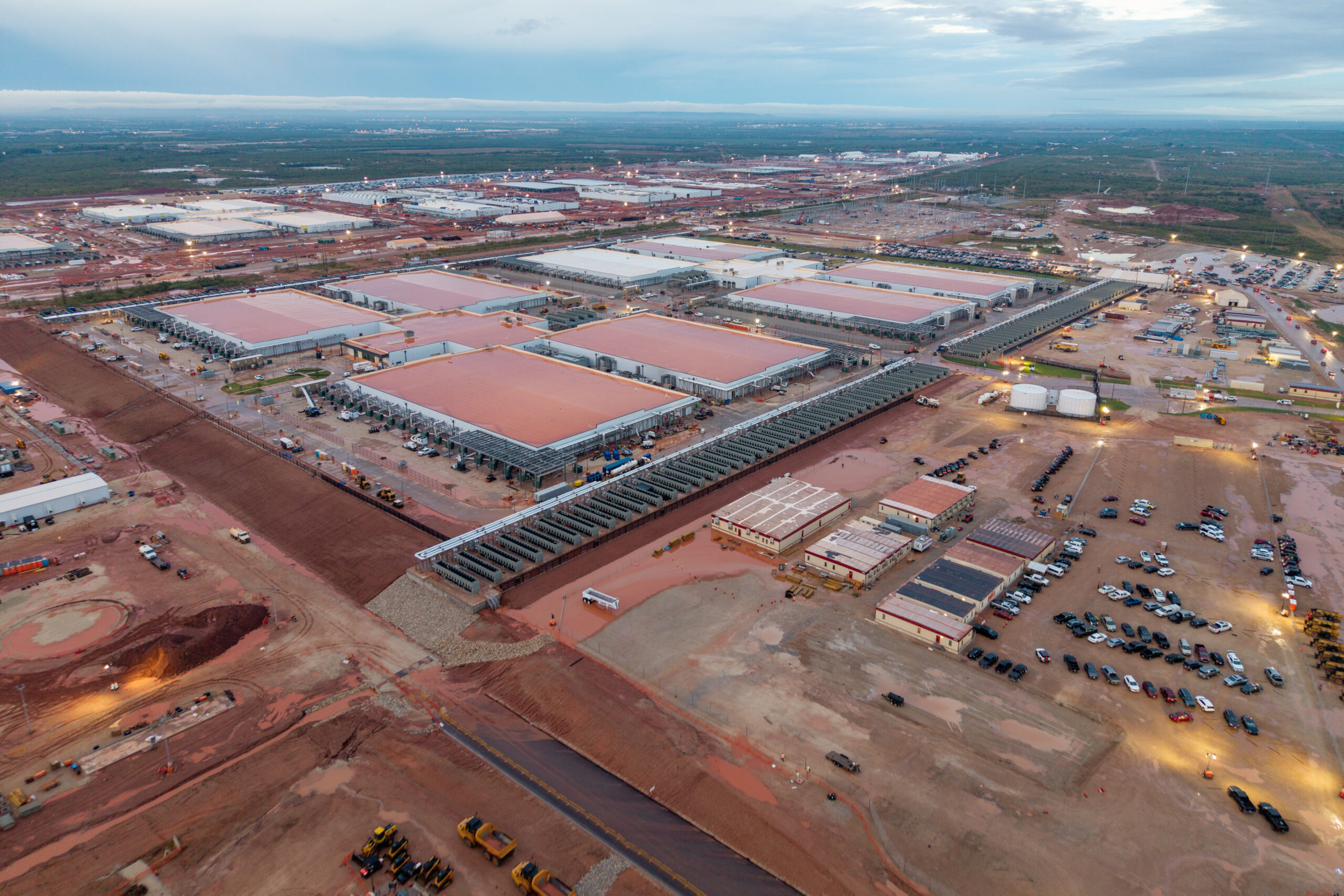
"We need industry alignment on one if we’re going to collectively report indirect water consumption," says Brandon Oyer, head of energy and water for Amazon Web Services (AWS). Amazon claims that its water efficiency has improved by 52% since 2021 through better heat management, though it, like most of its peers, still struggles to provide a comprehensive accounting of the water required by the utilities that power its servers.
Google, meanwhile, has taken a different approach. Ben Townsend, head of infrastructure strategy and sustainability, notes that the company focuses on transitioning to renewable energy. "With wind, solar, and storage, these projects have effectively zero water footprint," he claims. While renewable sources like solar and wind do indeed require minimal water compared to thermoelectric power plants, the intermittent nature of these energy sources means that until large-scale battery storage becomes ubiquitous, data centers will remain tethered to the broader, water-dependent grid.
Regional Implications: The Arizona Flashpoint
No state feels the pressure more acutely than Arizona. As the Colorado River experiences its most severe drought in over a millennium, the federal government has already implemented a 27% reduction in the state’s water allocation.
In the Phoenix metropolitan area, where municipal water systems rely on the Colorado River for up to 50% of their supply, the rapid influx of data centers is causing friction. Bloomberg Intelligence predicts that AI projects currently under development in the region could drive on-site water demand to 5 billion gallons annually—roughly 4.5% of Phoenix’s total annual production.
Yet, as local officials focus on the "on-site" disclosures required during the permitting process, the "indirect" impact remains entirely uncounted. Michael Gertzman, a spokesperson for the Phoenix Water Services Department, admits that while applicants must disclose direct usage, indirect consumption is not currently part of the evaluation criteria. This blind spot in policy allows developers to claim a small environmental footprint while the utility providers face the reality of a straining, water-heavy grid.
The Future of AI Sustainability
As the industry faces a potential reckoning, the path forward remains murky. Microsoft, while declining to disclose its indirect figures, continues to emphasize its liquid cooling designs, which the company claims can save 33 million gallons per facility annually.
"Our focus is on minimizing the water we use directly in the communities where we operate," a Microsoft spokesperson noted. However, as the research indicates, the focus on direct usage may be insufficient to address the environmental externalities of the AI revolution.
The divide between the tech industry’s sustainability narratives and the physical reality of regional resource scarcity is widening. If the AI buildout continues at its current trajectory, experts suggest that either the industry must achieve a massive breakthrough in power-grid water efficiency or face a future where regulators—spurred by the same public backlash that has already blocked billions in projects—impose strict, mandatory caps on both direct and indirect water consumption.
For now, the servers remain hot, the power plants continue to pull from drying rivers, and the true cost of our digital intelligence remains largely hidden in the shadows of the power grid.