IRS Finalizes Fee Increase to $76 for Estate Tax Closing Letters, Citing Biennial Cost-Recovery Review
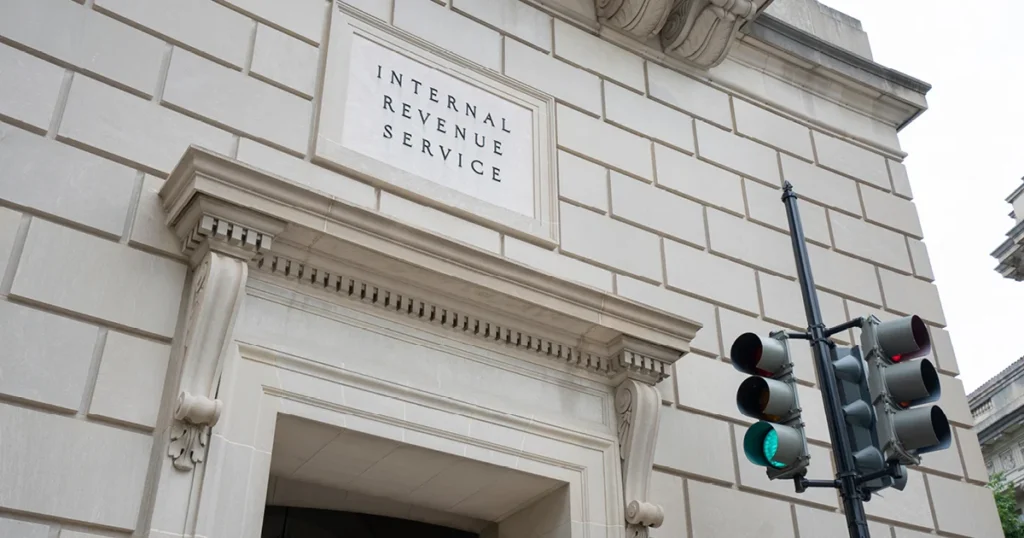
WASHINGTON — The Internal Revenue Service (IRS) and the Department of the Treasury have officially issued final regulations increasing the user fee for obtaining an estate tax closing letter—formally designated as IRS Letter 627—from $56 to $76. The final regulations (T.D. 10055), published Thursday, adopt without modification the proposed regulations that were initially introduced to the public in June.
The upward adjustment represents the latest update in a multi-step pricing shift for a document that plays a critical fiduciary role in the administration of taxable estates. Under the newly finalized rules, the $76 fee will apply to all applicable requests received by the IRS on or after October 26, 2026.
The policy shift is rooted in federal cost-accounting mandates designed to ensure that specific government-conferred benefits are funded by the recipients rather than general taxpayers. While the absolute dollar increase of $20 per request may appear modest in the broader context of estate administration expenses, tax professionals, executors, and legal practitioners must adapt their administrative workflows and client billing procedures to accommodate the new rate and the impending effective date.
Main Facts
The core mechanics of the newly finalized IRS regulations establish a direct, user-funded model for the issuance of estate tax closing letters.
- The Fee Adjustment: The cost for an estate tax closing letter (IRS Letter 627) is set to rise from $56 to $76 per request. This follows a previous adjustment that took effect on December 1, 2025.
- Effective Date: The final regulations apply strictly to requests for estate tax closing letters received by the IRS on or after October 26, 2026.
- Regulatory Authority: The price hike is executed under the authority of the Independent Offices Appropriations Act (IOAA) of 1952 (31 U.S.C. 9701), which dictates that federal agencies should, to the fullest extent possible, make services that provide special benefits to specific individuals self-sustaining.
- Cost Calculation Basis: The IRS arrived at the $76 figure through a comprehensive 2025 biennial review of its direct and indirect program costs, dividing total operational expenses by the projected annual volume of requests.
- Adoption Status: The Treasury Department and the IRS advanced the proposed rules through the public rulemaking process, reviewing external feedback before publishing the final regulations without substantive changes.
Chronology of Regulatory Developments
The journey toward the $76 user fee has evolved across several years of administrative review, regulatory proposals, and changing operational policies within the IRS. A detailed timeline outlines how the modern estate tax closing letter fee structure came to be:
The Pre-Fee Era (Prior to June 2021)
For decades, the IRS provided estate tax closing letters to executors and authorized representatives upon the completion of an estate tax examination (Form 706, United States Estate (and Generation-Skipping Transfer) Tax Return) as a standard administrative courtesy without any direct user fee.
Operational Shifts and the Elimination of Automatic Issuance (June 2021)
In June 2021, the IRS altered its long-standing operating procedure. Citing resource constraints and workload management, the agency announced it would no longer automatically issue Letter 627 upon the closing of an estate tax return audit. Instead, authorized persons were required to affirmatively request the letter, setting the stage for a centralized processing framework.
Introduction of the Initial Fee Framework (Late 2021 / Early 2022)
Recognizing that processing individual requests consumed agency resources, the IRS moved to implement user fees under the Independent Offices Appropriations Act. A fee was formally established to cover the administrative overhead of reviewing Form 706 accounts and generating the physical or electronic closing letters.
The December 1, 2025 Rate Implementation
Prior to the current regulatory action, the user fee sat at $56, a rate that took effect on December 1, 2025. This rate reflected early efforts by the Treasury to align fee schedules with updated operational cost models.
The 2025 Biennial Review and June 2026 Proposed Regulations
As required by federal financial guidelines, the IRS conducted a comprehensive biennial review of its user fee programs in 2025. This analysis calculated the true cost of the estate tax closing letter program. Following this review, the Treasury and the IRS issued proposed regulations in June, outlining the plan to increase the fee from $56 to $76.
Public Comment Window (Summer 2026)
During the mandatory public comment period following the June proposal, stakeholders had the opportunity to review the methodology and submit critiques, questions, or requests for data transparency regarding the agency’s underlying cost accounting models.
Final Rule Publication (October 2026)
Following the review of a single written comment submitted during the rulemaking window, the Treasury and the IRS officially published T.D. 10055 on Thursday, finalizing the $76 fee without modification and setting the operational launch date for October 26, 2026.
Supporting Data and Financial Analysis
Federal agencies are not permitted to set user fees arbitrarily. Under the Independent Offices Appropriations Act of 1952 and Office of Management and Budget (OMB) Circular A-25, fees must be calculated based on the full cost of rendering the service.
To determine the appropriate fee for Letter 627, the IRS conducted its required biennial review in 2025. The financial breakdown of the estate tax closing letter program reveals the specific metrics utilized by federal accountants:
- Total Program Direct and Indirect Costs: The IRS determined that the aggregate annual cost to maintain, staff, and administer the estate tax closing letter program is $615,593. This figure encompasses direct labor costs associated with reviewing files and processing requests, as well as indirect overhead, including IT infrastructure, administrative support, and facility costs.
- Estimated Annual Request Volume: Based on historical filing trends and operational data, the IRS projected an annual volume of 8,053 requests for Letter 627 from authorized persons.
- Per-Unit Cost Derivation: Dividing the total program cost ($615,593) by the projected request volume (8,053) yields a precise cost per request of $76.44, which the agency rounded down to $76 to establish the final user fee.
This mathematical transparency is designed to satisfy federal requirements proving that the fee merely recovers the cost of the government service provided and does not generate an unauthorized revenue surplus or tax.
Official Responses and Public Comments
The federal rulemaking process provides an avenue for public accountability, allowing affected industries, legal professionals, and taxpayers to scrutinize agency proposals.
The Administrative Response
In publishing T.D. 10055, the IRS and the Department of the Treasury defended the regulatory action by reiterating the legal principles governing federal user fees. The agencies emphasized that issuing an estate tax closing letter provides a specialized, tangible benefit to the requesting party—namely, confirmation that the estate tax return has been accepted or examined and that the estate’s liability is discharged—which is distinct from the broader, general benefits the IRS provides to the taxpaying public at large. Because the service confers a private, authorized benefit, federal law dictates that the costs must be borne by the beneficiary of the service rather than general tax revenues.
Public Engagement and Agency Rebuttal
The rulemaking process for the $76 fee saw remarkably light direct engagement from the public, underscoring the narrow, specialized nature of the regulation. Treasury and the IRS received exactly one written comment on the proposed regulations during the public comment window.
The lone comment did not challenge the underlying legal authority of the IRS to charge a fee under the Independent Offices Appropriations Act, nor did it dispute the general concept of cost recovery. Instead, the commenter sought a deeper level of transparency, requesting:
- Additional detailed information regarding the agency’s internal cost model.
- The release of more granular supporting data before the proposed regulations were finalized into law.
After formally reviewing and considering the submission, Treasury and the Treasury Department officials opted against altering the text or delaying the implementation of the rule. The agencies concluded that the data provided in the initial proposal and the 2025 biennial review sufficiently justified the $76 calculation under federal accounting standards. Consequently, the proposed regulations were adopted without change, moving swiftly from proposal to final rule.
Implications for Tax Practitioners, Executors, and Estates
While a $20 increase—moving from $56 to $76—is unlikely to fundamentally alter the macroeconomics of settling a high-net-worth estate, the finalization of T.D. 10055 carries several practical, administrative, and legal implications for professionals operating in the estate and trust administration space.
1. Administrative Workflow and Timing Adjustments
Executors, certified public accountants (CPAs), and estate planning attorneys must update their internal compliance checklists. Because the new fee applies to all requests received by the IRS on or after October 26, 2026, practitioners managing estates straddling this timeline must carefully track dispatch dates. Submitting a request prematurely with the old fee amount—or failing to include the correct payment mechanism alongside the request—can result in processing delays, administrative correspondence, and avoidable friction with the IRS.
2. The Legal and Practical Value of Letter 627
An estate tax closing letter is not strictly mandatory for every single step of estate administration, but it is practically indispensable. Executors and probate courts frequently rely on Letter 627 to verify that the IRS has completed its examination of Form 706.
- Distribution of Assets: Trustees and executors often hesitate to make final, unreserved distributions of estate assets to beneficiaries until they hold a closing letter in hand, mitigating the risk of personal liability if unexpected tax deficiencies emerge later.
- State-Level Closing: Many state tax authorities and probate courts look to the federal closing letter as a benchmark or prerequisite for issuing state-level tax clearances or final probate discharges.
Given the high stakes of estate settlement, a $76 fee is viewed by most practitioners as a nominal expense relative to the total cost of estate administration, but one that must be accurately accounted for in client fee agreements and accounting statements.
3. Payment Mechanics and Compliance
Practitioners must ensure they are utilizing the correct, current payment channels designated by the IRS for user fee submissions. Submitting the incorrect fee amount or using outdated payment submission protocols can cause the IRS to reject the request outright, forcing the authorized representative to restart the paperwork pipeline. Clear guidance from accounting firms to client service teams will be vital as the October 26, 2026 effective date approaches.
4. Broader Trend of User-Funded Government Services
The finalization of T.D. 10055 serves as another reminder of the federal government’s ongoing shift toward cost-recovery models for administrative services. As federal agencies face budgetary pressures and increased workloads, the reliance on user fees to fund specialized regulatory and administrative functions—such as closing letters, private letter rulings, and specialized compliance reviews—continues to expand. Taxpayers and practitioners should anticipate periodic biennial reviews and incremental fee adjustments across various IRS administrative programs in the years ahead.
For further information regarding these regulations, or to submit feedback and story ideas on related tax administration topics, contact AICPA-CIMA journalist Martha Waggoner at [email protected].