TechCrunch Mobility: A Pivotal Week for Autonomous Freight and Industry Shifts
Welcome back to TechCrunch Mobility, your definitive source for the future of transportation and the increasingly critical role artificial intelligence plays in moving people and goods. As the autumn leaves settle in the White Mountains and the industry gears up for Disrupt 2026 in San Francisco, the mobility sector is proving that the "autonomous era" is no longer a distant promise—it is becoming a regulatory and financial reality.
To ensure you stay ahead of the curve, sign up for our free newsletter here. And for those joining us at Disrupt, use the code mobility30 for 30% off your tickets.
The Regulatory Breakthrough: Removing the "Human Barrier"
For years, the promise of self-driving long-haul trucking has been hampered by a rigid, decades-old regulatory framework designed for human-operated vehicles. This week, that hurdle was significantly lowered.
The Problem: The Triangle Dilemma
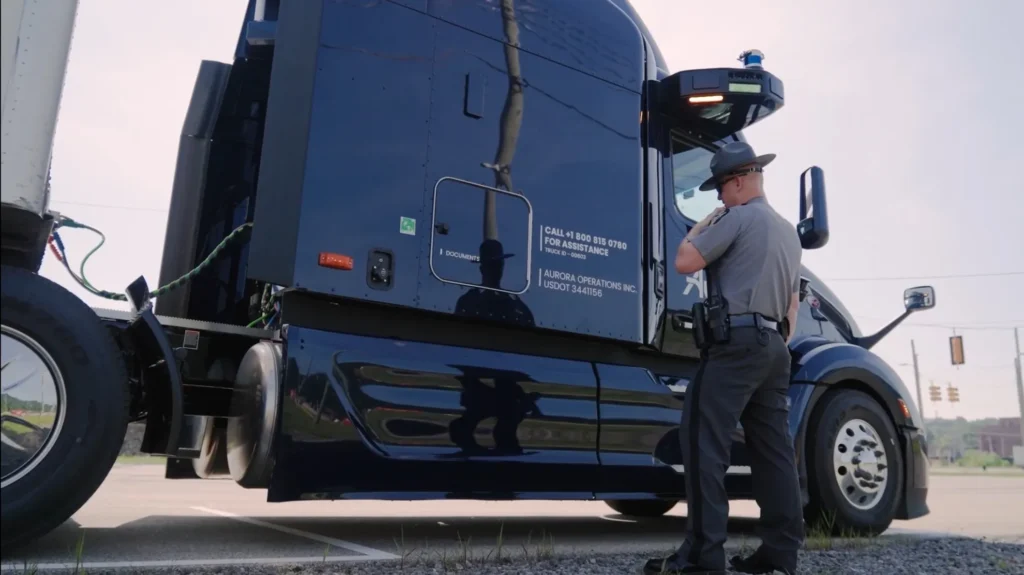
Under existing Federal Motor Carrier Safety Administration (FMCSA) regulations, a stalled or disabled big rig requires a human driver to pull over, activate hazard lights, and physically exit the cab to place reflective warning triangles on the road. This must be done within 10 minutes to alert oncoming traffic. For a fully autonomous truck, this requirement presented an existential regulatory crisis: if there is no human on board, who places the triangles?

The Resolution: A Five-Year Exemption
Following a protracted legal battle—which saw Aurora Innovation take federal regulators to court after an initial request for exemption was denied—the FMCSA has finally granted a five-year exemption.
This ruling allows autonomous trucking leaders, including Aurora Innovation and Kodiak AI, to replace physical, manual warning devices with cab-mounted, high-visibility warning beacons. This technology allows the truck to immediately signal its status to other road users the moment it experiences a mechanical failure or emergency stop, bypassing the need for human intervention.
Chronology of the Legal Fight
- January 2025: Aurora Innovation initiates legal action against federal safety regulators, arguing that current rules are incompatible with autonomous operations.
- Mid-2025: After a lower court denies the request, the dispute escalates to the District of Columbia Court of Appeals.
- 2025–2026: Companies operate under a temporary waiver as the regulatory review process continues.
- October 2026: The FMCSA grants a landmark five-year exemption, standardizing the use of cab-mounted beacons in lieu of manual triangles.
Official Responses and Industry Sentiment
The industry reaction has been one of relief and forward-looking optimism.
Gerardo Interiano, Aurora’s head of government relations and public affairs, hailed the move as a validation of the company’s commitment to safety. "This decision underscores the government’s recognition of the economic and community benefits of autonomous trucking," Interiano noted. He characterized the new beacon technology as a "critical, 21st-century solution that enhances roadside safety by immediately alerting other road users without ever needing to put a person in harm’s way."

Echoing this, Daniel Goff, VP of external affairs at Kodiak AI, emphasized the broader implications for the supply chain. "This exemption will help the industry usher in an autonomous era of freight movement on U.S. roads—one that can save lives and improve the efficiency of goods delivery."
Implications: The Standardization of Autonomy
The most pressing question following this decision is whether these cab-mounted beacons will become the industry standard for all trucking, not just autonomous fleets. If the technology proves superior in preventing roadside collisions, it could force a modernization of the entire trucking sector’s safety protocols, effectively moving the industry away from manual warning systems entirely.
The Financial Landscape: Capital Flows and Market Shifts
The mobility sector is currently defined by a "flight to quality" and massive capital deployment, as evidenced by the sheer volume of deals finalized this week.
Waymo’s Massive Debt Financing
In a surprising move, Waymo—which has historically relied on parent company Alphabet and venture capital—has pivoted to debt financing. The company secured a $5 billion loan from a consortium of heavy-hitting lenders including Blackstone, PIMCO, and Sixth Street. This influx of capital is slated to fuel the company’s rapid expansion into new U.S. markets, as well as its international ambitions in Europe and Japan.

Notable Deals at a Glance
- Parallel Systems: The rail-tech startup raised $100 million in a Series C round to further its mission of building autonomous freight trains capable of traveling 500 miles without an operator.
- Flai: The AI-driven dealership software provider secured $27 million in Series A funding, backed by Toyota’s venture arm and Y Combinator, signaling continued interest in digitizing the auto-sales funnel.
- Uber’s Acquisition: In a massive move for the food-delivery giant, Uber agreed to acquire the catering company ezCater for $2.3 billion in an all-cash deal, signaling a deepening commitment to the high-end catering and business-lunch market.
- Bloom: The startup aiming to become the "Alibaba of American manufacturing" raised $3.6 million in seed funding to streamline industrial procurement.
Industry Tidbits: Restructuring and Strategic Pivots
Not all news is growth-focused; some companies are facing the harsh reality of market maturation and public pushback.
Redwood Materials Undergoes Executive Shakeup
After cutting 10% of its workforce earlier this year to pivot toward energy storage, battery-recycling firm Redwood Materials is seeing a significant exodus of its leadership. Reports confirm that the VPs of engineering, operations, treasury, and external affairs have all departed the startup in recent weeks.
Surveillance Backlash at Flock
Flock, the surveillance camera firm known for its license plate readers, has laid off 18% of its staff (roughly 270 employees). The cuts come amidst mounting public and legal backlash regarding the privacy implications of its tracking technology.
Global Shifts: Tesla and Pony.ai
- Tesla: Following pressure from the German transportation ministry, Tesla has officially renamed its "Full Self-Driving (Supervised)" software in Europe to "Tesla Assisted Driving."
- Pony.ai: In a cross-continental collaboration, Uber and the Chinese autonomous vehicle maker have announced plans to launch a robotaxi service in London, marking a significant entry for Chinese AV tech into the European market.
Preview: Disrupt 2026 – Where AI Meets the Road
As we look toward Disrupt 2026, the agenda is packed with leaders defining the future of physical AI.

We will kick off the conference on October 13 with Rivian CEO RJ Scaringe, who will discuss the company’s ambitious roadmap for EVs, robotics, and autonomy. Other highlights include:
- Robotics Deep Dive: Fireside chats with Agility Robotics CTO Jonathan Hurst and Shield AI CTO Nathan Michael.
- Operational Excellence: Discussions on building AI systems where failure isn’t an option, featuring leaders from GM, Waabi, and Foxglove.
- The Future of Human-Machine Interface: A look at the latest in neural tech with Neuralink co-founder Max Hodak and a live demo of the Stretch 4 robot from Hello Robot.
With representation from the titans of industry—including Nvidia, OpenAI, Anthropic, and Hugging Face—Disrupt 2026 is poised to be the most consequential gathering of the year for mobility and robotics.
Don’t forget: Use code mobility30 to secure your spot. We look forward to seeing you in San Francisco.
Disclaimer: When you purchase through links in our articles, we may earn a small commission. This does not affect our editorial independence.