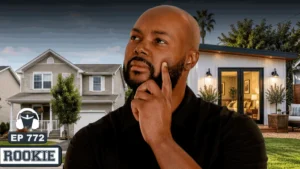
The Scaling Paradox: Why Dr. John Crutchfield Traded 600 Doors for Peace of Mind

In the world of real estate investing, the "door count" is often treated as a badge of honor—a metric of ego and accomplishment. However, for Dr. John Crutchfield, a Mississippi-based investor who scaled a modest start into a $35 million empire of over 600 units, the number of doors eventually became a source of systemic risk rather than a fountain of wealth.
Crutchfield’s journey, recently chronicled on the BiggerPockets podcast, serves as a sobering case study on the dangers of over-leveraging and the vital, often overlooked, distinction between "growth" and "profitability."
The Genesis of an Empire: From Classroom to Real Estate
Dr. John Crutchfield did not begin his career with capital; he began with a salary and a desire for financial autonomy. A former teacher, school principal, and university professor at Ole Miss, Crutchfield found himself trapped in the classic "lifestyle creep" cycle. Despite his academic credentials and salary increases, he remained financially tethered to his W-2 employment.
At age 26, after discovering the principles of passive income, Crutchfield began his journey. Lacking liquid capital, he leveraged a strategy that relied on hustle over cash: reaching out to "For Sale By Owner" (FSBO) listings on Zillow. His pitch was simple yet bold: "I’m interested in buying your house, but I don’t have any money. Will you owner finance it to me?"
After hundreds of rejections, he secured his first deal: an $80,000 property in Tupelo, Mississippi, which required $20,000 in renovations. The deal was a resounding success, eventually selling for $220,000. This initial win provided the blueprint for his expansion, moving him from a side-hustler to a full-time real estate entrepreneur by 2019.
Chronology of a Portfolio Explosion
Crutchfield’s trajectory follows a clear arc of aggressive, rapid expansion:
- 2014–2018 (Early Growth): Crutchfield focused on single-family homes and small packages, utilizing the "BRRRR" (Buy, Rehab, Rent, Refinance, Repeat) method. He relied heavily on sweat equity, often performing renovations with his family to keep costs low.
- 2019 (The Pivot): Having reached a level of portfolio performance that eclipsed his university salary, Crutchfield officially resigned from his position at Ole Miss to focus on real estate full-time.
- 2020–2022 (The Peak): During the low-interest-rate environment, Crutchfield scaled to over 600 units across multiple states, including Mississippi, Iowa, Arkansas, and Texas. His assets reached a valuation of approximately $35 million.
- 2023–Present (The Pruning): Following the Federal Reserve’s interest rate hikes, Crutchfield’s debt-servicing costs surged. He began a strategic liquidation process, reducing his portfolio by two-thirds to mitigate risk and prioritize cash flow over unit count.
The Mechanics of Over-Leverage: Supporting Data
The crux of Crutchfield’s challenge lay in the volatility of debt. Many of his properties were financed through local community banks with loans that reset every five years. In a low-interest environment, these loans were manageable, even lucrative. However, as rates shifted from 4% to 8% or higher, the math of his business changed fundamentally.
One specific example cited by Crutchfield highlights the danger: a mortgage payment on a single property jumped from $12,000 to $21,000 due to rate resets. When multiplied across hundreds of doors, this expense increase essentially wiped out the net operating income (NOI) that he had previously relied on for his lifestyle.
The lesson learned was mathematical: when interest rates rise, the "spread" between your debt service and your rental income narrows. If your portfolio is not sufficiently insulated with equity or high-margin cash flow, you are no longer the owner—the bank is.
Official Perspective: The "Door Count" Fallacy
During his conversation with BiggerPockets co-host Henry Washington, Crutchfield offered a candid assessment of why he pursued such a high volume of doors. "I got addicted to… updating my personal financial statement and seeing my net worth just going up like crazy," he admitted.
The temptation to equate size with success is a psychological trap for many investors. Washington, himself a seasoned investor, validated this, noting that many people are sold on the idea that rental income will cover their daily expenses. In reality, unexpected capital expenditures (CapEx)—such as HVAC failures, roof replacements, or plumbing issues—can arrive all at once across a 600-unit portfolio, creating a "cash crunch" that forces the investor to dip into personal savings or high-interest debt to keep the business operational.
Implications for Future Investors: "Less is More"
Crutchfield’s experience suggests a new philosophy for real estate investing in a high-rate environment:
1. The Necessity of Active Income
Crutchfield realized that relying solely on rental cash flow to support his lifestyle was a mistake. If the business is to grow, profits must be reinvested. If the owner extracts all the profit to pay for personal living expenses, the portfolio becomes stagnant and vulnerable to market shifts. Crutchfield advises that investors should maintain an active income stream—whether through flipping, brokerage, or consulting—to avoid draining their rental business of the capital it needs to survive unexpected repairs.
2. Quality Over Quantity
Today, Crutchfield is moving toward a smaller, more profitable portfolio. He is prioritizing "free and clear" properties—assets where he holds full equity and owes no debt. While he owned 600 units with debt, he finds more peace of mind in owning a fraction of that number without the looming threat of a lender’s interest rate reset.
3. The "Exit Strategy" Skill
Crutchfield notes that buying is easy, but selling is a specialized skill. Many investors enter the market without a plan for how to divest when the cycle turns. By becoming a licensed realtor and building relationships with experts in property disposal, he has been able to navigate the process of "pruning" his portfolio effectively.
Conclusion: The Path to True Freedom
The takeaway from Dr. John Crutchfield’s journey is not that real estate is a poor investment, but that the strategy of growth must match the economic reality of the time.
For aspiring investors, the message is clear: Do not let the "vanity metric" of door counts distract you from the reality of your balance sheet. Financial freedom is not found in the number of properties you own; it is found in the stability of your cash flow and the security of your equity. As Crutchfield concludes, "You don’t need hundreds of doors if you’re looking at it like paid-off rental property."
In an era of economic uncertainty, the most successful investor is not necessarily the one with the biggest empire, but the one with the most resilient one. By trading volume for value, Crutchfield has transitioned from being a slave to his portfolio to being a master of his own financial future.