Brazil’s Political Earthquake: Flávio Bolsonaro’s Surge and the Shifting Landscape of Latin America’s Largest Democracy
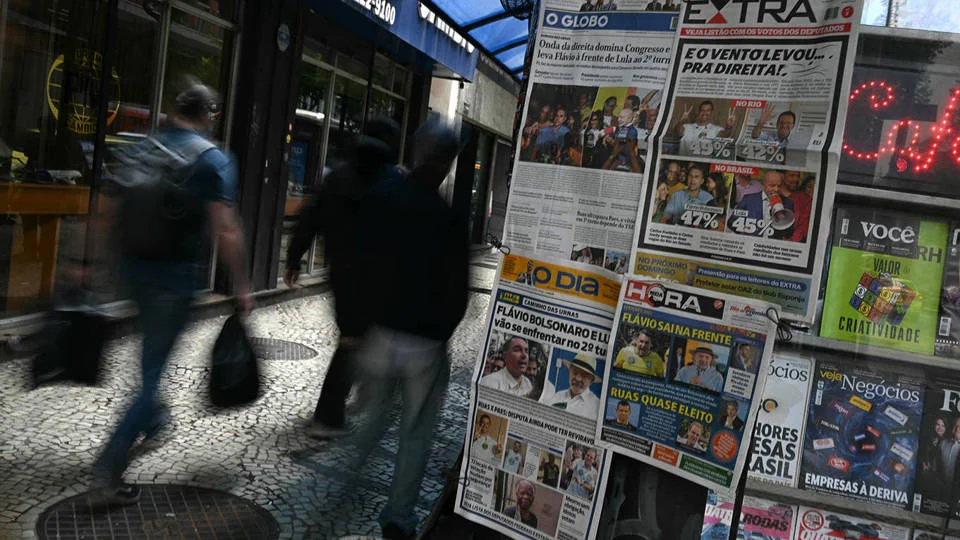
BERLIN — Brazilians awoke on Monday, October 6, 2026, to a radically transformed political map. In the first round of the nation’s high-stakes presidential election, Flávio Bolsonaro—the eldest son of former right-wing President Jair Bolsonaro—captured a commanding 47% of the vote. He narrowly outperformed the incumbent left-wing president, Luiz Inácio Lula da Silva, who secured 45%.
The outcome of Sunday’s ballot has sent shockwaves through Brasilia, Latin America, and international capitals alike. With Flávio Bolsonaro carrying the standard of the conservative movement while his father remains under house arrest for his role in a 2022 election-overturn attempt, Brazil appears poised to join a growing global wave of rightward-veering democracies. Analysts suggest the stunning result demonstrates that the ruling Workers’ Party (PT) has failed to adapt to a rapidly evolving electorate, one that is older, increasingly devout, and laser-focused on public safety, economic stability, and traditional family values.
Main Facts
The preliminary results from the Supreme Electoral Court (TSE) confirmed a deeply polarized nation heading toward a tense October runoff.
- The Frontrunners: Flávio Bolsonaro, representing the right-wing conservative coalition, secured 47% of the vote, falling just short of the absolute majority required to avoid a second round. Incumbent President Luiz Inácio Lula da Silva trailed closely with 45%.
- The Context of the Bolsonaro Campaign: Flávio’s campaign heavily leveraged the legacy of his father, Jair Bolsonaro. The former president is currently serving house arrest following legal convictions related to attempts to undermine the 2022 democratic transition.
- Demographic Realities: Sunday’s vote highlighted deep structural shifts in Brazilian society. Over the past decade, the electorate has aged significantly, evangelical Christianity has expanded its cultural and political footprint, and urban violence has re-emerged as a primary anxiety for working- and middle-class citizens.
- The Runoff Stakes: The two candidates will face off in a second-round vote later this month, setting the stage for what is expected to be one of the most contentious and polarized fortnights in modern Brazilian political history.
Chronology: How the 2026 Race Unfolded
To understand the seismic shift in Brazil’s October 2026 vote, it is necessary to trace the trajectory of the campaign leading up to this weekend’s ballot.
1. The Post-2022 Aftermath and Judicial Fallout (2023–2024)
Following Jair Bolsonaro’s defeat to Lula in 2022 and the subsequent January 8, 2023, riots in Brasília, the Brazilian judiciary launched sweeping investigations into the former administration. By 2024, Jair Bolsonaro was barred from running for public office and eventually placed under house arrest due to active legal proceedings concerning subversion and conspiracy. Denied a direct path back to the presidency, the Bolsonaro clan faced an existential crisis regarding who would inherit the mantle of the Brazilian right.
2. The Rise of Flávio Bolsonaro (Late 2024–2025)
Recognizing the need for a unified standard-bearer, the conservative coalition coalesced around Senator Flávio Bolsonaro. Unlike some of his more volatile siblings, Flávio maintained a disciplined political profile in the legislature, consolidating ties with Brazil’s powerful agribusiness sector, evangelical bloc (bancada evangélica), and law enforcement lobbies. Throughout 2025, as inflation flickered and urban crime rates stagnated in key metropolitan areas, Flávio’s platform gained steady momentum.
3. The 2026 Campaign Trail (June–September 2026)
As the official campaign kicked off, Lula’s administration ran largely on its historical record of social welfare expansion and economic resilience. However, the incumbent campaign struggled to connect with younger voters and suburban populations weary of taxation and bureaucratic friction. Flávio Bolsonaro capitalized on these vulnerabilities, running a hyper-targeted digital campaign focused on law and order, traditional family structures, and anti-corruption narratives—effectively painting the aging PT establishment as out of touch with contemporary Brazilian anxieties.
4. First-Round Shocker (October 5–6, 2026)
Exit polls and early returns on Sunday evening signaled a tighter-than-expected race. By Monday morning, with nearly all votes tallied, Flávio Bolsonaro’s 47% to 45% lead over Lula confirmed that the conservative movement had successfully bridged regional divides and mounted a formidable challenge to the incumbent left.
Supporting Data and Demographic Shifts
The dramatic resurgence of the Brazilian right is not merely a transient political phenomenon; it is rooted in profound socio-demographic transformations over the past decade.
+-------------------------------------------------------------------+
|              2026 BRAZILIAN PRESIDENTIAL FIRST ROUND              |
+-------------------------------------------------------------------+
|  Flávio Bolsonaro (Right / Conservative Coalition)  |    47%      |
|  Luiz Inácio Lula da Silva (Left / Workers' Party)  |    45%      |
|  Other Candidates / Minor Parties                   |     8%      |
+-------------------------------------------------------------------+
1. The Evangelical Factor
Brazil’s religious landscape has undergone a historic demographic transition. Over the past 20 years, the percentage of the population identifying as evangelical Protestant has surged from under 10% to over 30%, with projections suggesting parity with Roman Catholics by the 2030s. Evangelical churches—particularly neo-Pentecostal denominations—have cultivated deeply conservative stances on social issues, abortion, and education. Flávio Bolsonaro’s campaign successfully mobilized these congregations, framing the election as a moral defense of the traditional family.
2. Aging and Urban Security
The median age in Brazil has risen steadily, moving from 29 years in 2010 to nearly 35 years in 2026. Older electorates tend to prioritize economic predictability, healthcare access, and physical security. Compounding this, persistent challenges with organized crime—particularly drug cartels operating in Rio de Janeiro, São Paulo, and the tri-border regions—have kept personal safety at the forefront of public consciousness. While Lula’s social programs addressed poverty alleviation, critics argued that the administration lacked a forceful, coherent strategy to combat rising rates of extortion and violent crime.
3. Economic Anxieties
While Brazil avoided outright macroeconomic collapse during Lula’s third term, post-pandemic inflation, high interest rates, and sluggish productivity growth squeezed the urban middle class. For self-employed workers, gig-economy laborers, and small business owners—segments that expanded rapidly during the 2020s—the promise of deregulation, lower taxes, and free-market capitalism championed by the Bolsonaro camp proved far more persuasive than traditional state-centric welfare messaging.
Official Responses and International Reactions
The outcome of the first round triggered immediate, high-stakes reactions from political actors across Brazil and key international observers.
- The Incumbent Camp: Speaking from Brasília on Monday afternoon, President Luiz Inácio Lula da Silva struck a defiant yet pragmatic tone. Rallying his core supporters, Lula emphasized that the second round represents a democratic choice between progress and regression. "We have fought harder battles, and we know the heart of the Brazilian worker," Lula stated, urging progressive coalitions to consolidate behind his candidacy ahead of the runoff.
- The Conservative Movement: From his residence, former President Jair Bolsonaro celebrated the result as a vindication of the conservative movement. Flávio Bolsonaro addressed jubilant supporters in São Paulo, framing his performance as a referendum against systemic corruption and government overreach. "The people of Brazil have spoken; they want security, they want freedom, and they want a government that respects their values," Flávio declared to cheering crowds waving the green-and-yellow national flag.
- International Observations: Foreign capitals are closely monitoring the unfolding crisis. In Washington, European Union headquarters in Brussels, and across Latin America, diplomats are reassessing regional stability. A potential return of a Bolsonaro-led government to Brasília would significantly alter hemispheric dynamics, particularly regarding environmental policy in the Amazon, trade negotiations (such as the stalled EU-Mercosur trade agreement), and multilateral cooperation within BRICS.
Implications for Brazil and Global Geopolitics
As Brazil braces for a polarized two-week sprint to the runoff, the implications of this election extend far beyond domestic governance.
1. The Fate of Brazilian Democracy and Rule of Law
Should Flávio Bolsonaro secure victory in the second round, questions will immediately arise regarding the status of ongoing judicial proceedings involving his father and close political allies. A conservative victory could trigger legislative pushes to curtail the powers of the Supreme Federal Court (STF) or enact pardons, testing the resilience of Brazil’s institutional checks and balances. Conversely, a narrow victory by Lula would likely cement a deeply fractured nation where half the population views the executive branch as illegitimate or hostile to their worldview.
2. Environmental Policy and Global Climate Commitments
Under Lula, Brazil attempted to reclaim its role as an environmental leader, curbing deforestation rates in the Amazon basin and positioning itself as a host for major international climate summits (such as COP30). A Bolsonaro administration would likely pivot away from stringent federal environmental enforcement, prioritizing agricultural expansion, mining deregulation, and energy sovereignty—a shift that would alarm international climate scientists and trade partners alike.
3. A Bellwether for Global Politics
Brazil’s 2026 election reinforces a broader global trend: the enduring appeal of right-wing populism and nationalism in the face of post-pandemic economic friction, cultural anxiety, and demographic shifts. As major democracies across the Americas and Europe confront similar internal cleavages, the ultimate choice made by Brazilian voters in the upcoming runoff will serve as a powerful indicator of the ideological direction of the twenty-first-century democratic world.