Navigating the Holding Pattern: Inside the Trump-Xi Summit and the Future of Managed Sino-American Rivalry
By Minghao Zhao
Published: October 6, 2026
Main Facts
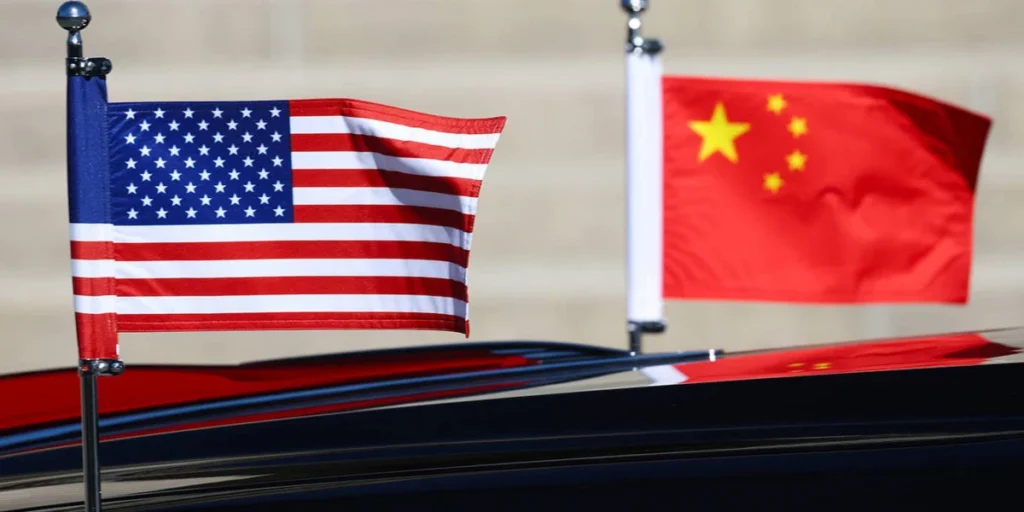
The recent high-stakes summit between United States President Donald Trump and Chinese President Xi Jinping concluded with a series of measured agreements designed to stabilize bilateral ties. Chief among the outcomes is a vital two-month extension on ongoing trade negotiations, providing both economic superpowers with a much-needed buffer against immediate tariff escalations.
In addition to the commercial reprieve, the leaders established formal bilateral dialogue channels concerning the governance and safety of Artificial Intelligence (AI), acknowledging the technology as a critical frontier for strategic competition. Furthermore, the summit produced carefully calibrated diplomatic language addressing the deeply sensitive issue of Taiwan—a perennial flashpoint in the relationship.
According to regional analysts and political insiders, the overarching outcome of the meeting is a strategic holding pattern. Neither Washington nor Beijing sought a grand bargain or a structural overhaul of their complex relationship. Instead, the primary objective—successfully achieved from Beijing’s perspective—was to prevent managed rivalry from deteriorating into outright confrontation or kinetic conflict.
Chronology: The Path to the Summit
The road to the Trump-Xi summit was paved with months of escalating rhetoric, supply chain anxieties, and high-level diplomatic jockeying. Understanding the trajectory of the relationship in the lead-up to the October 2026 meeting contextualizes the tactical nature of the summit’s results.
Early 2026: Economic Friction and Export Controls
The opening months of the year were characterized by tightening technological restrictions. Following the implementation of expanded U.S. export controls on advanced semiconductor manufacturing equipment, Beijing responded with targeted regulatory hurdles on critical mineral exports, particularly rare earth elements essential for global tech and defense manufacturing. Markets reacted with volatility, creating immense pressure from the business community in both nations to find a diplomatic off-ramp.
Mid-2026: Backchannel Diplomacy and Preparations
By late spring, ministerial-level talks began to bear fruit, laying the groundwork for a leader-level encounter. U.S. Treasury and Commerce officials held discreet preparatory meetings with their counterparts in Geneva and Singapore. Concurrently, diplomatic envoys worked painstakingly to draft mutually acceptable language on geopolitical flashpoints, most notably the Taiwan Strait, ensuring that neither side would be forced into a public retreat on core sovereignty issues.
October 2026: The Summit and the Two-Month Extension
Converging at a neutral diplomatic venue, Presidents Trump and Xi engaged in hours of direct negotiations. While structural divides over industrial policy, intellectual property, and regional security architecture remained firmly intact, the leaders recognized the immediate mutual benefit of buying time. The announcement of the two-month trade extension effectively deferred impending tariff deadlines, providing markets with a temporary sigh of relief and establishing a framework for ongoing bureaucratic engagement through the end of the year.
Supporting Data and Economic Context
The necessity of the summit’s stabilizing measures is underscored by the sheer magnitude of the economic interdependence—and friction—between the world’s two largest economies.
- Trade Volume: Despite persistent decoupling narratives and legislative efforts to "de-risk" supply chains, bilateral trade between the United States and China remains measured in the hundreds of billions of dollars annually, anchoring global macroeconomic stability.
- The Tariff Clock: The newly brokered two-month extension delays what economists estimated could have been billions of dollars in new retaliatory tariffs across consumer electronics, automotive components, and green technology goods.
- Technological Chokepoints: Data from the International Data Corporation (IDC) highlights that semiconductor trade and AI compute capabilities remain the most heavily contested domains, with export restrictions costing multinational tech firms billions in lost market capitalization over the past twenty-four months.
- Rare Earth Dependencies: Recent trade metrics indicate that while Western nations have accelerated friend-shoring initiatives, China continues to control over 60% of global rare earth mining and nearly 90% of refined processing capacity, giving Beijing significant leverage in bilateral economic standoffs.
Official Responses and Diplomatic Reactions
The aftermath of the summit triggered a wave of carefully managed statements from capitals around the globe, reflecting a mixture of cautious optimism and enduring skepticism.
Washington’s Perspective
From the White House, administration officials framed the summit as a pragmatic assertion of American strength paired with responsible statecraft. U.S. spokespeople emphasized that the two-month trade extension is not a concession, but rather a stringent review period during which Beijing must demonstrate concrete progress on market access and intellectual property protections. On AI, American officials welcomed the establishment of dialogue channels, stressing the imperative of setting guardrails for autonomous systems and military applications.
Beijing’s Perspective
In Beijing, state media and Foreign Ministry briefings highlighted the summit as a triumph of stability and mutual respect. Chinese officials reiterated that President Xi’s primary objective—preventing tensions from spiraling out of control—was decisively met. Beijing underscored that cooperation on global public goods, such as AI governance, is only possible if Washington respects China’s core interests, particularly regarding Taiwan and national sovereignty.
International and Market Reactions
Global financial markets responded with modest gains, breathing a sigh of relief as the threat of an immediate trade war escalation was pushed into the winter months. However, multilateral institutions, including the International Monetary Fund (IMF) and the World Trade Organization (WTO), issued cautionary statements. Analysts within these organizations noted that while a temporary holding pattern prevents worst-case scenarios, it fails to provide the long-term policy predictability required for robust global investment and sustainable post-pandemic economic recovery.
Implications: What the Holding Pattern Means for the Future
The Trump-Xi summit ultimately demonstrates that the United States and China have entered a mature phase of "managed rivalry"—an era where total victory or complete decoupling are viewed as mutually destructive, leading both powers to prioritize risk mitigation over conflict resolution.
1. The Institutionalization of Crisis Management
By establishing working groups on artificial intelligence and extending trade negotiations, both nations are signaling an institutionalization of competition. Rather than relying on ad-hoc diplomacy during moments of crisis, Washington and Beijing are building bureaucratic shock absorbers designed to prevent minor maritime incidents or regulatory disputes from cascading into military or economic catastrophes.
2. The Persistence of Structural Divergence
Despite the diplomatic optics of stability, the holding pattern does not resolve fundamental ideological and structural contradictions. The contest for technological supremacy, differing visions of international law, and competing security architectures in the Indo-Pacific remain unchanged. The two-month trade extension simply postpones, rather than eliminates, the day of reckoning on global trade rules.
3. Implications for Third-Party Allies
For U.S. allies in Asia—such as Japan, South Korea, and Australia—as well as European partners, the summit brings mixed implications. While regional capitals welcome any reduction in superpower friction that diminishes the risk of military conflict, the holding pattern also reinforces the reality that middle powers must continuously navigate the gravity well of Sino-American competition. Allies will likely use this two-month window to diversify their own diplomatic and economic portfolios, ensuring they are insulated from future bilateral storms.
As the international community looks toward the conclusion of the two-month trade extension, the core takeaway remains clear: the superpower relationship is no longer about finding harmonious convergence, but about mastering the art of enduring, controlled coexistence.