Beyond Emergency Aid: Why Fee-Free Remittances are Nepal’s Best Lifeline for Post-Disaster Reconstruction
By Ngozi Okonjo-Iweala and Dilip Ratha
Published: October 5, 2026
Section: Economics
Main Facts
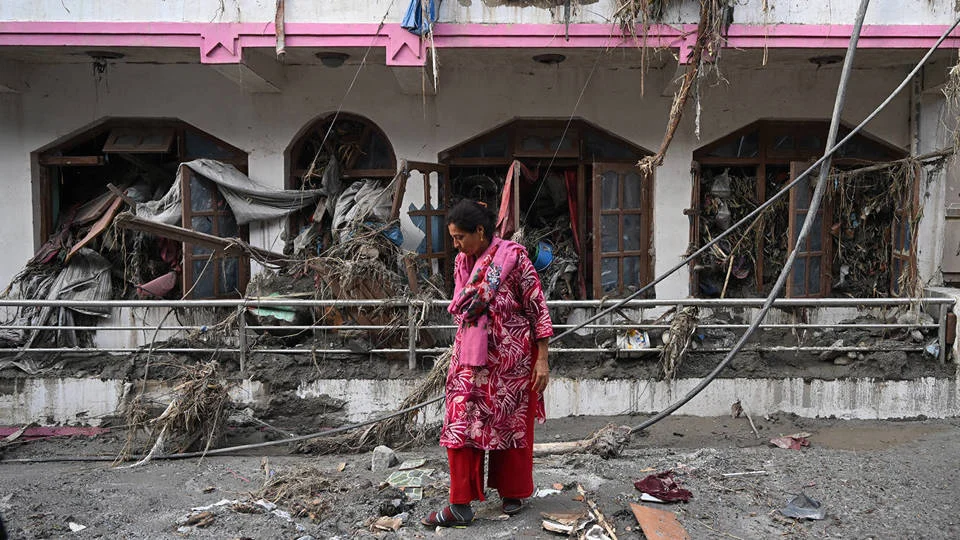
Months after catastrophic flash floods tore through the valleys and plains of Nepal on August 26, the country is transitioning from immediate rescue and relief operations to a massive, multi-year reconstruction phase. The disaster claimed over a thousand lives, laying waste to entire communities, washing away critical agricultural land, destroying residential housing, and shattering public infrastructure.
As the Himalayan nation grapples with the staggering economic toll of the disaster, global financial experts and economic leaders are looking beyond traditional international aid frameworks. A formidable, decentralized economic engine already exists to support the recovery: remittances.
In an urgent call to action, economists and policymakers argue that money-transfer companies, commercial banks, and digital financial platforms must waive all transaction and transfer fees on remittances sent to Nepal for a minimum of two months. Eliminating these barriers could instantly inject tens of millions of dollars into the domestic economy—generating financial support that dwarfs the yields of recent emergency appeals launched by the United Nations.
Utilizing existing payment networks and deep-seated family ties, fee-free remittances bypass bureaucratic red tape, delivering capital directly into the hands of survivors who need it most to rebuild their homes, restart small businesses, and restore their livelihoods.
Chronology of a Crisis: From Cloudburst to Reconstruction
To understand the urgency of the current economic intervention, one must trace the timeline of the catastrophe that unfolded in late August and the subsequent mobilization of national and international response mechanisms.
August 26, 2026: The Deluge
A series of unprecedented, torrential cloudbursts struck Nepal, triggering massive flash floods and devastating landslides across multiple districts. The sudden wall of water and debris overwhelmed riverbanks, sweeping away homes, bridges, roads, and vital agricultural assets in the dead of night.
Late August – Early September 2026: Emergency Search and Rescue
The immediate aftermath was defined by frantic search-and-rescue operations. Local authorities, security forces, and community volunteers mobilized in remote and urban areas alike. Search teams navigated treacherous mudslides and swollen rivers to rescue stranded citizens, recover bodies, and establish makeshift relief camps for the newly displaced. The human toll quickly surpassed one thousand confirmed fatalities, making it one of the deadliest weather events in Nepal’s recent history.
Mid-September 2026: The UN Appeal and Humanitarian Aid
As the scope of the disaster became fully apparent, international humanitarian agencies stepped in. The United Nations launched an emergency flash appeal to mobilize global donations for food, clean water, temporary shelter, and emergency healthcare. While international donors responded, traditional aid mechanisms proved slow to scale, encumbered by logistical bottlenecks, high overhead costs, and complex distribution channels.
October 2026: The Shift to Reconstruction and Economic Recovery
By early October, active rescue operations gave way to the daunting reality of long-term recovery. Survivors returned to sites where their homes and farms once stood, facing total economic ruin. Public infrastructure—including schools, health posts, and irrigation canals—remained severely damaged. Recognizing that traditional aid alone would be insufficient, financial economists turned their attention to the private financial lifelines connecting the Nepali diaspora to their homeland.
Supporting Data: The Power of Remittances vs. Traditional Aid
When developing nations are struck by natural disasters, international assistance typically flows through multilateral organizations, sovereign grants, and non-governmental organizations (NGOs). While vital, these channels often pale in comparison to the steady, resilient flow of money sent home by migrant workers.
The Scale of Remittance Inflows to Nepal
Even prior to the August floods, remittances formed the absolute bedrock of Nepal’s macroeconomy. According to global migration and remittance data, money sent home by millions of Nepali workers abroad accounts for nearly a quarter to nearly a third of the nation’s Gross Domestic Product (GDP). These funds sustain households, pay for education and healthcare, and drive local commerce in communities where formal banking infrastructure is sparse.
Beating the UN Appeal
When disasters strike, diaspora communities naturally increase their financial transfers to support affected family members. However, high transaction fees—often ranging from 3% to over 10% depending on the corridor, transfer method, and currency conversion rates—siphon off critical capital.
Economic projections indicate that if major remittance service providers (such as Western Union, MoneyGram, and digital platforms like Wise, Remitly, and Ripple) and correspondent banks completely waive fees for a two-month period, the resulting surge in volume and direct savings would inject financial relief several times larger than the total yield of the recent United Nations emergency appeal for Nepal.
Unlike institutional aid, which must navigate administrative layers before reaching local populations, remittance flows are immediate, targeted, and self-allocating. A family receiving a fee-free transfer can decide instantly whether to purchase corrugated iron sheets for a temporary roof, buy seeds for the next planting season, or pay for medical treatment.
Official Responses and Stakeholder Positions
The proposal to waive remittance fees has drawn sharp focus from international financial institutions, national governments, and the private sector, revealing a dynamic interplay of responsibilities in disaster response.
The Perspective of Financial Economists and Global Institutions
Advocates for the fee-waiver initiative emphasize that modern payment technology makes the suspension of fees operationally feasible. In past crises—such as natural disasters in the Philippines, Haiti, and Pakistan—calls for zero-fee remittances have met with varying degrees of success. Economists argue that financial institutions have a corporate social responsibility to absorb transfer costs during catastrophic events, viewing it as a high-impact, low-cost contribution to global stability. Furthermore, by easing the financial burden on senders, companies often see a dramatic spike in transaction volumes, which can partially offset per-transaction revenue losses.
The Response from Commercial Banks and Money-Transfer Operators
Reactions from the private financial sector have been mixed. While digital-first fintech platforms have increasingly demonstrated agility in offering zero-fee promotions during humanitarian crises, traditional brick-and-mortar correspondent banking networks often cite regulatory compliance, anti-money laundering (AML) protocols, and complex fee-sharing arrangements as barriers to instantaneous fee elimination.
However, pressure is mounting from civil society organizations and consumer advocacy groups demanding that financial giants match their public ESG (Environmental, Social, and Governance) commitments with concrete, life-saving actions on the ground.
Government and Regulatory Action
The Government of Nepal, through its central bank (Nepal Rastra Bank) and Ministry of Finance, has been actively engaging with international remittance partners to facilitate smoother liquidity flows. Policymakers recognize that foreign exchange reserves and domestic banking liquidity are under immense strain following the disaster. Encouraging a flood of fee-free remittances not only helps individual households but also shores up the country’s foreign exchange reserves, providing macroeconomic stability at a critical juncture.
Implications for Nepal’s Long-Term Economic Resilience
The aftermath of the August 26 flash floods presents both a profound tragedy and a defining moment for how Nepal—and the global community—approaches disaster recovery and economic resilience.
1. Decentralized Recovery vs. Bureaucratic Bottlenecks
The heavy reliance on remittances during this crisis underscores a broader paradigm shift in international development: decentralized economic recovery is fundamentally faster and more efficient than centralized aid distribution. When individuals manage their own recovery funds, the risk of bureaucratic corruption, administrative delay, and misallocation is significantly reduced.
2. Accelerating Financial Inclusion
The push for fee-free remittances serves as a powerful catalyst for financial inclusion. To take advantage of digital fee waivers, many unbanked or cash-dependent households in rural Nepal are prompted to open mobile wallet accounts or formal bank accounts. This integration into the formal financial ecosystem yields long-term developmental dividends, allowing families to access credit, insurance, and savings products long after the immediate disaster has faded from the headlines.
3. Strengthening Preparedness and Shock-Absorbing Infrastructure
As climate change increases the frequency and intensity of extreme weather events across South Asia, countries like Nepal must build structural resilience against future shocks. Establishing permanent, automated frameworks for zero-fee remittances during declared natural disasters could become a standard policy tool in global disaster-risk management. Financial institutions, regulators, and international bodies should institutionalize these protocols now, rather than negotiating ad-hoc agreements in the chaotic aftermath of every future catastrophe.
Conclusion
The flash floods of August 26 left a scar across Nepal that will take years to heal. While search-and-rescue operations have ended and international headlines have shifted elsewhere, the real work of rebuilding homes, farms, and lives has only just begun. By removing financial friction and making remittance transfers entirely free for the next two months, global money-transfer companies and banks have an unprecedented opportunity to amplify the generosity of the Nepali diaspora. In doing so, they can deliver a masterclass in private-sector humanitarian impact—turning family ties into Nepal’s most powerful engine for recovery.