The Accountability Gap: DOJ Closes Probe into Former Fed Chair Jerome Powell Amid Renovation Controversy
By Banking Dive Staff
Published October 5, 2026
The United States Department of Justice has officially confirmed that it will not reopen its criminal investigation into former Federal Reserve Chair Jerome Powell regarding the controversial, multi-billion-dollar renovation of the central bank’s historic complex. This decision marks a definitive end to a high-profile legal saga that had become a flashpoint for political tensions between the executive branch and the nation’s monetary policy institution.
While the DOJ has cleared Powell of criminal wrongdoing, the controversy surrounding the cost overruns at the Marriner S. Eccles Building and the adjacent 1951 Constitution Avenue Building remains a subject of intense scrutiny, fueling ongoing debates about administrative oversight, institutional independence, and the accountability of unelected officials.
The Core Findings: Mismanagement vs. Criminality
The decision to shutter the probe follows a comprehensive report from the Federal Reserve’s Office of the Inspector General (OIG), which concluded that while the renovation project was marred by significant mismanagement, there was no evidence of criminal intent or administrative misconduct that would warrant legal charges.
Attorney General Todd Blanche, speaking to Bloomberg TV on Friday, emphasized the critical distinction between managerial failure and criminal behavior. "There is a big difference between whether he did anything wrong and whether he should be held accountable, and whether there’s any criminal conduct," Blanche stated.
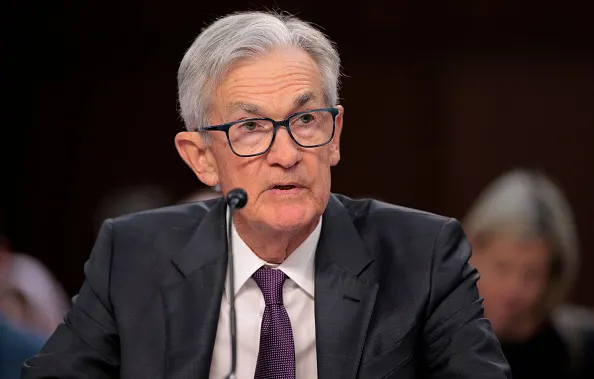
The OIG’s report painted a picture of a project that ballooned far beyond its initial fiscal projections, suffering from a lack of internal controls and poor oversight. However, for the DOJ, the evidence gathered did not cross the threshold of illegality. Blanche noted that while the Inspector General’s findings were damning regarding oversight, "not having any sort of oversight over the folks doing billion-dollar projects isn’t necessarily a crime."
A Chronology of the Renovation and Investigation
To understand the scope of the controversy, one must look at the timeline of events that brought the Fed’s internal operations into the public spotlight.
- Initial Planning and Execution: The renovation of the Eccles building and its neighbor, the 1951 Constitution Avenue complex, was initiated under Jerome Powell’s tenure. What began as a modernization project quickly faced significant hurdles, leading to massive budget overruns.
- January 2026: The Department of Justice officially opened a criminal probe into the renovation expenditures, following mounting political pressure and allegations of fiscal irresponsibility.
- April 2026: The DOJ initially dropped the investigation after a federal judge intervened. The court found that subpoenas issued in relation to the case appeared to be driven by a "dominant (if not sole) purpose to harass and pressure Powell" to either align with the administration’s policy preferences or resign.
- September 2026: The Office of the Inspector General released its long-awaited findings, confirming systemic mismanagement but no criminal acts.
- October 2026: Attorney General Blanche reaffirms that the DOJ will not reopen the case, despite ongoing political calls for further action.
The Political Firestorm: Executive Pressure
The investigation into Powell was never merely about building costs; it was inextricably linked to the broader power struggle between the White House and the Federal Reserve. President Donald Trump has been an outspoken critic of Powell’s tenure, frequently using the renovation controversy as a cudgel to demand his departure.
In a recent statement via Truth Social, President Trump responded to the OIG report with characteristic intensity, demanding that the former Fed chair be forced to resign "IMMEDIATELY!" The President argued that if resignation was not forthcoming, the government should sue Powell for "corruption or incompetence," labeling both as "completely unacceptable."
The legal proceedings have been shadowed by accusations of pretext. As noted in the April court ruling, the judiciary expressed significant concern that the investigation was being used as a tool to facilitate a leadership change at the Federal Reserve, potentially threatening the institution’s hallmark independence.

Examining the Financials: Where Did the Money Go?
The sheer scale of the renovation costs—reaching into the billions—has left many lawmakers and taxpayers questioning the procurement processes utilized by the Fed. The OIG report suggests that the "accountability gap" identified by the Attorney General stems from a failure of the Board of Governors to effectively monitor the entities responsible for project execution.
The Fed’s current leadership, led by Chair Kevin Warsh, has acknowledged the failures highlighted by the watchdog. In a September letter appended to the OIG report, Warsh pledged a new era of fiscal transparency. The Fed has committed to an independent audit to verify the accuracy and compliance of all renovation awards to date. Furthermore, the central bank is currently drafting a new framework for "clear internal controls and standards for budgeting, performance, and oversight for the future."
The goal, according to the Fed, is to ensure that "no issues of this kind will be repeated." However, for critics of the former administration, these measures are a day late and a dollar short.
Implications for Institutional Independence
The closing of the DOJ investigation leaves a complex legacy. On one hand, it upholds the legal principle that poor management—even at the highest levels of government—does not automatically equate to a criminal act. By declining to pursue criminal charges, the DOJ has avoided setting a precedent where administrative failures are criminalized, which could have had a chilling effect on future public officials.
On the other hand, the "accountability" mentioned by Attorney General Blanche remains an open question. Blanche conceded that "there’s more work to do to understand" how the project became so expensive, signaling that while the criminal aspect is closed, the political and administrative fallout may continue.

The case highlights the inherent vulnerability of independent agencies like the Federal Reserve. Because the Fed is funded through its own operations rather than direct congressional appropriations, its internal project management has historically operated with a higher degree of autonomy than other federal departments. This autonomy, designed to protect monetary policy from political interference, created a vacuum in which the renovation project was able to balloon without the typical checks and balances found in other agencies.
Future Outlook: Accountability Without Criminality
Moving forward, the focus will likely shift toward civil accountability and institutional reform. If the DOJ is finished with the matter, congressional oversight committees may seek to hold further hearings on the matter, not necessarily to pursue criminal charges, but to demand legislative changes to how the Fed manages capital projects.
For Jerome Powell, the legal victory is significant, but the reputational damage caused by the constant drumbeat of "corruption" allegations from the executive branch persists. The incident has left a permanent mark on the Federal Reserve’s public image, complicating the institution’s efforts to maintain its reputation as a non-partisan, technocratic body.
As the dust settles, the financial world will be watching closely to see if the Fed’s promised reforms—including the independent audit and stricter budgetary standards—are enough to appease skeptical lawmakers and the public. The saga serves as a cautionary tale for federal institutions: in an era of hyper-partisanship, the line between managerial oversight and political weaponization is increasingly thin, and every dollar spent is under the microscope of a public—and an executive—that demands total transparency.
Ultimately, the DOJ’s decision underscores the finality of the OIG’s report: the Fed may have failed in its fiduciary duty to manage its own house, but it did not cross the line into criminality. Whether this is enough to satisfy the demands for accountability remains the central, unresolved question of this administration.