Europe’s Technological Crossroads: Escaping the Trap of Yesterday’s Champions
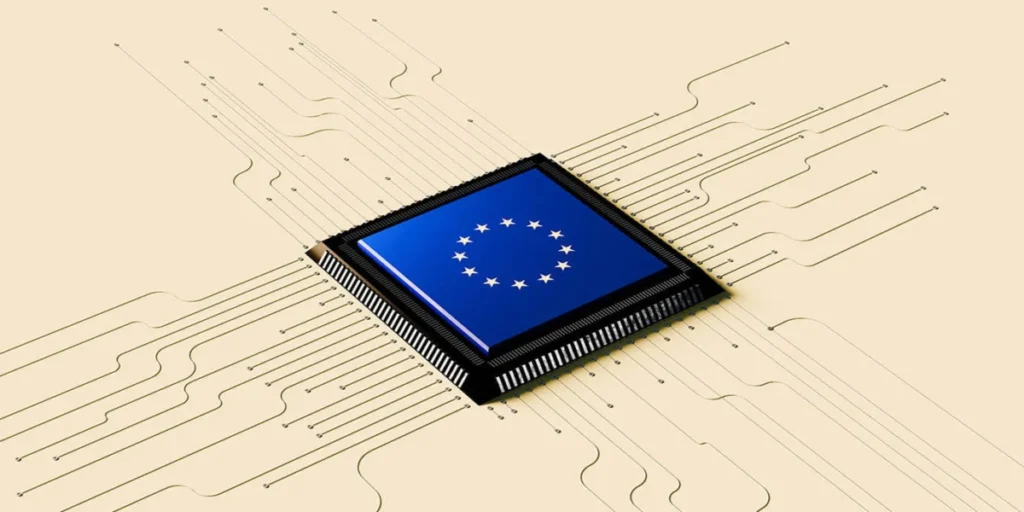
By Carl Benedikt Frey
Published: October 2, 2026
OXFORD — Technology has always been the ultimate currency of global power. For centuries, when China sat near the world’s frontier of invention, it was simultaneously a master of statecraft and geopolitical dominance. However, the advent of the Industrial Revolution in Europe fundamentally redrew the map. The decisive technologies of the era—steam power, advanced metallurgy, continental railway networks, and rifled artillery—shifted the balance of global power decisively westward. That shift inaugurated a period indelibly embedded in China’s collective memory as the "century of humiliation," a historical lesson Beijing has spent the modern era ensuring it never repeats.
Today, history is rhyming, but the geopolitical axes have shifted. Europe, once the undisputed workshop of the world and the crucible of industrial capitalism, finds itself at a profound economic and technological crossroads. Having built a remarkably stable yet sclerotic economic framework that meticulously protects yesterday’s industrial champions, the continent is increasingly doing so at the direct expense of tomorrow’s potential market winners.
To remain economically competitive, strategically sovereign, and secure in the volatile landscape of the 21st century, Europe must urgently abandon its reliance on legacy protective models. In their place, it requires a revolutionary economic architecture explicitly geared toward promoting domestic innovation, scaling emerging enterprises, and commercializing breakthrough technologies from laboratory to market.
Main Facts
The core structural dilemma facing the European Union is not a deficit of intellectual capital or scientific brilliance, but a systemic failure in translation, scaling, and market dynamics.
- The Innovation-Commercialization Chasm: While European universities and research institutions consistently produce world-class foundational science, the continent routinely fails to nurture these breakthroughs into global corporate giants.
- The Regulatory Fortress: Europe’s regulatory framework—while successful in establishing high standards for consumer privacy, environmental protection, and labor rights—often operates as a heavy-handed barrier to entry, suffocating early-stage startups under compliance overhead before they can achieve escape velocity.
- Capital Market Fragmentation: Unlike the unified venture capital and equity markets of the United States or the state-directed financial leviathans of China, Europe’s capital markets remain fractured along national lines. This fragmentation denies high-growth firms the deep pools of risk capital necessary to scale rapidly.
- The Incumbency Bias: European industrial policy has historically favored legacy sectors—such as traditional automotive manufacturing, heavy chemicals, and legacy engineering—shielding them from creative destruction through subsidies, protective tariffs, and stringent market regulations.
Chronology: The Evolution of Europe’s Technological Lag
To understand how Europe arrived at this precarious juncture, it is essential to trace the historical and policy milestones that shaped the continent’s contemporary economic model.
1. Post-War Reconstruction and the Welfare State (1945–1970s)
In the wake of the Second World War, European nations prioritized social cohesion, labor security, and the reconstruction of physical infrastructure. The "Rhine-Alpine" model of capitalism and various forms of social democracy were forged to guarantee stability. Industrial policy focused on national champions in steel, coal, and manufacturing, laying the groundwork for high living standards but institutionalizing state-business interdependence.
2. The Single Market and the Digital Awakening (1986–2000s)
The signing of the Single European Act and the subsequent launch of the Maastricht Treaty created a borderless market of goods, services, and capital. However, as the global economy pivoted toward the digital revolution in the late 1990s and early 2000s, European policymakers largely treated software, internet services, and early digital platforms as secondary phenomena. While Silicon Valley built the foundations of the modern internet economy, European policy remained anchored in physical goods and industrial engineering.
3. The Sovereign Debt Crisis and Regulatory Turn (2009–2019)
The 2008 global financial crisis and the subsequent Eurozone sovereign debt crisis paralyzed European investment in emerging technologies as governments implemented austerity measures. During this decade, Europe sought to assert global leadership not through technological innovation, but through regulatory power—exemplified by the rollout of the General Data Protection Regulation (GDPR) in 2018. While GDPR set the global gold standard for privacy, it inadvertently created massive compliance moats that cemented the dominance of incumbent American tech giants while starving European upstarts of compliance-ready capital.
4. The Twin Transitions and Strategic Autonomy (2020–Present)
The COVID-19 pandemic, followed by the geopolitical shock of Russia’s invasion of Ukraine and intensifying U.S.-China technological decoupling, forced a harsh reckoning in Brussels and national capitals. Concepts like "strategic autonomy" entered political lexicons. Initiatives such as the European Chips Act and the Green Deal Industrial Plan represent attempts to reclaim manufacturing and technological sovereignty. Yet, these programs remain hampered by slow bureaucratic rollout, state-aid rule disputes, and a lingering reluctance to let uncompetitive legacy firms fail.
Supporting Data and Economic Indicators
The symptoms of Europe’s innovation deficit are clearly visible across macroeconomic data points, comparative corporate valuations, and venture capital flows.
- R&D Expenditure Discrepancy: According to OECD data, the European Union consistently invests a significantly smaller share of its Gross Domestic Product (GDP) into Research and Development (R&D) compared to the United States, South Korea, and China. While the EU average hovers around 2.3% of GDP, leaders like South Korea exceed 4.8%, and the U.S. invests upwards of 3.5%, heavily propelled by private sector venture capital.
- The Valuation Gap: A decade ago, European and American corporate valuations were far more closely aligned. Today, the capitalization gap is staggering. The market value of the "Magnificent Seven" U.S. tech firms dwarfs the entire market capitalization of major European stock indices combined. Europe boasts virtually zero hyperscale cloud providers, dominant social media networks, or frontier artificial intelligence laboratories of global scale.
- Venture Capital Drought: European startups face a severe "scale-up valley of death." While early-stage seed funding has improved markedly over the past ten years, late-stage venture capital (Series B and beyond) remains profoundly thin. Consequently, successful European founders routinely relocate their headquarters to the United States to access deep pools of institutional growth capital.
- Brain Drain: Skilled European engineers, AI researchers, and biotechnology innovators continue to emigrate to North America, attracted by higher compensation packages, flexible equity options, and dynamic entrepreneurial ecosystems.
Official Responses and Policy Debates
Recognizing the existential threat posed by technological stagnation, European policymakers have launched high-profile diagnostic efforts and policy overhauls, though political consensus remains elusive.
The release of the landmark report on European competitiveness by former Italian Prime Minister Mario Draghi served as a watershed moment for EU policymaking. Draghi bluntly warned that the European Union faces a "slow agony" unless it dramatically boosts productivity through massive, coordinated investments in innovation, decarbonization, and defense technology.
"We have reached a point where, if we do not change, we will have to compromise our welfare, our environment, or our freedom," Draghi stated during his presentation to the European Parliament. "The European model has been built on open trade, predictable multilateralism, and social inclusion. But the world has changed drastically. Our competitors are weaponizing economic interdependence, and our productivity growth is anaemic."
In response, the European Commission has advanced proposals to complete the Capital Markets Union (CMU)—a long-stalled initiative designed to integrate the continent’s fragmented national stock exchanges and channel private savings into high-growth innovative firms. However, resistance from member states wary of ceding financial sovereignty to Brussels has crippled legislative progress.
Concurrently, national governments remain deeply divided over state-aid rules. Wealthier member states, such as Germany and France, have advocated for relaxing restrictions on state subsidies to support domestic green tech and semiconductor manufacturing. Conversely, smaller member states argue that loosening state-aid rules disproportionately benefits deep-pocketed nations, distorting the Single Market and crushing competition from peripheral economies.
Implications: The Path Forward for Europe
The stakes for Europe’s economic future could not be higher. If the continent continues down its current trajectory of protecting legacy industries while erecting regulatory barriers around digital and deep-tech sectors, the implications will extend far beyond economic sluggishness.
1. Geopolitical Irrelevance
In a multipolar world dictated by techno-nationalism—where access to advanced semiconductors, quantum computing, and sovereign artificial intelligence dictates geopolitical leverage—Europe risks becoming a regulatory museum. Without indigenous technology leaders, the continent will be forced to choose between digital vassalage to Washington or technological dependence on Beijing.
2. Erosion of the Social Model
Europe’s generous welfare state, universal healthcare systems, and robust labor protections are ultimately financed by sustained productivity growth and corporate tax revenues. As legacy manufacturing faces structural pressures from automation and global competition, stagnant productivity will make the European social model increasingly unaffordable.
3. The Necessity of Creative Destruction
To break this cycle, European leaders must embrace the foundational engine of capitalist dynamism: creative destruction. This requires a cultural and political shift away from shielding failing enterprises toward empowering dynamic challengers. Specific policy imperatives include:
- Radical Deregulation for Scale: Streamlining EU-wide corporate law to allow startups to scale effortlessly across all 27 member states without navigating a labyrinth of localized labor, tax, and commercial regulations.
- Deepening the Capital Markets Union: Unlocking the trillions of euros currently sitting stagnant in European retail bank accounts and pension funds, channeling them directly into venture capital and equity growth funds.
- Reforming Procurement: Directing public procurement budgets—particularly in defense, health, and digital infrastructure—toward innovative domestic and European scale-ups, mirroring the historic role of agencies like DARPA in the United States.
Europe’s history is defined by periods of radical reinvention. The industrial prowess that once reshaped the globe was not born of caution, but of bold experimentation, risk-taking, and institutional adaptability. If the continent is to secure its prosperity, sovereignty, and democratic values in the 21st century, it must rediscover that pioneering spirit—dismantling the protective cocoons of yesterday to unleash the economic champions of tomorrow.