IRS Finalizes Fee Increase to $76 for Estate Tax Closing Letters, Citing Full-Cost Recovery Mandate
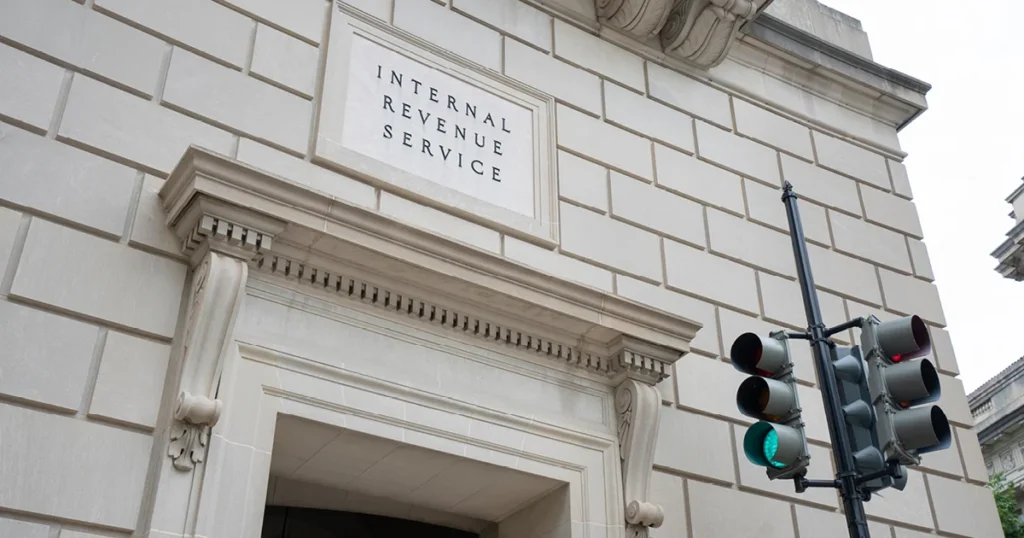
WASHINGTON — The Internal Revenue Service (IRS) and the Department of the Treasury have officially issued final regulations increasing the user fee for obtaining an estate tax closing letter—widely known as IRS Letter 627—from $56 to $76. The final rule, designated as Treasury Decision (T.D.) 10055, was published following a brief public comment period and adopts without modification the proposed regulations that were initially introduced in June.
The adjustment represents a $20, or roughly 35.7%, increase over the previous fee structure that went into effect late last year. According to federal regulatory documents, the updated fee applies to any requests for estate tax closing letters received by the IRS on or after October 26, 2026.
While the absolute dollar figure remains modest in the context of high-net-worth estate administration, the policy underscores the federal government’s ongoing adherence to strict cost-recovery mandates for specialized agency services. Tax practitioners, estate planners, and executors must now factor this updated fee into their administrative checklists when wrapping up complex decedent estates.
Main Facts
The core of the new regulatory action centers on the administrative pricing of IRS Letter 627, a document frequently requested by executors, personal representatives, and other authorized persons to confirm that the IRS has completed its examination of a federal estate tax return (Form 706) and that the agency’s file on the estate is officially closed.
- The New Fee: The cost for each estate tax closing letter increases from $56 to $76.
- Effective Date: The new fee applies to all requests received by the IRS on or after October 26, 2026.
- The Legal Authority: The fee adjustment is rooted in the Independent Offices Appropriations Act (IOAA) of 1952 (codified at 31 U.S.C. 9701), which dictates that services provided by federal agencies should be self-sustaining to the fullest extent possible.
- Cost Calculation: The IRS arrived at the $76 figure by conducting a formal biennial review of the program in 2025. Agency analysts calculated that the total direct and indirect annual costs of running the estate tax closing letter program equal $615,593. Dividing this figure by an estimated 8,053 annual requests yielded a per-unit cost of $76.25, which was rounded down to $76.
Chronology of the Regulatory Action
The path to the final $76 fee unfolded over several months, marked by routine regulatory checkpoints, cost assessments, and a brief public comment window.
December 1, 2025: The Prior Fee Takes Effect
The baseline for the recent change was established when a previous adjustment set the estate tax closing letter fee at $56. This rate was the product of earlier evaluations aimed at aligning user fees with the actual operational costs borne by the government.
June 2026: Proposed Regulations Issued
Following the completion of the IRS’s 2025 biennial review—which revealed rising administrative, personnel, and technological overhead associated with processing Form 706 returns and issuing corresponding letters—the Treasury Department and the IRS published proposed regulations. These proposals formally laid out the mathematical justification for elevating the fee from $56 to $76 per request.
Summer 2026: Public Comment Period
In accordance with the Administrative Procedure Act, the proposed rule was opened to public scrutiny. During the comment window, the Treasury and the IRS received one formal written submission from a stakeholder questioning the underlying economic model and asking for greater transparency regarding the agency’s data points before finalization.
October 2026: Final Rule Published (T.D. 10055)
After reviewing the single public comment and determining that no alterations to the economic model or fee structure were warranted, the Treasury and the IRS published T.D. 10055, adopting the proposed regulations without change and setting the implementation clock for late October 2026.
Supporting Data and Financial Mechanics
To understand why the IRS charges for these letters, one must examine the legal and economic framework governing federal user fees. Under the Independent Offices Appropriations Act (IOAA) of 1952, federal agencies are authorized to establish fees for services that confer a "special benefit" to an identifiable recipient beyond those accruing to the general public.
The issuance of an estate tax closing letter is classified precisely as such a service. While the general public funds the baseline operations of tax administration, an executor or authorized representative requests Letter 627 for specific, private utility: to provide comfort to beneficiaries, probate courts, and state tax authorities that the federal estate tax liability has been fully satisfied and audited, thereby clearing the way for final asset distribution.
The Math Behind the $76 Fee
The Office of Management and Budget (OMB) Circular A-25 establishes federal policy regarding user fees, directing agencies to calculate the "full cost" of providing a service. Full cost includes all direct and indirect costs of rendering the service, including:
- Direct and indirect personnel costs (salaries and benefits for IRS personnel processing the requests).
- Physical overhead, office space, and utilities.
- Information technology infrastructure, database maintenance, and communication expenses.
In its 2025 biennial review, the IRS calculated these variables for the estate tax closing letter program:
| Metric | Amount / Figure |
|---|---|
| Total Annual Direct & Indirect Costs | $615,593 |
| Estimated Annual Requests (Volume) | 8,053 |
| Calculated Cost Per Request | $76.25 |
| Final Imposed Fee | $76.00 |
By dividing the total program cost by the projected volume of requests, the agency arrived at a per-unit cost that reflects the current inflationary environment and labor expenses required to verify return closures and issue the documentation.
Official Responses and Stakeholder Feedback
The rulemaking process for T.D. 10055 was notably quiet compared to major tax overhauls, drawing only a single public comment. However, that comment highlights the ongoing tension between regulated taxpayers and federal agencies regarding transparency in bureaucratic pricing models.
The Public Comment and Government Response
The sole written submission received by the Treasury Department and the IRS raised questions about the granular details of the agency’s cost accounting model. Specifically, the commenter requested that the IRS disclose additional underlying data regarding how direct and indirect costs were allocated to the estate tax closing letter program before moving forward with a finalized rule.
In the preamble to T.D. 10055, Treasury and IRS officials indicated that they reviewed the submission carefully. Ultimately, however, the agencies declined to alter the rule or publish additional data arrays. The government maintained that the methodology employed during the 2025 biennial review fully complied with OMB Circular A-25 and standard federal accounting principles, which do not mandate the public release of proprietary or internal administrative overhead breakdowns beyond what is published in the notice of rulemaking. Consequently, the proposed regulations were adopted unchanged.
Implications for Tax Practitioners, Executors, and Estates
While a $20 fee increase will not disrupt the macroeconomics of multi-million-dollar estates, the new regulation carries several practical, legal, and procedural implications for estate planning professionals and personal representatives.
1. Administrative Budgeting and Minor Cost Adjustments
For executors managing estate administration expenses, the $76 fee is a minor administrative disbursement, but it must be properly accounted for on accounting schedules submitted to probate courts. Practitioners should update their client intake sheets, retainer agreements, and fee schedules to reflect the new cost of obtaining Letter 627.
2. The Operational Value of Letter 627
The estate tax closing letter has long been a vital document in estate administration. Although the IRS historically issued these letters automatically after processing a Form 706, a procedural shift instituted several years ago required authorized persons to explicitly request and pay for the letters.
- Peace of Mind: Executors rely on Letter 627 to assure beneficiaries and probate judges that no unexpected federal tax liabilities remain.
- Fiduciary Protection: Distributing estate assets before receiving a closing letter or a formal closing/discharge certificate can expose personal representatives to personal liability if the IRS later assesses additional taxes. The $76 fee is thus a minimal price for a high degree of fiduciary insulation.
3. Alternative Verification Methods
Because requesting an estate tax closing letter incurs both a fee and a processing wait time, some practitioners have utilized IRS account transcripts (such as a Return Transcript or Account Transcript for Form 706) as an alternative indicator that an examination has concluded or that the statute of limitations has run. However, many financial institutions, title companies, and probate courts still express a formal preference for Letter 627, ensuring a steady stream of annual requests—estimated by the IRS at over 8,000 per year—despite the fee.
4. Broader Trend of User Fee Expansion
The increase to $76 reflects a broader, multi-decade federal trend toward user-funded government services. Across numerous agencies—from the U.S. Patent and Trademark Office to U.S. Citizenship and Immigration Services and the IRS—the philosophy of "beneficiary pays" has gained firm ground. As operational costs, cybersecurity requirements, and wage pressures rise within the federal workforce, taxpayers can anticipate that future biennial reviews will likely bring incremental upward adjustments to other specialized administrative fees.
Conclusion
The finalization of T.D. 10055 marks a minor yet notable milestone in federal tax administration. By bumping the estate tax closing letter fee from $56 to $76, the IRS continues to fulfill its statutory obligation to keep specialized programs self-sustaining under the Independent Offices Appropriations Act of 1952. For estate planning attorneys, certified public accountants, and executors navigating the final stages of closing an estate, the rule serves as a reminder to account for the updated fee on all Form 706 submissions received by the IRS on or after October 26, 2026.