The Geothermal Revolution: Fervo Energy Hits Commercial Milestone at Cape Station
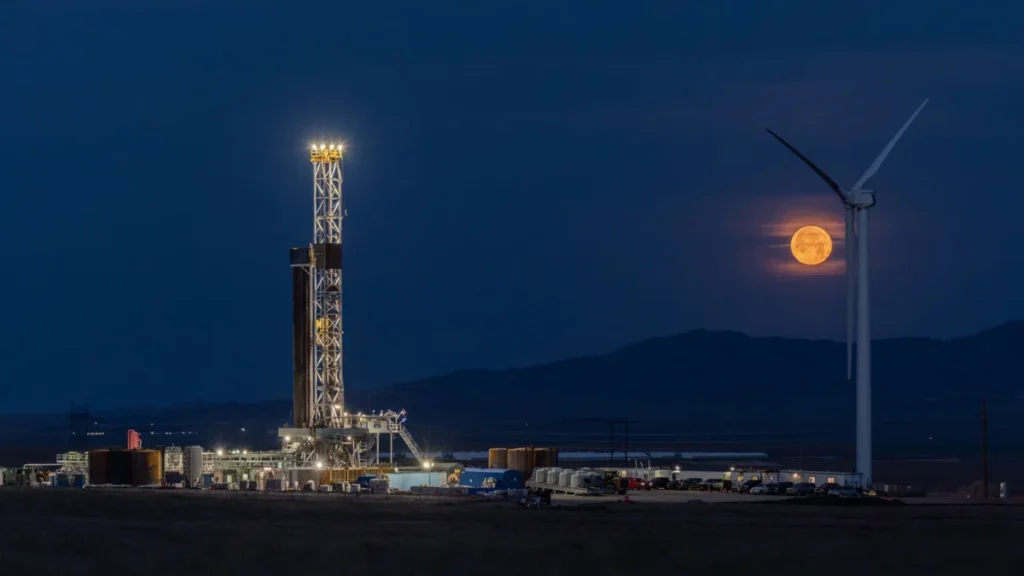
In a landmark achievement for the renewable energy sector, Fervo Energy has officially transitioned from an ambitious startup to a critical player in the global power grid. On September 30, the company began delivering electricity from its Cape Station power plant to the grid, hitting this commercial milestone one full day ahead of its projected schedule. This development marks the first time an enhanced geothermal energy (EGE) company has successfully synchronized a large-scale project with the grid, signaling a potential paradigm shift in how the world generates clean, baseload power.
The initial phase of the Cape Station project now operational accounts for one-third of a planned 100-megawatt (MW) capacity. However, this is merely the prologue to a much larger vision; Fervo has indicated that the site possesses the geological potential to expand to as much as 4 gigawatts (GW) of total capacity—a figure that would rival the output of several large-scale nuclear power plants.
The Chronology of a Breakthrough
The journey to Cape Station was defined by an aggressive timeline and the application of unconventional engineering techniques. From the initial groundbreaking to the commencement of commercial operations, the first block of the facility took just 23 months to complete. In the world of utility-scale energy projects, which often face multi-year delays and complex bureaucratic hurdles, this speed is unprecedented.
Key Milestones:
- 2017: Fervo Energy is founded, aiming to disrupt the geothermal industry by adopting horizontal drilling and multistage fracturing techniques pioneered by the oil and gas sector.
- 2023–2024: The company secures significant financial backing, culminating in a highly successful IPO in May 2026 that raised $1.9 billion.
- Late 2026: Construction at the Cape Station site accelerates.
- September 2026: The plant synchronizes with the electrical grid.
- September 30, 2026: Cape Station officially begins selling electricity, beating the internal target.
Looking forward, Fervo is not resting on its laurels. The engineering team is already working to optimize the construction cycle. By refining their processes and supply chain logistics, the company aims to reduce the development timeline for future blocks to just 18 months. This “factory-style” approach to geothermal energy—treating each block like a standardized product—is a radical departure from the bespoke, high-risk geothermal projects of the past.
Supporting Data and Technical Innovation
To understand why Fervo’s success is being hailed as a “win” for the energy transition, one must look at the fundamental difference between traditional geothermal and enhanced geothermal systems (EGS).
The EGS Advantage
Traditional geothermal energy relies on finding rare, naturally occurring pockets of steam or hot water near the Earth’s surface. These sites are geographically limited and notoriously difficult to find. In contrast, EGS taps into the heat inherent in the Earth’s crust regardless of surface-level indicators. By drilling deeper into hot, dry rock and using hydraulic stimulation to create permeable reservoirs, Fervo can circulate water through the rock to absorb heat, which is then brought to the surface to spin turbines.
Scalability and Financial Backing
The scale of Fervo’s operation is bolstered by significant capital investment. Having raised over $1.3 billion as a startup from heavyweights like Breakthrough Energy Ventures, Congruent Ventures, and Capricorn Investment Group, the company entered the public market with a strong balance sheet. The $1.9 billion raised in its May 2026 IPO provided the liquidity necessary to move from pilot programs to industrial-scale deployment.
The economics are equally compelling. Because geothermal energy is "baseload"—meaning it provides power 24/7, unlike wind or solar which are intermittent—it commands a premium in a market increasingly worried about grid reliability.
Official Responses and Strategic Partnerships
The energy industry has taken notice of Fervo’s rapid progress. The company’s ability to deliver consistent power has attracted major off-takers, including Google and Southern California Edison. For these corporations and utilities, geothermal represents the "holy grail" of carbon-free energy.
"No team has ever built a project like this anywhere in the world, and we did it ahead of schedule," said Tim Latimer, co-founder and CEO of Fervo Energy. His statement reflects the growing confidence within the company that they have moved past the “science experiment” phase and into the “commercial execution” phase.
Google’s involvement, in particular, is strategic. As a massive consumer of energy to power its global network of data centers, Google has a vested interest in ensuring that its carbon-neutral pledges are backed by reliable, clean power. By securing 400 MW from Fervo, Google is effectively hedging against the intermittency issues that plague standard renewable portfolios.
Implications for the Future of Data Centers
Perhaps the most significant implication of Fervo’s success lies in the booming data center industry. With the rise of Artificial Intelligence and high-performance computing, data center operators are facing a power-starvation crisis. Traditional grids are struggling to keep up with the massive load requirements of new AI server racks.
The "Modular" Energy Solution
Data centers are typically built in phases, adding server capacity as demand grows. Fervo’s modular approach to geothermal—developing the project in 33-megawatt blocks—aligns perfectly with the phased development of hyperscale data centers. This allows operators to scale their clean power consumption in lockstep with their computational needs.
A New Model for Clean Energy
The success at Cape Station suggests that the oil and gas industry’s "secret sauce"—horizontal drilling and advanced subsurface modeling—can be pivoted toward green energy with remarkable efficiency. This has profound implications for the labor market as well, as oilfield service workers find their skills directly applicable to the burgeoning EGS sector.
Looking Beyond Cape Station: The 4-Gigawatt Vision
If Fervo manages to scale Cape Station to its projected 4 GW capacity, it would fundamentally change the energy landscape of the Western United States. A 4 GW facility would be one of the largest single-site renewable energy projects in the world.
However, the path to 4 GW is not without challenges. It requires sustained regulatory support, continued advancements in drilling speed, and the management of seismic risks associated with subsurface stimulation. Despite these hurdles, the momentum is clearly in Fervo’s favor.
The industry is watching closely. If Fervo can continue to shrink its construction timelines and drive down the levelized cost of energy (LCOE), other players in the EGS space are likely to follow suit. The transition from the "incubation" phase to the "industrialization" phase of geothermal energy appears to be well underway.
In conclusion, the activation of the Cape Station plant is more than just a successful engineering project; it is a proof-of-concept that the heat beneath our feet can be harnessed on a scale capable of powering the digital future. As Fervo Energy continues to bridge the gap between speculative technology and reliable utility-scale power, the dream of a 24/7 carbon-free grid moves one step closer to reality. The question is no longer whether enhanced geothermal can work, but how quickly it can be deployed to meet the insatiable energy demands of a modern, electrified world.
Disclaimer: This article contains information regarding companies and financial instruments. When you purchase through links in our articles, we may earn a small commission. This doesn’t affect our editorial independence.
About the Reporter
Tim De Chant is a senior climate reporter at TechCrunch. With a PhD in environmental science, policy, and management from UC Berkeley, he bridges the gap between complex technical breakthroughs and the policy frameworks that govern them. His work has appeared in Wired, Ars Technica, and the Chicago Tribune. For inquiries or further verification, please reach out to him at [email protected].