Bitcoin Extends Inflow Streak to Nine Days as Spot ETFs Pull $66M, Reclaiming the $84,000 Level

Main Facts
Bitcoin is staging a resilient recovery, clawing its way higher as institutional appetite for U.S. spot Bitcoin Exchange-Traded Funds (ETFs) refuses to wane. On Tuesday, U.S. spot Bitcoin ETFs secured an additional $66.19 million in net inflows, marking a ninth consecutive session of positive capital accumulation.
This sustained wave of institutional buying has helped propel Bitcoin back toward the $84,400 mark by Wednesday, registering a steady 1% gain on the day and successfully erasing the minor losses sustained at the start of the week.
According to market tracking data, the current nine-day inflow streak—which officially commenced on September 17—has amassed an impressive aggregate of approximately $3.08 billion. This performance narrowly outperforms the notable nine-day accumulation run witnessed in August, which spanned from August 17 to August 27 and totaled roughly $3.04 billion. While both streaks tie in terms of duration, the current September run edges out its predecessor by roughly $33 million in net capital capture.
Industry analysts view this milestone as particularly significant. The August rally is widely credited by market participants with pulling Bitcoin out of a protracted bear market, establishing a foundation of support. The fact that September’s inflows have not only matched that duration but marginally surpassed its total capital volume underscores a growing institutional confidence, even in the face of persistent macroeconomic headwinds.
Chronology of the Rally: From Fed Jitters to Institutional Inflows
The narrative behind Bitcoin’s recent price action is a classic tale of macro volatility met by aggressive institutional absorption. The timeline of the past several weeks highlights how rapidly market sentiment can pivot:

- Mid-September Macro Pressures: On September 16, the Federal Reserve executed a 25-basis-point interest rate hike, lifting the benchmark rate to a range of 3.75% to 4%. This marked the central bank’s first rate increase since 2023. Although derivative traders had priced in nearly a 93% probability of the hike beforehand, the official confirmation injected immediate volatility into risk-on assets.
- The Immediate Slump: Because higher interest rates typically diminish the availability of "cheap money," risk assets like Bitcoin historically face downward pressure. True to form, Bitcoin slid sharply toward the $75,000 zone that week. Concurrently, U.S. spot Bitcoin ETFs bled roughly $746 million in capital outflows over a brutal two-day window.
- The Turning Point (September 17): Sentiment flipped almost overnight. On September 17, the bleeding stopped as spot ETFs recorded $159.5 million in net inflows. This marked Day 1 of the current nine-day streak. Supported by this sudden injection of institutional demand, Bitcoin reclaimed the $80,000 threshold within 48 hours.
- Accelerating Momentum: Capital inflows quickly shifted from a steady trickle to a torrent. On September 21, single-day inflows spiked to an eye-watering $999 million. This momentum culminated in the week ending September 25, which pulled in a massive $2.4 billion—registering the largest weekly institutional haul since October 2025 and pushing the cumulative annual fund flows back into positive territory for 2026.
- The Current Landscape: By Wednesday, Bitcoin was changing hands comfortably near $84,400. While the current nine-day streak is formidable, it still trails the record-shattering 13 consecutive days of inflows logged back in June 2025. Market statisticians note that matching that historic 13-day run would require the current inflow streak to sustain itself through Monday, October 5.
Supporting Data: Understanding the ETF Engine and Historical Context
To truly grasp the significance of these inflows, one must examine the mechanics and historical performance of U.S. spot Bitcoin ETFs. Launched two and a half years ago, these financial instruments revolutionized the cryptocurrency landscape. They allow institutional and retail investors alike to gain direct exposure to Bitcoin’s price movements without the administrative friction of navigating crypto exchanges, managing private keys, or securing digital assets in self-custody wallets. Trading seamlessly like traditional equities on standard brokerage applications, these ETFs have transformed into the premier sentiment barometer for the entire digital asset class.
When evaluating the $3.08 billion generated over the past nine sessions, context is vital. This late-summer and early-autumn strength builds upon earlier policy shifts that provided a structural floor for the market. Notably, Bitcoin’s broader summer rebound traces its roots back to August 19, when the U.S. Treasury announced plans to double its longer-dated bond buybacks to a minimum of $4 billion per operation. That announcement catalyzed a relief rally that pushed Bitcoin to $69,000 for the first time in two months.
Despite the current robust recovery and consecutive green inflow days, Bitcoin remains approximately one-third below its all-time high of $126,296, which was struck in October 2025. The gap between current valuations and historic peaks highlights that while institutional demand is fierce, the market still faces substantial overhead resistance as it works to chart new territory.
Official Responses and Market Perspectives
Financial institutions, asset managers, and market commentators have closely monitored the persistent wave of inflows, interpreting the data through various lenses of macroeconomics and market psychology.
Cryptocurrency analysts point out that the decoupling of Bitcoin from traditional equity market weakness during certain sessions highlights a maturing asset class. Spokespersons for prominent digital asset funds have noted that institutional allocators—including pension funds, registered investment advisors (RIAs), and family offices—are increasingly utilizing market dips as systematic accumulation windows rather than exit points.
"The institutional playbook has evolved," noted one senior digital asset strategist. "Where previous market cycles were driven primarily by retail FOMO [fear of missing out] and leveraged derivatives, the current price action is heavily anchored by systematic ETF allocations. When macro shocks like the Fed rate hike hit, the initial knee-jerk reaction is liquidation, but the spot ETF apparatus provides a continuous, institutional-grade sponge that absorbs supply far more efficiently than older market structures."
Furthermore, macroeconomic commentators emphasize that the interplay between U.S. monetary policy, Treasury operations, and digital asset valuations has never been more intertwined. As central banks navigate a complex landscape of sticky inflation and shifting employment data, institutional investors are increasingly looking to decentralized, capped-supply assets like Bitcoin as a strategic portfolio hedge, regardless of short-term interest rate adjustments.
Implications: What a Continuing Streak Means for the Market
The persistence of multi-day institutional inflow streaks carries profound implications for Bitcoin’s price trajectory and market structure heading into the final quarter of the year.
- Supply Squeeze Dynamics: As U.S. spot Bitcoin ETFs continuously absorb millions of dollars worth of BTC daily, the circulating supply available on centralized exchanges steadily dwindles. When institutional accumulation outpaces the rate of newly mined Bitcoin (especially post-halving), basic economics dictates that upward price pressure will intensify if demand remains constant or increases.
- Macro Resilience: The market’s ability to brush off a Federal Reserve rate hike and immediately pivot into a multi-billion-dollar inflow streak signals a high degree of maturity. It demonstrates that long-term institutional allocators are increasingly unfazed by short-term central bank maneuvers, viewing macroeconomic volatility as noise compared to the long-term thesis of digital asset adoption.
- Sentiment and Retail Spillover: Institutional validation via regulated ETF products tends to trickle down to retail participants. Sustained positive fund flows act as a powerful psychological anchor, frequently sparking renewed interest across broader crypto sectors, including decentralized finance (DeFi), layer-2 scaling solutions, and alternative altcoin markets.
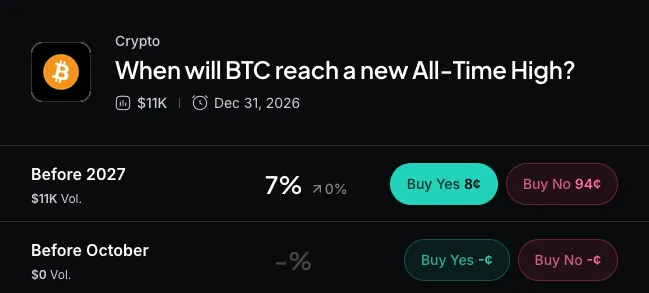
- The Road to New Highs: With Bitcoin currently hovering around $84,400—roughly 33% away from its October 2025 peak of $126,296—market participants are actively debating whether these inflows possess the sheer velocity required to breach historic highs before the year concludes. Prediction markets and order books suggest that sustained daily inflows averaging over $50 million to $100 million will be a prerequisite if Bitcoin is to mount a serious challenge against its all-time high in the near term.
As the inflow streak enters its tenth day and approaches the historic threshold required to match June 2025’s 13-day record, all eyes remain fixed on the ETF ledger. For now, the institutional buyers are showing up, the balance sheets are expanding, and Bitcoin’s grind higher continues unabated.