Presidential Power and Agency Independence: The High-Stakes Legal Battle Over the NCUA
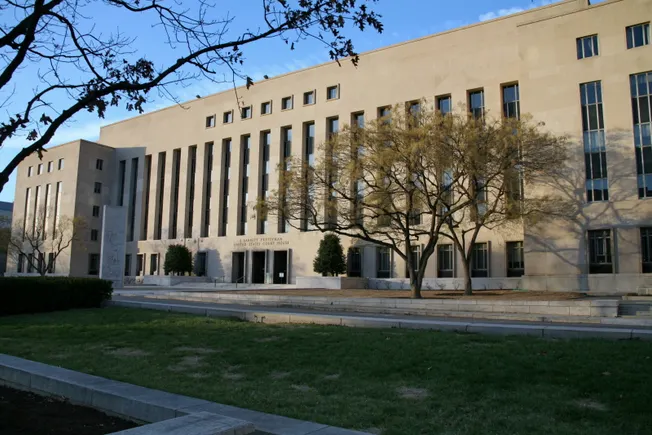
The ongoing legal confrontation between the U.S. Department of Justice (DOJ) and two ousted members of the National Credit Union Administration (NCUA) board has evolved into a foundational debate over the limits of executive authority. As the case reaches the D.C. Circuit Court of Appeals, it pits the Trump administration’s assertion of "at-will" removal power against the arguments of regulators who claim their independence is essential to financial stability.
In a scathing legal filing submitted this past Friday, the DOJ challenged the reinstatement of Todd Harper and Tanya Otsuka, accusing the pair of relying on a "hodgepodge" of historical narratives and outdated legislative theories to shield themselves from presidential termination. The outcome of this dispute promises to set a definitive precedent for how much control the White House can exert over federal financial regulators.
A Chronology of the Conflict
The seeds of this legal crisis were sown in April 2025, when President Donald Trump exercised his executive authority to fire Todd Harper and Tanya Otsuka, both Democrats serving on the NCUA board. The move was abrupt, effectively stripping the agency of its leadership and leaving the board with only one remaining member—a situation the fired commissioners argued rendered the agency incapable of maintaining a legal quorum.
The conflict escalated rapidly:
- April 2025: President Trump terminates Harper and Otsuka, citing his broad executive powers of appointment and removal.
- May 2025: Harper and Otsuka file a lawsuit in federal district court, challenging the legality of their removal and arguing that the NCUA’s structure—modeled closely after the Federal Reserve—inherently precludes "at-will" firing by the President.
- July 2025: A district court judge sides with the plaintiffs, ordering their reinstatement and finding that the removal process violated the agency’s structural integrity.
- Late 2025 – Present: The DOJ appeals the ruling, bringing the case to the D.C. Circuit. The legal community has closely watched these proceedings, especially in light of shifting Supreme Court guidance regarding the firing of Federal Trade Commission (FTC) members versus Federal Reserve governors.
The DOJ’s Constitutional Argument: A Return to 1903
In its latest filing, the Department of Justice made it clear that it rejects the notion of "implied" independence. To bolster its case, the DOJ bypassed the "zeitgeist of the 1970s" mentioned by the plaintiffs and reached back to the foundations of American jurisprudence.
Central to the DOJ’s argument is the 1903 Supreme Court case Shurtleff v. U.S. The DOJ invoked the ruling to underscore the principle that, absent an explicit statutory restriction passed by Congress, the President possesses the authority to remove an officer at will. "In the absence of [a] constitutional or statutory provision explicitly to the contrary, the longstanding constitutional rule is that the President can, by virtue of his general power of appointment, remove an officer, even though appointed by and with the advice and consent of the Senate," the DOJ argued.
The department’s position is firm: because Congress never enacted specific "for-cause" removal protections for NCUA board members, those members serve at the pleasure of the President. The DOJ characterizes the plaintiffs’ argument as a retroactive attempt to invent protections that do not exist in the statute books.
The "Federal Reserve" Analogy and Its Limits
A core pillar of the plaintiffs’ defense has been the claim that the NCUA is functionally and structurally analogous to the Federal Reserve Board of Governors. By comparing the NCUA to the Fed, Harper and Otsuka hope to secure the same type of "political insulation" that has traditionally protected central bankers from being fired for policy disagreements with the White House.
The DOJ, however, dismantled this comparison with clinical precision. "While plaintiffs try to analogize themselves to the Federal Reserve Board of Governors, that analogy fails on its own terms," the DOJ wrote. The department emphasized that Congress explicitly provided statutory removal restrictions for the Federal Reserve—protections that are conspicuously absent from the legislation governing the NCUA.
Furthermore, the DOJ argued that the "singular tradition" of shielding Fed governors does not extend to the broader federal financial regulatory landscape. To illustrate this, the government pointed to the Secretary of the Treasury and the Office of the Comptroller of the Currency (OCC). Despite their massive influence over interest rates, monetary policy, and banking supervision, neither of these roles enjoys the same degree of protection from executive interference as the Federal Reserve.
Historical Precedent and the Madisonian View
In an attempt to ground their argument in the intent of the Founding Fathers, the DOJ cited James Madison, the architect of much of the U.S. constitutional framework regarding executive power. The DOJ highlighted Madison’s historical observations regarding the comptroller of the currency, noting that while there were arguments for independence, the Constitution ultimately demands that executive officers remain accountable to the Chief Executive.
"The Constitution demands that these executive officers must be dependent upon the President because [they] can be removed by him," the DOJ asserted. By invoking Alexander Hamilton and Madison, the DOJ is signaling to the D.C. Circuit that the "independence" of regulatory agencies is a legislative gift, not a constitutional right, and that it must be explicitly granted by law to exist.
Implications for Regulatory Governance
The implications of this case extend far beyond the NCUA. As the legal community monitors the D.C. Circuit, the case serves as a critical test of the "unitary executive theory"—the idea that the President has absolute authority over the executive branch.
1. The Erosion of "For-Cause" Protections
If the appellate court upholds the DOJ’s position, it could effectively weaken the job security of hundreds of appointees across various federal agencies. It signals that unless a statute specifically states an officer can only be removed "for cause" (e.g., inefficiency, neglect of duty, or malfeasance), they are vulnerable to political shifts.
2. Equitable Powers and Judicial Intervention
The DOJ also attacked the district court’s decision-making process. Citing the recent Supreme Court ruling regarding Federal Reserve Governor Lisa Cook, the DOJ argued that the lower court overstepped its authority. The department contended that courts of equity are limited to maintaining the status quo during litigation—allowing an official to remain in office de facto—but they lack the authority to definitively rule on the validity of a presidential removal.
3. Future Legislative Action
This case may force Congress to revisit the statutes governing independent agencies. If agencies wish to maintain independence, they may need to lobby for clearer, more explicit statutory language that shields their boards from the political whims of the Oval Office. Without such clarity, the current legal environment suggests that the "at-will" power of the President is the default state of affairs.
Conclusion
The battle over the NCUA board is more than a dispute over the employment status of two individuals. It is a fundamental contest over the structure of the American government. The DOJ’s insistence that "the NCUA is not the Federal Reserve" serves as a warning to other agencies that their historical autonomy may be more fragile than they assume. As the D.C. Circuit prepares to weigh these arguments, the decision will likely redefine the boundary between executive control and agency independence, leaving a lasting mark on the landscape of federal oversight for decades to come.