The High-Speed Stumble: Inside Brightline’s Chapter 11 Restructuring
Executive Summary: A Billion-Dollar Rail Reckoning
Brightline, the ambitious private passenger rail venture that promised to revolutionize transit between Miami and Orlando, has formally filed for Chapter 11 bankruptcy protection. The move, executed in a New Jersey court this past Thursday, marks a sobering conclusion to years of financial volatility characterized by mounting debt, slashed ridership forecasts, and an increasingly impatient creditor base.
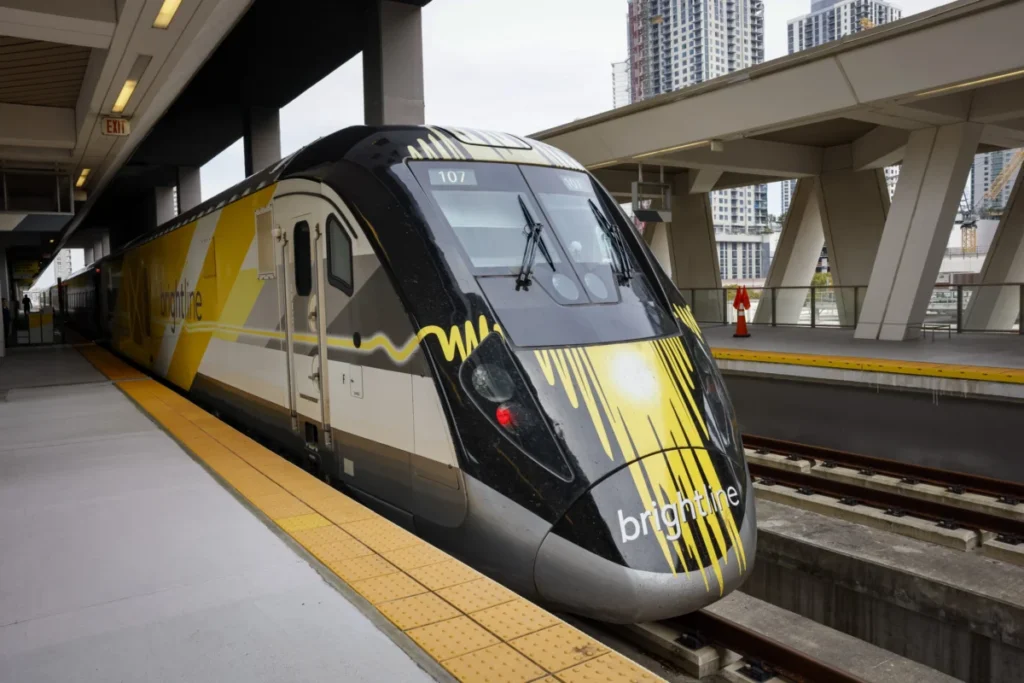
Brightline Holdings LLC, alongside key parent entities, listed assets and liabilities in the range of $1 billion to $10 billion. Crucially, the filing intentionally excludes the operating company—Brightline Trains Florida LLC—ensuring that the iconic yellow trains continue to whisk passengers between South and Central Florida without interruption. While the company characterizes the move as a strategic "restructuring," the filing is a significant blow to the vision of billionaire Fortress Investment Group co-founder Wes Edens, whose 2012 plan to create a transformative, privately funded high-speed rail network now faces a grueling test of financial viability.
Chronology: A Slow-Motion Journey to Insolvency
The Visionary Beginnings (2012–2018)
The project began as an audacious experiment in American infrastructure. Wes Edens envisioned a private railroad that could bypass the bureaucratic lethargy of state-led transit projects. By leveraging the existing Florida East Coast Railway corridor, the company aimed to connect Miami, Fort Lauderdale, and West Palm Beach, with a later expansion to Orlando International Airport.
The Expansion and the Debt Trap (2019–2023)
In 2019, while the company was still hemorrhaging cash, it tapped the municipal bond market for $1.5 billion to fuel the push to Orlando. The expansion was heralded as a triumph of private enterprise, yet the financial foundation remained fragile. Following the 2023 launch of the Orlando service, reality began to set in. Despite positive public sentiment, the company was forced to repeatedly slash ridership forecasts as the revenue required to service a staggering $5.5 billion debt stack failed to materialize.
The Final Descent (2024–2026)
By 2024, the company was forced to seek $1.2 billion in "junk debt" financing to stay afloat. This move proved to be a turning point, inviting aggressive hedge funds into the capital structure. These creditors eventually began to maneuver for control, leading to a period of skipped interest payments and intense, closed-door negotiations. Despite a recent management shakeup—including the hiring of former Eurostar CEO Christophe Petrovic—the company could not outrun its obligations, leading to this week’s bankruptcy filing.
Supporting Data: The Anatomy of a $5.5 Billion Burden
The complexity of Brightline’s debt stack has been a point of fascination and concern for the municipal-bond market. Unlike traditional infrastructure projects backed by stable tax revenues, Brightline relied heavily on speculative growth projections.
- The Debt Stack: The company carries approximately $5.5 billion in total debt.
- The Protective Measures: As part of the Chapter 11 proceedings, Brightline has secured $258 million in post-petition funding from bond insurer Assured Guaranty Ltd. and a consortium of investors. This "Debtor-in-Possession" (DIP) financing is intended to keep the lights on and the trains running through the reorganization.
- The Exit Strategy: Upon emerging from bankruptcy, the company has secured a commitment for an additional $490 million in new long-term capital. Assured Guaranty, which insures a significant portion of the senior tax-exempt bonds, has positioned itself as a central architect of this survival plan.
- Bondholder Status: Under the current proposal, the $2.2 billion in Series 2024 bonds will remain in place, as will another $2.2 billion held by associated entities. Notably, the plan currently calls for no reduction in the principal amounts of these bonds, an attempt to maintain market confidence in the face of widespread default fears.
Official Responses and Corporate Strategy
The narrative from Brightline’s leadership is one of resilience and long-term positioning. Patrick Goddard, Chief Executive Officer of Brightline Florida, framed the bankruptcy not as a failure, but as a "catalyst."
"Today’s agreement brings $490 million in new long-term capital to Brightline from the stakeholders who know this business, and it comes at a time of real momentum," Goddard stated in a press release. "This transaction will be a catalyst for further growth in ridership and revenue."
Assured Guaranty echoed this sentiment, emphasizing that their primary goal is to stabilize the operating entity. "This new capital will be used to support Brightline Florida’s ongoing operations and help position it for long-term stability and success," the firm noted in a statement. By insulating the operating company from the parent entity’s debt, the stakeholders hope to protect the brand’s reputation and customer loyalty, which are essential for its eventual path to profitability.
Implications: A Watershed Moment for Infrastructure Finance
The collapse of Brightline’s parent company serves as a cautionary tale for the private infrastructure sector. For years, the project was cited as a potential model for the future of U.S. transit—a high-speed system built without the long-term tax burdens typically associated with public works.
1. The Municipal Bond Market’s Unease
Brightline’s presence in the municipal-bond market was always unusual, given its status as a loss-making enterprise. Bankruptcy is rare in this sector, and the "Brightline saga" has forced investors to re-examine the risks associated with private-public infrastructure hybrids. The fact that the company had to resort to high-interest "junk debt" in 2024 sent a clear signal to the market that the original financial model was unsustainable.
2. A Setback for the "Edens Vision"
For Wes Edens, the bankruptcy is a significant personal and professional setback. Edens, a titan in the investment world, had hoped that the Florida model would provide a blueprint for a similar, much larger project connecting Las Vegas and Southern California. While the Nevada-California project continues to progress, the bankruptcy in Florida invites intense scrutiny regarding whether such capital-intensive projects can truly be sustained by private debt alone, or if they require more robust government subsidies.
3. The Hedge Fund Influence
The entry of hedge funds into the capital structure highlights the dangers of over-leveraging growth-stage infrastructure. When debt becomes distressed, control inevitably shifts from visionaries to creditors whose primary interest is the recovery of capital. The recent months of "dueling creditor groups" proposing conflicting restructuring plans illustrate the friction that occurs when debt is treated as a commodity rather than an investment in public utility.
4. The Future of the Rails
For the average passenger, the short-term impact of this filing will likely be negligible. The separation of the operating company from the debt-laden parent entity is a common, albeit risky, legal maneuver. However, the long-term success of the service now hinges on a narrow path: the company must significantly increase its ridership and revenue to justify the $490 million in new debt it is taking on. If the "momentum" cited by CEO Patrick Goddard fails to materialize, the company could find itself back at the negotiating table, with far fewer options than it has today.
Conclusion
Brightline now enters a critical phase of its existence. It is no longer just a railroad; it is a financial puzzle that must be solved under the watchful eyes of bankruptcy judges and skeptical creditors. While the trains continue to run, the high-speed dream of Wes Edens has hit a major obstacle. Whether this restructuring provides the financial breathing room for the company to thrive, or whether it marks the beginning of a long-term erosion of the service, remains to be seen. For now, the "Brightline experiment" serves as a stark reminder: in the world of high-speed rail, the track to profitability is often far more treacherous than the track to the station.