The Great Disconnect: Why Pessimistic Consumers Keep Opening Their Wallets Despite Sticky Inflation
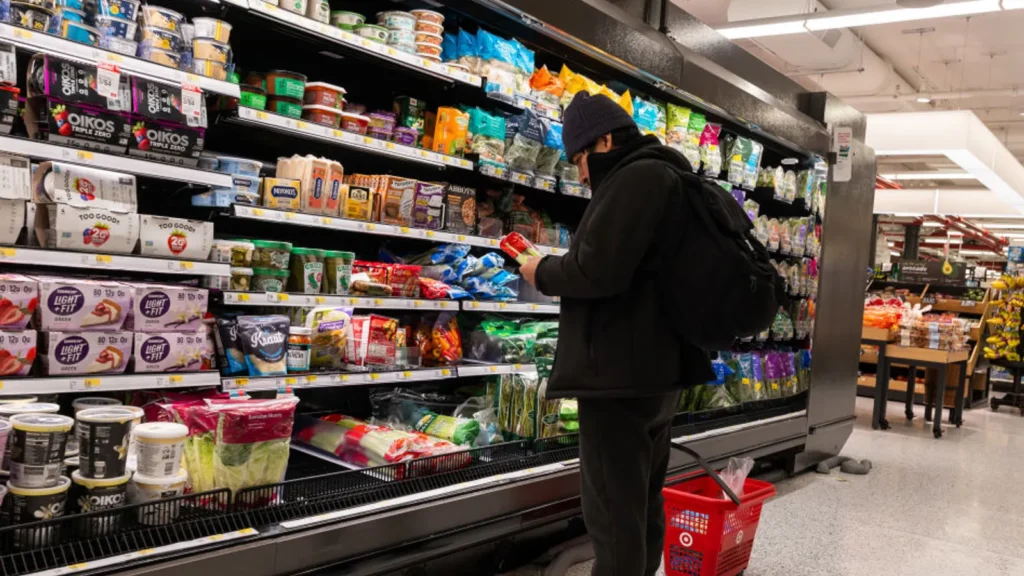
NEW YORK — By all traditional metrics of economic sentiment, the American consumer should be battening down the hatches. Pessimism regarding inflation, future business conditions, and the broader macroeconomic landscape has weighed heavily on consumer confidence surveys for months. Yet, in a fascinating economic paradox that continues to baffle analysts, consumer spending is not slowing down—it is accelerating.
Recent data from the U.S. Census Bureau reveals a stark dichotomy between how people feel about the economy and how they actually behave within it. While sentiment indexes flash warning signs, retail registers are ringing at a clip that suggests shoppers are adopting a "buy now, pay later" or "buy now before it costs more" mentality. This resilience has forced a re-evaluation of economic forecasting models as the Federal Reserve navigates a complex web of persistent price pressures, geopolitical supply shocks, and rising interest rates.
The Main Facts: Sentiment vs. Spending
The core narrative of the current U.S. economy centers on an apparent contradiction: sliding consumer confidence paired with robust, unyielding retail activity.
According to government figures released in late September 2026, retail sales covering a full spectrum of goods surged by a higher-than-forecast 1.2% in August on a month-over-month basis. This impressive rebound completely wiped out the 0.5% contraction recorded in July. Looking at a broader three-month window from June through August, total sales climbed 6% compared to the exact same period in 2025.
"Consumer sentiment is low," acknowledged Anna Paulson, president of the Federal Reserve Bank of Philadelphia, during a speech detailing current economic conditions. "But the spending data tell a different story."
This divergence has put economists on high alert. Typically, when households feel anxious about inflation and business conditions, they rein in discretionary purchases, build up emergency savings, and adopt a defensive posture. Instead, consumers are marching into grocery stores, home improvement centers, and automotive lots, opening their wallets despite vocal anxieties about the rising cost of living.
Chronology of the Economic Shift
To understand how the economy arrived at this juncture, it is helpful to trace the trajectory of consumer behavior and Federal Reserve policy over the past year:
- Early 2026: Consumer inflation expectations hover around a relatively subdued 3.4% in February—prior to the outbreak of geopolitical conflicts, notably in the Middle East, that would later ripple through global energy markets.
- Spring 2026: Supply chain strains begin to re-emerge, driven by renewed oil price volatility and shifting tariff policies. Inflation expectations begin a steady upward creep.
- July 2026: Retail sales dip by 0.5%, sparking brief speculation that consumers are finally buckling under the weight of cumulative price increases and elevated borrowing costs.
- August 2026: Any fears of a prolonged consumer pullback are dispelled as retail sales rebound sharply, jumping 1.2% month-over-month and outperforming Wall Street forecasts. Short-term inflation expectations spike to 4.6%.
- Mid-September 2026: Alarmed by stubborn price pressures and rising inflation expectations, Federal Reserve policymakers pivot decisively. On September 16, the central bank increases the federal funds rate to a range of 3.75% to 4%, marking its first rate hike in three years.
- Late September 2026: Regional Fed presidents deliver synchronized warnings regarding the upside risks of inflation, emphasizing that returning inflation to the central bank’s elusive 2% target remains nonnegotiable, even as consumers continue their robust spending spree.
Supporting Data and Underlying Drivers
What is driving consumers to spend money they claim to worry about? Analysts point to a psychological phenomenon rooted in inflation expectations: preemptive purchasing.
When consumers expect prices to rise further tomorrow, the rational economic choice today is to accelerate purchases before purchasing power degrades even more. This logic appears to be guiding household decisions, particularly regarding big-ticket items.
"Buying conditions for durables improved a bit, in part due to a perception that completing such purchases now would help consumers avoid higher prices in the future," noted Joanne Hsu, director of consumer surveys, highlighting data showing that consumers are adjusting their shopping habits in real time.
At the same time, actual economic output has surprised to the upside. "After a slow start to the year, real consumption growth accelerated to an annualized rate of 3.4% in the second quarter," Paulson noted.
However, this spending is unfolding against a backdrop of escalating inflationary dread:

- One-Year Inflation Expectations: Rose to 4.6% in September, a significant jump from the 4.0% reading in August. This figure substantially exceeds the 3.4% baseline seen in February and outpaces every reading recorded throughout 2024.
- Long-Term Inflation Expectations: Consumers’ long-range inflation outlook ticked up to 3.4%, up from 3.3% in August and sitting well above the steady 2.8% to 3.2% range maintained throughout the entirety of the previous year.
- The 2% Target Horizon: Inflation has persistently exceeded the Federal Reserve’s preferred 2% threshold for more than five consecutive years, eroding consumer purchasing power over the long haul.
Official Responses from Federal Reserve Leadership
The persistent strength of consumer spending—coupled with rising inflation expectations—has triggered a coordinated messaging campaign from top Federal Reserve officials. Central bankers are signaling that they will not tolerate prolonged deviations from their price stability mandate.
Cleveland Fed President Beth Hammack addressed the shifting economic landscape during a late-September address, pointing directly to external pressures. "The inflation outlook continues to be highly uncertain, with risks tilted to the upside," Hammack said, citing a cascade of supply shocks originating from shifting trade tariffs and volatile global oil markets.
Hammack emphasized the compounding danger of inaction. "The longer that high inflation persists, the more challenging and costly it can be to bring it back down," she warned, highlighting the more than five-year stretch that inflation has spent above the Fed’s 2% goal.
Philadelphia Fed President Anna Paulson was even more unequivocal regarding the central bank’s ultimate objective, signaling zero institutional tolerance for high-water inflation metrics.
"Let me be clear: returning inflation to 2% is nonnegotiable, and I will support the policy path that gets us there while carefully weighing risks to the labor market along the way," Paulson asserted.
This hawkish pivot culminated in the Fed’s mid-September decision to lift the benchmark interest rate to between 3.75% and 4%—a clear message that the era of monetary accommodation is firmly in the rearview mirror.

Economic Implications for Businesses and Policymakers
The disconnect between low consumer sentiment and high retail spending carries profound implications for CFOs, corporate strategists, and macroeconomic policymakers alike.
1. Corporate Pricing Power and Margin Management
For businesses, the data suggests that consumers—while vocal about their distaste for high prices—retain the capacity and willingness to absorb them, at least in the near term. Companies that have successfully defended their profit margins through strategic price increases may find that demand is less elastic than feared. However, as borrowing costs rise due to the Fed’s recent rate hikes, financing inventory and capital expenditures will become increasingly expensive, forcing corporate leaders to balance resilient top-line revenue against tighter financial constraints.
2. Monetary Policy Dilemmas
For the Federal Reserve, strong consumer spending complicates the task of cooling the economy. Traditional monetary theory dictates that raising interest rates should dampen consumer demand by making credit more costly and encouraging savings. Yet, if consumers continue to spend out of a fear of future price hikes, elevated demand could inadvertently keep inflation fires burning, requiring the central bank to maintain higher interest rates for a longer duration than financial markets currently anticipate.
3. The Labor Market Balance
As policymakers like Paulson have noted, any aggressive policy path designed to crush stubborn inflation must carefully weigh risks to the labor market. Thus far, employment has held up remarkably well, supporting wage growth that helps fuel ongoing consumer expenditures. If the Fed’s tightening cycle begins to bite harder into corporate profitability, however, labor demand could cool, testing whether consumers can maintain their spending momentum without steady income gains.
Ultimately, the American consumer remains an unpredictable engine of economic activity. As autumn unfolds, corporate boardrooms and central bank committee rooms will be watching closely to see how long shoppers can maintain their high-velocity spending spree in the face of rising rates and mounting price pressures.