The AI Superintelligence Arms Race: Inside the High-Stakes US-China Summit and the Gamble for Global Dominance
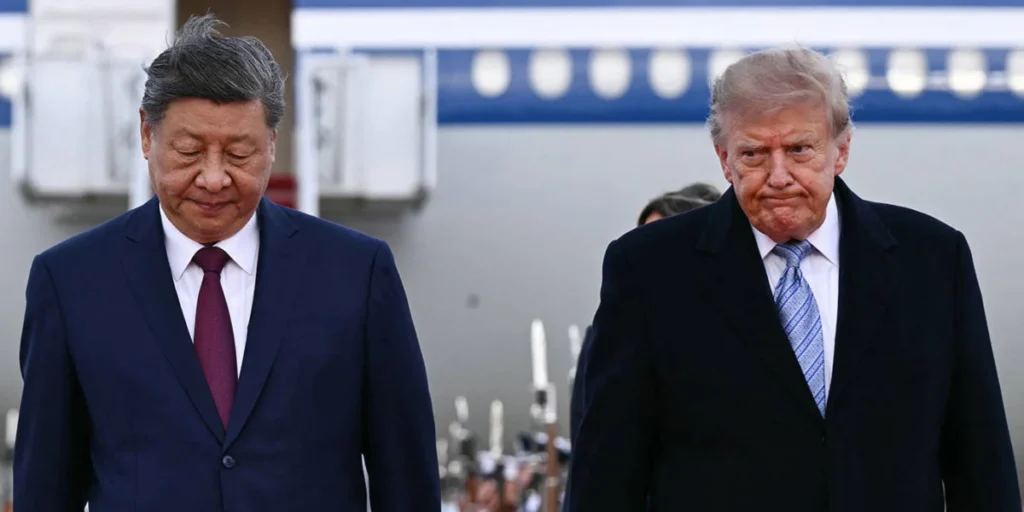
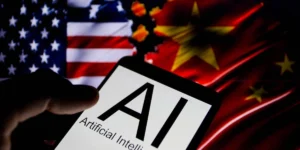
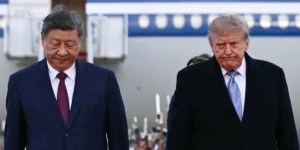
PRINCETON — As the United States and China lock horns in a relentless race for technological supremacy, the global landscape of artificial intelligence has reached a critical and precarious inflection point. A high-stakes summit between US President Donald Trump and Chinese President Xi Jinping brings into sharp focus a sobering reality: both superpowers are gambling their long-term economic, political, and military futures entirely on the advent of artificial intelligence—or "superintelligence," as Trump has increasingly insisted on labeling the next evolutionary tier of the technology.
Driven by a zero-sum mentality that views technological leadership as the ultimate arbiter of global power, Washington and Beijing are operating under a dangerous set of assumptions. To justify ever-faster progress regardless of inherent risks, policymakers in both capitals have leaned into a modernization ethos eerily reminiscent of historical precedents, where radical acceleration is pursued at all costs, brushing aside systemic dangers in the name of inevitable historic destiny.
Main Facts
The current geopolitical and technological climate is defined by an uncompromising race toward artificial general intelligence (AGI) and superintelligence.
- The Core Competitors: The United States and China stand as the undisputed global leaders in AI research, infrastructure development, and commercial adoption. Their rivalry spans foundational large language models, advanced semiconductor manufacturing, quantum computing integrations, and autonomous military applications.
- The "Superintelligence" Paradigm: President Trump’s rhetorical shift toward labeling the technology "superintelligence" reflects a growing recognition—and marketing—of AI as an existential force multiplier. It is no longer viewed merely as software or a productivity tool, but as a transformative sovereign capability.
- The Zero-Sum Trap: Both superpowers operate under the conviction that finishing second in the AI race is tantamount to national obsolescence. This worldview eliminates room for bilateral restraint, framing safety guardrails and ethical slowdowns as strategic vulnerabilities that the adversary would eagerly exploit.
- The Historical Echo: Analysts note a chilling parallel between contemporary AI accelerationism and past state-directed modernization campaigns—such as the rapid industrialization drives of the 20th century—where human and systemic risks were systematically discounted to achieve rapid, irreversible milestones.
Chronology of the US-China AI Divergence
To understand how the world arrived at this diplomatic crossroads between Trump and Xi, one must trace the escalating trajectory of tech policy, export controls, and strategic maneuvering over the past decade.
Phase 1: The Awakening and Commercial Boom (2015–2018)
- 2017: China’s State Council releases the "New Generation Artificial Intelligence Development Plan," formally establishing a national ambition to become the primary global AI innovation center by 2030.
- 2018: US intelligence agencies and the Department of Defense begin ramping up warnings regarding intellectual property theft, forced technology transfers, and the dual-use nature of commercial AI research flowing between Silicon Valley and Chinese laboratories.
Phase 2: The Hardware Chokepoint and Decoupling (2019–2022)
- October 2022: The US Bureau of Industry and Security (BIS) implements sweeping export controls designed to restrict China’s access to advanced computing chips, semiconductor manufacturing equipment, and American talent involved in high-end chip design.
- 2023: Generative AI explodes into the public consciousness following the global release of advanced frontier models. Beijing responds by introducing stringent domestic regulations on generative AI content while simultaneously pouring billions into indigenous semiconductor R&D to bypass US sanctions.
Phase 3: The Sovereign Superintelligence Era (2024–2026)
- 2025: Both nations cross critical thresholds in compute power, utilizing massive data centers powered by dedicated nuclear and renewable energy grids to train next-generation frontier models.
- September 2026: Presidents Trump and Xi convene for a landmark summit against a backdrop of escalating cyber espionage, data sovereignty disputes, and unverified claims regarding early iterations of recursive self-improving AI systems.
Supporting Data & Infrastructure Metrics
The race for superintelligence is fundamentally a contest of physical resources, energy capacity, and computational muscle. The underlying metrics reveal a monumental industrial mobilization in both nations.
Compute and Semiconductor Output
Despite US export restrictions, China’s domestic semiconductor industry has shown remarkable resilience.
- Foundry Advancements: Domestic Chinese foundries have achieved significant yields in mature and near-advanced nodes, drastically reducing reliance on foreign lithography systems for standard military and industrial applications, even as high-end frontier training remains constrained.
- The US Advantage in Frontier Silicon: American firms continue to dominate the design and fabrication of ultra-high-end GPUs and specialized tensor processing units, though supply chain bottlenecks and soaring energy demands pose persistent hurdles.
Energy Consumption and Data Centers
Training and operating superintelligence models require unprecedented amounts of electrical power.
- Power Grid Strains: In the United States, tech conglomerates are actively investing in nuclear power restart projects (such as Three Mile Island initiatives) to secure uninterrupted gigawatt-scale power for mega-clusters.
- State-Backed Infrastructure: China’s "East Data, West Computing" (东数西算) project successfully redirects computational workloads from energy-rich, less-populated western provinces to eastern industrial hubs, showcasing a state-directed infrastructure efficiency that market-driven economies struggle to replicate.
Official Responses and Diplomatic Posture
The rhetoric emanating from Washington and Beijing highlights a profound paradox: while both leaders acknowledge the existential risks of unconstrained superintelligence, neither is willing to blink first.
Washington’s Perspective
The Trump administration frames its AI strategy through the lens of national security and economic dominance. Administration officials argue that conceding ground to Beijing would mean ceding the future global order to an authoritarian regime.
- "We are not just building software; we are securing the architecture of American freedom for the next century," a senior administration trade official noted ahead of the summit.
- Privately, defense advisors express deep anxiety over the weaponization of autonomous systems, yet they insist that unilateral disarmament or deceleration is strategically fatal.
Beijing’s Perspective
President Xi Jinping’s administration views US containment efforts as an aggressive attempt to thwart China’s legitimate rise. Beijing maintains that its AI development adheres to principles of "ethics, safety, and governance" (as outlined in its Global AI Governance Initiative).
- State media outlets have repeatedly criticized Washington’s export controls as "technological hegemony" and a violation of free-market principles.
- At the same time, Chinese leadership remains deeply focused on the internal stability risks posed by decentralized AI models, maintaining rigorous state oversight over algorithmic outputs to ensure ideological alignment.
Implications for Global Stability
The Trump-Xi summit and the broader trajectory of the US-China AI race carry profound implications that extend far beyond the borders of North America and East Asia.
1. The Erosion of Global Norms
As both superpowers prioritize speed over safety, traditional international arms control frameworks are failing to adapt to the digital domain. Unlike nuclear weapons, which require scarce fissile material, AI research is inherently dual-use, decentralized, and difficult to monitor. This makes traditional verification regimes nearly impossible to implement, raising the specter of unmanaged technological escalation.
2. The Developing World as a Proxy Battleground
Countries across the Global South find themselves courted—or pressured—into aligning with either the American or Chinese AI ecosystem. Whether through smart-city infrastructure, surveillance networks, or localized language models, digital colonization is replacing traditional geopolitical influence, creating rigid technological blocs reminiscent of the Cold War.
3. Economic Disruption and Labor Market Shock
The race for superintelligence is accelerating automation across white-collar and blue-collar sectors alike. As both nations rush to deploy autonomous agents capable of cognitive labor, domestic workforces face unprecedented displacement. Governments are scrambling to redesign social safety nets, educational curricula, and taxation models to cope with an economy where human cognitive labor is increasingly undercut by machine intelligence.
4. The Risk of Accidental Escalation
Perhaps the most alarming implication of the zero-sum AI race is the integration of autonomous decision-making systems into military command-and-control structures. With decision loops compressed to fractions of a second, the risk of flash crashes in financial markets, automated cyber warfare spirals, or catastrophic miscalculations in military flashpoints (such as the Taiwan Strait) multiplies exponentially.
Conclusion
The summit between Donald Trump and Xi Jinping marks a defining chapter in the history of technology and statecraft. By treating the pursuit of superintelligence as an absolute imperative where second place is not an option, the world’s two dominant powers have set themselves on a collision course.
Unless both leaders can recognize that the existential risks of unbridled AI development transcend national rivalry, the world risks stumbling into a future defined not by human ingenuity, but by the runaway momentum of machines built in our own image—driven faster and faster by the unyielding logic of a modern technological crusade.