IRS Finalizes Fee Hike for Estate Tax Closing Letters, Raising Cost to $76 per Request
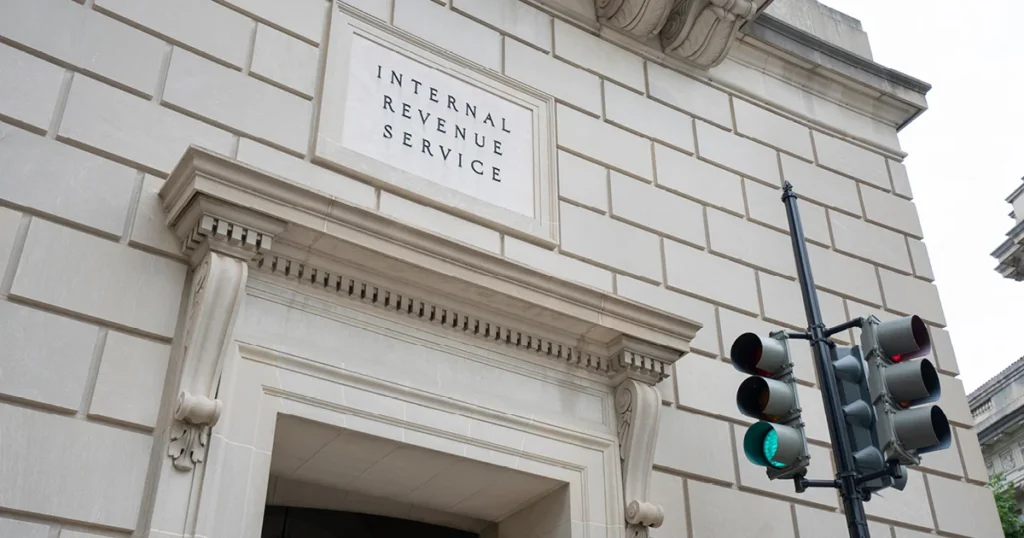
WASHINGTON — Executors, estate planners, and legal representatives navigating the complex landscape of post-mortem administration will soon face higher administrative costs when dealing with federal tax authorities. The Internal Revenue Service (IRS) and the U.S. Department of the Treasury issued final regulations on Thursday, formally increasing the user fee for obtaining an estate tax closing letter—officially designated as IRS Letter 627—from $56 to $76 per request.
The newly minted regulations, published as Treasury Decision (T.D.) 10055, adopt without modification the proposed rules that were initially introduced to the public in June. This adjustment marks the latest chapter in the federal government’s ongoing effort to align the cost of specialized administrative services with the actual operational expenditures required to deliver them, adhering to decades-old federal statutory mandates regarding agency self-sustainability.
The fee increase, which applies to all relevant requests received by the IRS on or after October 26, 2026, impacts those handling the final affairs of decedents whose estates are subject to federal estate taxation. While the $20 jump from the previous $56 rate—which only took effect on December 1, 2025—may appear modest in the context of multi-million-dollar taxable estates, it underscores a broader regulatory philosophy emphasizing cost-recovery for government-conferred special benefits.
Main Facts
The core regulatory action centers on the issuance and pricing of IRS Letter 627, universally known as the estate tax closing letter. This official document is routinely requested by executors, personal representatives, and authorized legal counsel following the successful audit and closure of a United States Estate (and Generation-Skipping Transfer) Tax Return (Form 706).
Key elements of the final regulations include:
- Fee Adjustment: The cost for an estate tax closing letter increases by 35.7%, moving from $56 to $76 per request.
- Effective Date: The new $76 fee applies strictly to requests received by the IRS on or after October 26, 2026.
- Statutory Authority: The fee structure is anchored in the Independent Offices Appropriations Act (IOAA) of 1952 (codified at 31 U.S.C. 9701), which dictates that federal agency services providing special benefits to specific individuals or organizations—above and beyond those available to the general public—should be self-sustaining to the fullest extent possible.
- Cost Accounting: The IRS calculated the updated fee following a mandatory biennial review conducted in 2025, which evaluated the direct and indirect operational costs associated with processing Letter 627.
While estate tax closing letters are not legally mandatory for every estate, they are frequently considered indispensable by practitioners. Executors often rely on Letter 627 to provide definitive proof to probate courts, beneficiaries, and state tax authorities that the IRS has completed its review of Form 706 and that the federal tax liability has been fully satisfied or discharged. Without this letter, distributing estate assets or closing probate proceedings can be fraught with uncertainty, as lingering liability fears can stall the final winding down of an estate.
Chronology of the Fee Increase
To understand how the estate tax closing letter fee arrived at its current $76 rate, it is necessary to examine the historical timeline of administrative policy changes, user fee studies, and regulatory milestones that have transformed Letter 627 from a free, routine administrative courtesy into a paid, highly scrutinized service.
Historical Context and Early Procedures
For decades, the IRS issued estate tax closing letters automatically upon the completion of a Form 706 examination, or alternatively, provided "account transcripts" that served a similar evidentiary purpose. However, facing budget constraints, resource reallocations, and escalating processing volumes, the IRS announced in June 2015 that it would temporarily halt the automatic issuance of closing letters for estate tax returns filed after June 1, 2015, shifting instead to issuing account transcripts. This abrupt policy shift created significant friction for estate planners and probate courts, who strongly preferred the explicit assurances contained within the traditional closing letter.
In response to industry outcry, the IRS subsequently restored the issuance of closing letters, but with a significant catch: authorized persons would now have to request them explicitly, and the agency would begin exploring mechanisms to recover the administrative costs of providing the service.
The 2021–2025 Regulatory Evolution
The pathway to user fees for Letter 627 accelerated significantly in recent years:
- May 2021: The IRS issued proposed regulations seeking to establish a user fee for estate tax closing letters for the first time, initially suggesting a fee of $67.
- December 2021: Following public comments and cost recalculations, the Treasury and the IRS published final regulations setting the fee at $67, which took effect in late 2021.
- 2025 Biennial Review: Pursuant to federal accounting guidelines and Office of Management and Budget (OMB) Circular A-25, the IRS initiated its required biennial review of user fees in 2025. This review analyzed the actual resource expenditures required to process requests for Letter 627 during the preceding fiscal cycles.
- December 1, 2025: An interim adjustment recalibrated the fee to $56, reflecting updated economic models from the review cycle.
- June 2026: The IRS published proposed regulations in the Federal Register, signaling its intent to raise the fee from $56 to $76 based on the finalized findings of the 2025 biennial review.
- October 2026: Following a standard public comment period and administrative review, the Treasury Department and the IRS published T.D. 10055, adopting the $76 fee without modification, effective for requests received on or after October 26, 2026.
Supporting Data and Economic Modeling
Federal agencies are not permitted to set user fees arbitrarily. Under the Independent Offices Appropriations Act (IOAA) and OMB Circular A-25, user fees must be calculated based on the full cost of providing the service, including both direct and indirect expenses.
To justify the increase to $76, the IRS opened its financial books regarding the estate tax closing letter program during the 2025 biennial review. The economic model breaks down as follows:
Total Program Costs
The IRS determined that the aggregate annual direct and indirect costs required to maintain, staff, and administer the estate tax closing letter program totaled $615,593. These expenses encompass a wide array of operational outlays, including:
- Personnel costs for IRS estate tax attorneys, customer service representatives, and administrative staff who review Form 706 status and process incoming requests.
- Information technology overhead, including the secure database systems required to verify estate tax compliance and generate Letter 627.
- Overhead allocations, such as physical and digital infrastructure, management oversight, and compliance verification protocols.
Volume Projections
To arrive at a per-unit cost, the agency analyzed historical request volumes and projected future demand. The IRS estimated that it will process approximately 8,053 annual requests for estate tax closing letters.
The Mathematical Formula
Dividing the total annual program cost ($615,593) by the estimated annual request volume (8,053) yields a precise per-request cost of approximately $76.44, which the agency rounded down to the final established user fee of $76.
[Total Annual Program Costs: $615,593] ÷ [Estimated Annual Requests: 8,053] = $76.44 (Rounded to $76)This data-driven methodology demonstrates that the fee increase is not designed to generate general tax revenue for the federal government, but rather to fully offset the operational footprint generated by the 8,000-plus executors and legal professionals who request the service each year.
Official Responses and Public Comments
The regulatory rulemaking process allows stakeholders, professional organizations, and the public to scrutinize agency proposals and submit formal feedback. Throughout the development of T.D. 10055, the Treasury Department and the IRS monitored public reaction closely.
The Public Comment
During the comment window following the publication of the proposed regulations in June, Treasury and the IRS received one written public comment. While a single comment may appear sparse for a federal tax regulation, it came from a sophisticated industry stakeholder or professional observer.
The comment did not challenge the foundational principle that the government is permitted to charge user fees under the IOAA. Instead, it focused on transparency and accountability within the federal cost-accounting framework. Specifically, the commenter:
- Sought additional, granular information regarding the agency’s internal cost model used to calculate the $76 rate.
- Requested that the IRS release more detailed underlying data concerning direct versus indirect cost allocations before finalizing the regulations.
The Agency’s Response
Following a thorough review of the submission, Treasury and the IRS elected to adopt the proposed regulations without change.
In their formal decision notes accompanying T.D. 10055, federal officials maintained that the published methodology complied fully with the statutory requirements of the IOAA and OMB Circular A-25. The agency concluded that the data provided in the preamble of the proposed and final rules offered sufficient transparency regarding the aggregate program costs and request volumes, rendering further structural modifications or data disclosures unnecessary prior to implementation.
Professional tax and legal associations, such as the American Institute of CPAs (AICPA) and various state bar associations, have historically monitored these fee adjustments closely. While practitioners generally prefer minimizing administrative roadblocks, the consensus among estate planning professionals has largely adapted to the reality that modest fees for closing letters are an unavoidable cost of modern estate administration.
Implications for Estates, Executors, and Practitioners
While a $76 fee is unlikely to alter the fundamental tax planning strategies of high-net-worth individuals, the finalization of T.D. 10055 carries several notable practical, legal, and operational implications for those navigating the estate administration process.
1. Budgeting and Minor Cost Adjustments for Estates
For executors and personal representatives managing an estate, administrative expenses—ranging from probate court filing fees and appraisal costs to legal and accounting fees—are a standard part of the wind-down process. Adding a $76 fee for an estate tax closing letter is nominal in the context of estates required to file Form 706 (which generally applies to gross estates exceeding the applicable exclusion threshold, currently sitting at historic highs under federal law). However, executors must account for this fee in their formal accounting records presented to probate courts and beneficiaries.
2. Operational Timing and the October 26, 2026 Deadline
The establishment of a firm effective date (October 26, 2026) introduces a critical operational checkpoint for legal practitioners. Executors and attorneys submitting requests for Letter 627 must pay careful attention to the date their correspondence and payment are received by the IRS:
- Requests received prior to October 26, 2026, will remain subject to the outgoing $56 fee.
- Requests received on or after October 26, 2026, must include the updated $76 fee.
Failing to include the correct payment amount can lead to administrative delays, rejected applications, and frustrating correspondence loops with IRS payment processing centers—complications that estate administrators are universally eager to avoid.
3. The Continuing Debate Over Document Necessity
The finalization of the user fee also reinforces ongoing professional discussions regarding the necessity of Letter 627. Because obtaining an estate tax closing letter requires both a financial fee and a dedicated administrative request, some practitioners weigh whether an official IRS account transcript—which can sometimes be obtained through alternative practitioner channels—suffices for local probate closing requirements.
However, many state probate judges and fiduciary accountants continue to strongly recommend or explicitly require Letter 627 as the definitive "gold standard" proof of audit closure. Consequently, the vast majority of Form 706 filers are expected to continue absorbing the fee as a standard, non-negotiable cost of securing peace of mind and finality from the federal tax authority.
4. Broader Trend of IRS User-Fee Expansion
From a macro-level perspective, the closing letter fee hike exemplifies a broader trend across federal agencies—and the IRS in particular—to shift the administrative burden of specialized services directly onto the end-users. As the IRS modernizes its systems under funding initiatives, targeted user fees for specific, high-touch administrative services are likely to remain a permanent fixture of federal tax administration.
Conclusion
The publication of T.D. 10055 and the formal establishment of the $76 estate tax closing letter fee mark the conclusion of the IRS’s latest biennial cost-recovery review. With the new rate taking effect for all requests received on or after October 26, 2026, executors, estate planning attorneys, and certified public accountants must update their administrative checklists and fee schedules accordingly.
While the $20 increase represents a minor financial increment in the grand scale of federal estate administration, it serves as a timely reminder of the administrative diligence required to successfully close out an estate and achieve ultimate regulatory finality with the Internal Revenue Service.