The New Wave in the Crescent City: Nola Bank Marks a Historic Return to Local Banking
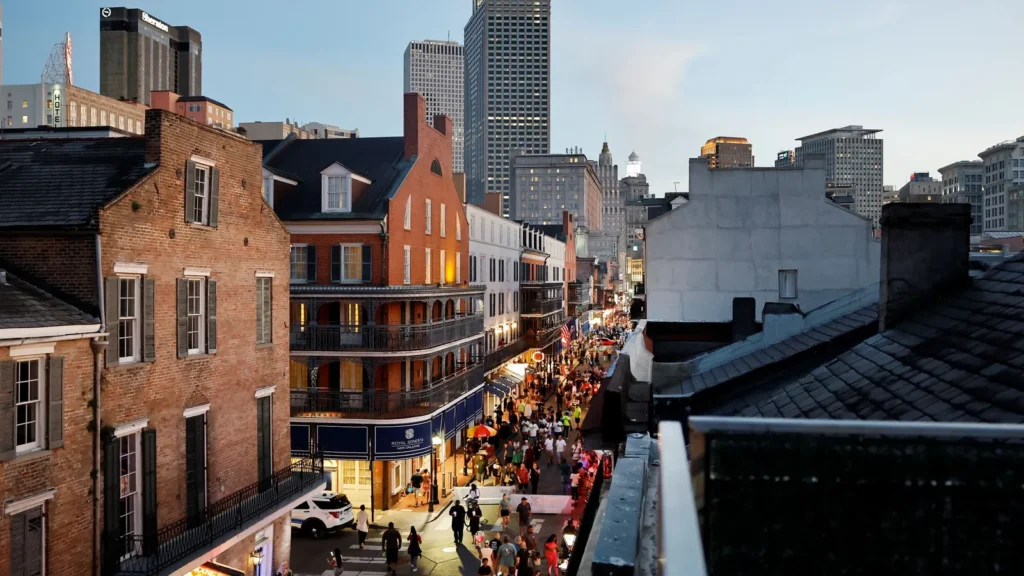
In a significant milestone for the financial landscape of Louisiana, Nola Bank has officially opened its doors, marking the first time in 16 years that a de novo—a brand-new, independently chartered financial institution—has launched in the state. For a city defined by its resilience and unique cultural identity, the arrival of Nola Bank represents more than just a new place to store capital; it serves as a symbolic reclamation of local financial agency in a market long dominated by out-of-state regional and national conglomerates.
The New Orleans-based lender received final regulatory approval on September 11 and commenced operations on September 14. With $29.2 million in initial capital raised from a robust group of 78 investors, Nola Bank enters the arena as the eighth de novo institution to open nationwide this year, signaling a cautious but optimistic thaw in the frozen market for new bank charters.
The Long Road to Opening: A Chronology of Resilience
The path to Nola Bank’s opening was far from straightforward. The banking environment in New Orleans has been defined for nearly two decades by a "consolidation fever" that swept through the region following the catastrophic impact of Hurricane Katrina in 2005.
The Aftermath of 2005
The storm did more than cause physical destruction; it fundamentally altered the demographic and economic fabric of New Orleans. As residents displaced by the storm sought lives elsewhere, the local capital base eroded, and the appetite for risk among potential bank investors plummeted. CEO Joe Omner, reflecting on the era, cited a local adage that captured the mood of the time: "Ain’t dere no more."
For years, the phrase applied not just to the homes and landmarks that had been washed away, but to the community banks that had once anchored the city’s small business ecosystem. "Not just banks, but across the footprint of businesses, there’s been consolidation," Omner explained. "Regionals have come in here and just gobbled up the community banks."
The Multi-Year Effort
The effort to establish a new bank in the region has been attempted by various groups over the years, many of which failed to secure the necessary capital to satisfy stringent post-crisis regulatory requirements. Nola Bank’s success in raising $29.2 million is a testament to the founders’ ability to articulate a compelling mission—one centered on serving the specific, nuanced needs of the New Orleans community.
Market Dynamics: The Shadow of the Giants
To understand the magnitude of Nola Bank’s entry, one must examine the landscape it seeks to disrupt. According to Federal Deposit Insurance Corp. (FDIC) data from June 2026, the New Orleans deposit market is heavily concentrated in the hands of three major players.
Market Share Breakdown
- Capital One: Following its 2005 acquisition of the historic Hibernia National Bank, Capital One currently commands the largest deposit market share in the city at approximately 35%.
- Hancock Whitney Bank and JPMorgan Chase: These two institutions hold a combined grip on the market, with each claiming roughly 21% of the local deposit share.
- Niche Players: First Horizon Bank and the local Gulf Coast Bank and Trust Company operate with smaller footprints, at 8% and 4% respectively.
This extreme concentration creates a significant gap for local businesses. According to Chief Banking Officer Chris Shah, the "big bank" model relies on centralized underwriting and remote decision-making. "When you’re sitting down with the bank personnel at a large national firm, they are generally just taking your information," Shah noted. "But the decision is being made by somebody that’s never actually met the client."
The "Speedboat" Philosophy: Operational Strategy
Nola Bank is positioning itself as the antithesis of the monolithic institutions that currently dominate the New Orleans skyline. If a major regional bank is a massive barge that requires miles to turn around, Nola Bank characterizes itself as a "speedboat."
Local Decision-Making
The bank’s operational strategy hinges on agility. By keeping decision-makers in the same zip code as the borrowers, Nola Bank intends to offer a level of responsiveness that large institutions simply cannot replicate. "If something needs to change, it is done here with the decision-makers," Omner said. "We can react very quickly to any customer’s needs."
Technological Parity
While Nola Bank emphasizes "old-school" relationship banking, it is leveraging modern infrastructure to compete. The bank has partnered with Jack Henry & Associates, a leading financial technology provider, to ensure that its digital banking suite, mobile apps, and online presence are on par with, or superior to, the offerings of national banks.
"Community banks can compete now because technology is going so far," Omner said. "We have the same capabilities, if not more, than some regionals."
A Mission-Driven Institution: Pursuing MDI Status
Nola Bank is not merely a commercial endeavor; it is a social one. The bank is currently in the process of applying to become a Minority Depository Institution (MDI) with a multiracial designation.
Why MDI Status Matters
The pursuit of MDI status is supported by the FDIC, which has actively encouraged the bank to seek the designation. The benefits of this status are two-fold:
- CRA Incentives: Other lenders can receive Community Reinvestment Act (CRA) credit for engaging in business with Nola Bank, encouraging a collaborative ecosystem rather than a purely competitive one.
- Community Programs: The bank will gain access to specific federal programs aimed at fostering financial literacy and providing targeted services to the underbanked populations in New Orleans.
The board of directors, chaired by Henry L. Coaxum Jr., reflects the bank’s commitment to diversity. With a majority of both the board and the investor base consisting of racial minority individuals, the bank is uniquely positioned to understand the barriers to capital faced by entrepreneurs in the region. Roughly 40 of the bank’s 78 initial investors are themselves small business owners, creating a "by the community, for the community" feedback loop.
Regulatory Outlook and Future Growth
The regulatory environment for de novo banks has historically been a significant barrier to entry. However, Nola Bank’s leadership notes a positive shift in the attitude of the FDIC and the Louisiana Office of Financial Institutions.
Requirements and Compliance
As part of its charter, Nola Bank is required to maintain a Tier 1 leverage ratio of at least 8% for the first three years of operation. While Omner described the application process as "difficult," he expressed deep appreciation for the regulators, noting that they "really see the need for additional bank charters" and were supportive throughout the process.
Omner also pointed to recent efforts by the FDIC to streamline the de novo application process, a move he believes will encourage more groups to attempt to fill the void in community-level lending.
Implications: A New Era for New Orleans?
The launch of Nola Bank represents a critical test case for the future of community banking in the United States. In a post-pandemic, post-Katrina economy, the city of New Orleans is searching for ways to foster homegrown wealth. By providing tailored credit facilities to small businesses—the lifeblood of the city’s tourism, hospitality, and service-based economy—Nola Bank hopes to spark a broader economic revitalization.
The Human Element
Beyond the spreadsheets and the capital ratios, the success of the bank will ultimately depend on its people. Every employee at Nola Bank has been selected not only for their technical banking expertise but for their deep-rooted connections to the region.
"We’ve got to have connections to the community," Omner concluded. "Every one of our employees has bought into our mission and are engaged with the community."
As Nola Bank begins its journey, it stands as a symbol of defiance against the trend of consolidation. Whether it can maintain its "speedboat" agility while scaling its operations will be the defining narrative of the next several years. For now, the people of New Orleans have a new option—a bank that aims to know their names, their businesses, and the unique challenges of the Crescent City.