The Nuclear Pivot: Kairos Power Enlists Samsung C&T to Power Google’s AI Ambitions
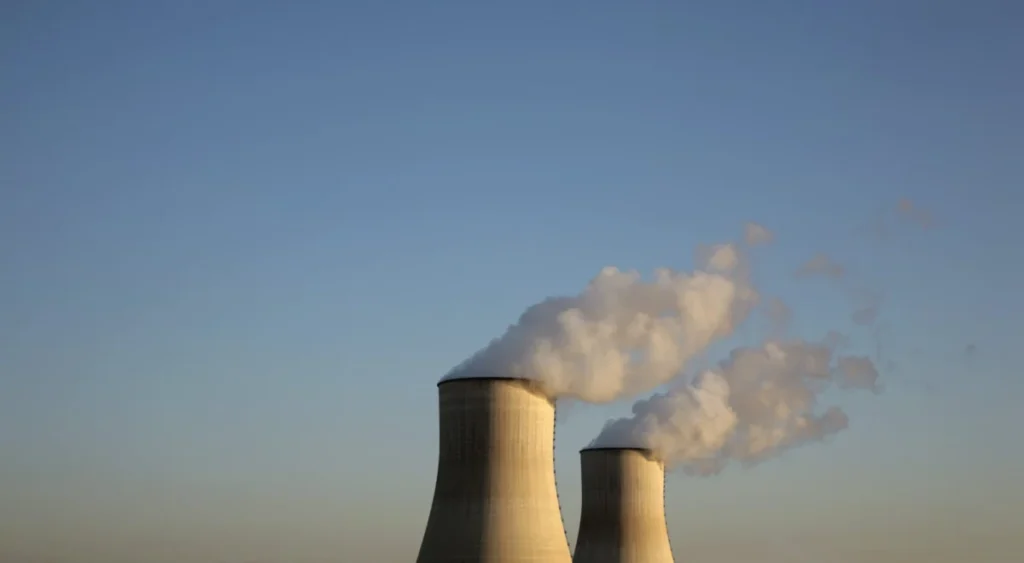
The global race to satisfy the voracious energy demands of artificial intelligence has pushed the technology sector into an unlikely partnership with the nuclear industry. In a significant move to accelerate its ambitious deployment timeline, Kairos Power, a trailblazing nuclear startup, announced on Monday that it has secured a strategic partnership with the engineering and construction giant Samsung C&T.
This collaboration is aimed squarely at the successful delivery of a 50-megawatt demonstration reactor—a cornerstone project in Kairos Power’s agreement to provide clean, reliable energy to Google’s burgeoning fleet of AI data centers. With the industry facing a 2030 deadline that many critics view as aggressive, this alliance represents a critical infusion of capital and technical expertise.
The Strategic Alliance: $100 Million in Capital and Expertise
The partnership between Kairos Power and Samsung C&T is multifaceted, combining financial backing with industrial-grade engineering capacity. According to Kairos Power, the deal is valued at up to $100 million. This total is comprised of a $70 million direct equity investment in the startup, with the remaining $30 million allocated toward "in-kind" engineering and construction services.
For Samsung C&T, this investment is a natural extension of its global footprint. The firm brings a wealth of experience to the table, having participated in the construction of approximately a dozen nuclear reactors worldwide. By integrating Samsung’s seasoned engineering teams into the project development cycle, Kairos Power aims to mitigate the common pitfalls that have historically plagued large-scale nuclear infrastructure projects, such as supply chain delays and construction bottlenecks.
Chronology: From Concept to Commercialization
The trajectory of Kairos Power’s rise is inextricably linked to the meteoric growth of AI. The following timeline outlines the company’s path toward its 2030 and 2035 milestones:
- Fall 2024: Google and Kairos Power announce a landmark agreement. The deal mandates that Kairos develop nuclear reactors capable of generating approximately 500 megawatts (0.5 gigawatts) of electricity by 2035 to support Google’s data center energy needs.
- November 2024: The U.S. Nuclear Regulatory Commission (NRC) grants Kairos Power formal approval to move forward with the construction of two small modular reactors in Oak Ridge, Tennessee.
- 2025–2029: The primary construction and testing phase. Kairos focuses on "Hermes 1," a low-power demonstration unit, followed by "Hermes 2," the first commercial-scale iteration.
- 2030: Targeted completion date for the initial 50-megawatt phase, which will draw its power from the Hermes 2 reactor.
- 2035: Full scale-up. Kairos is expected to have delivered on its commitment to provide 500 megawatts of electricity to the Google grid.
The Technology: Redefining Nuclear Safety and Efficiency
At the heart of Kairos Power’s strategy is a departure from conventional light-water reactor technology. Instead, the company is betting on a fluoride salt-cooled high-temperature reactor design. This design has long been discussed in nuclear physics circles but has remained largely theoretical until now.
Why Fluoride Salt?
The primary advantage of using fluoride salts as a coolant lies in their thermal properties. Unlike water, which requires high pressure to remain liquid at high temperatures—creating the risk of steam explosions or high-pressure blowouts during component failure—fluoride salts have a high boiling point and operate at near-atmospheric pressure. This design significantly reduces the structural requirements for containment, theoretically lowering costs and enhancing passive safety.
The TRISO Fuel Revolution
Complementing the cooling system is the use of TRISO (Tri-Structural Isotropic) fuel. TRISO fuel consists of tiny kernels of uranium oxycarbide encapsulated in multiple layers of ceramic and carbon. These kernels are then embedded into billiard ball-sized spheres. This "pebble" design is engineered to be incredibly robust; the fuel is virtually impossible to melt under reactor conditions, providing a level of safety that renders traditional emergency cooling systems largely redundant.
Supporting Data: The AI-Nuclear Nexus
The sudden interest in nuclear power is not incidental; it is a direct response to the energy requirements of large language models and the data centers that host them. As AI models become more complex, the compute power required to train and deploy them has surged, leading to power consumption patterns that renewables alone cannot currently stabilize.
Data centers operate 24/7, requiring "baseload" power—a steady, uninterrupted flow of electricity. Wind and solar, while essential to the transition, are intermittent. Nuclear power, specifically small modular reactors (SMRs), offers a high-density, carbon-free, and constant source of energy that fits perfectly into the infrastructure requirements of tech giants like Google, Amazon, and Microsoft.
Official Responses and Industry Outlook
The partnership has been met with cautious optimism from the energy sector. While the 2030 timeline remains a subject of debate among industry analysts, the addition of Samsung C&T provides a level of institutional validation that Kairos Power previously lacked.
"The investment by Samsung C&T is a testament to the viability of the Kairos model," noted an industry analyst familiar with the deal. "Nuclear power is a game of scale and precision. By bringing in a partner that has successfully built global nuclear assets, Kairos is shifting from a research-and-development mindset to an operational, delivery-focused organization."
Kairos Power, for its part, remains confident. By utilizing a "test-first" approach with the Hermes 1 demonstrator, the company intends to iron out manufacturing and regulatory hurdles before attempting the rapid deployment required for the 2035 Google milestone.
Implications for the Energy Landscape
The implications of this deal extend far beyond the relationship between a single startup and a tech conglomerate. If Kairos Power successfully hits its 2030 target, it could trigger a "nuclear renaissance" driven by the private sector.
1. Decoupling from Grid Constraints
By building reactors specifically to power data centers, tech companies are effectively bypassing the sluggish pace of national grid upgrades. This "behind-the-meter" or dedicated power strategy allows companies to guarantee energy security regardless of regional grid instability.
2. Regulatory Reform
The success of the Hermes project will likely place immense pressure on the Nuclear Regulatory Commission to streamline the licensing process for advanced reactors. The current regulatory framework was built for the massive, custom-built reactors of the 20th century; if the industry moves toward factory-built, standardized SMRs, the NRC will need to adapt its oversight to match the velocity of the tech sector.
3. Economic Competitiveness
The investment from Samsung C&T suggests that there is substantial money to be made in the nuclear supply chain. As AI continues to dictate corporate capital expenditure, the firms that can build these reactors safely and on time will likely become the most valuable players in the energy infrastructure market.
Conclusion
The collaboration between Kairos Power and Samsung C&T is a landmark event in the ongoing marriage between Silicon Valley and the nuclear sector. With the clock ticking toward 2030, the pressure to deliver is immense. However, by combining cutting-edge TRISO fuel technology and fluoride-salt cooling with the seasoned construction prowess of a global industry leader, Kairos Power is positioning itself as a credible contender in the race to solve the energy crisis of the AI era.
Whether this model can be scaled to meet the massive, growing demand for emission-free baseload power remains to be seen. What is clear, however, is that the energy landscape is changing—and for the first time in decades, the future of power is looking decidedly nuclear.