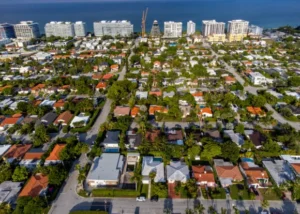
The Strategic Renovation: A Proven Playbook for Maximizing Real Estate Value
For decades, the fundamental logic of real estate investing has remained unchanged: purchase an undervalued asset, execute strategic renovations, and capture the resulting appreciation. While the strategy is simple in concept, the execution often separates profitable investors from those who see their margins eroded by unnecessary expenses.
In the second installment of our deep-dive series on rehabilitation costs, veteran investor Henry Washington outlines the "value-add" framework that has guided his success across more than 100 individual projects. By focusing on high-impact upgrades rather than aesthetic vanity, investors can reliably increase property value by tens—and occasionally hundreds—of thousands of dollars.
The Core Philosophy: Renovating for Return
The "whole game" of real estate investing, according to Washington, is the delta between renovation costs and the resulting increase in market value. Spending $20,000 on a kitchen that adds $50,000 to the appraised value is the standard to which every investor should aspire.
However, the industry is rife with "pretty" renovations that offer little to no return on investment. The key is understanding what appraisers, prospective buyers, and renters actually value. While the "Big Five"—plumbing, electrical, HVAC, foundation, and roof—must be addressed to make a property viable, the true wealth-building phase comes from cosmetic and functional upgrades that drive desirability.
Kitchens and Bathrooms: The Engine of Property Value
The Kitchen: Balancing Layout and Cost
Kitchens are the undisputed "moneymakers" of any home renovation. However, Washington warns against the common pitfall of over-investing in structural changes. Unless the existing layout is fundamentally dysfunctional, moving plumbing or tearing down walls often costs more than the marginal value it provides.
- Flooring: In wet spaces like kitchens, tile remains the gold standard. Utilizing larger 12×24 inch tiles can create a modern aesthetic while streamlining labor. Investors should expect to pay between $1.50 and $3.00 per square foot for materials, with labor ranging from $1.50 to $2.50 per square foot.
- Countertops: For a standard three-bedroom, two-bathroom home, countertop surface area typically ranges from 35 to 70 square feet. By budgeting between $25 and $40 per square foot for quartz or granite, investors can typically keep this line item under $2,000.
- Cabinetry Strategy: This is the most significant line item in any kitchen project. Rather than opting for low-quality particle board, investors should consider professional cabinet door replacement. By cleaning existing solid-wood boxes and installing new doors with soft-close hinges, investors can achieve a "like-new" look for $1,100 to $2,200—a fraction of the cost of a full cabinet replacement.
- The "Desirability" Factor: Backsplashes are a low-cost, high-impact feature. While they may not drastically alter the appraisal, they significantly increase marketability. With materials costing less than $1,000 for a typical kitchen, the return is found in shorter days-on-market.
Bathroom Renovations: Precision and Function
Bathroom updates should follow a similar disciplined approach. For most projects, replacing a dated vanity with a modern, affordable off-the-shelf unit is more cost-effective than attempting to salvage old fixtures.
- The Bathing Area: Washington strongly advises against plastic tub inserts, which tend to signal "builder-grade" quality to buyers. Investing in floor-to-ceiling tile for showers and tub surrounds creates a luxury feel that justifies higher rents or sale prices.
- Fixture Budgeting: A common mistake is overspending on accessories. By sourcing plumbing and lighting fixtures from online retailers, investors can outfit a full bathroom for approximately $500–$600, maintaining a total renovation cost per bathroom at roughly $5,000.
Hidden Value: Three Upgrades Many Investors Ignore
Beyond the traditional kitchen and bathroom updates, experienced investors look for "hidden" square footage under the existing roof structure.
1. Converting Unconditioned Space
Many homes built between the 1950s and 1980s contain sunrooms or enclosed porches that are not currently part of the home’s "heated and cooled" square footage. By adding ductwork or a mini-split system, these areas can be legally converted into living space. If a home is valued at $225 per square foot, adding 200 square feet of finished space can generate $45,000 in equity for an investment of less than $5,000.
2. The Garage Conversion
For single-family rentals, the number of bedrooms is the primary driver of rent growth. Converting a single-car garage into a bedroom or a primary suite can increase monthly rent by $250 or more. If the home sits on a crawl space but the garage is on a concrete slab, building a subfloor to level the transition is a standard, cost-effective maneuver that transforms a storage space into a high-value asset.
3. Layout Modernization
Older homes often feature compartmentalized layouts, such as formal living and dining rooms that go unused by modern families. Converting a formal dining room into a bedroom or an office—by adding a closet and a door—is an extremely inexpensive way to increase the property’s utility. As long as the room has an existing window, these conversions can often be completed for under $3,000.
Supporting Data and Estimating Methodology
To ensure profitability, investors must move away from "guesstimates" and toward a systematic, per-square-foot approach.
- Whole-House Paint: Rather than itemizing per room, calculate the cost for the entire interior. Budgeting between $3.50 and $5.50 per square foot—depending on whether cabinets are included—provides a reliable ballpark.
- Blended Flooring: Investors should utilize a "blended" cost per square foot for the entire house. By averaging the cost of LVP in common areas, tile in wet rooms, and carpet in bedrooms, investors can quickly analyze a property’s potential without getting bogged down in minute details. For a 1,500-square-foot home, a blended budget of $6.50 per square foot ($9,750 total) is a standard benchmark.
Implications for the 2026 Investor
The current real estate climate demands efficiency. As interest rates and material costs fluctuate, the investors who thrive will be those who can accurately predict their renovation costs before submitting an offer.
Professional Guidance
- Market Research: Always study "comps" in your specific neighborhood. If the market expects high-end appliances, failing to provide them will lead to longer vacancies. Conversely, if you are over-improving for a neighborhood of starter homes, you are effectively burning capital.
- Contractor Relationships: Use the data provided here as a baseline, but always secure multiple bids from local contractors. Labor costs vary wildly by region, and your goal is to find professionals who understand the value-add philosophy.
- The Role of Technology: Leveraging tools and spreadsheets to track every dollar allows for rapid iteration. If you know your cost-per-square-foot for every major trade, you can evaluate a potential deal in minutes rather than days.
Conclusion
Real estate investing is not about making a house look "pretty"; it is about making a house perform as a financial vehicle. By focusing on the kitchen and bath, reclaiming unconditioned square footage, and repurposing outdated formal spaces, investors can create massive value that persists regardless of market volatility. The formula for success is clear: prioritize the right renovations, maintain conservative estimates, and focus on the metrics that drive long-term rental income and resale demand.