The Limits of Dollar Hegemony: How China and the Renminbi Shield Iran from U.S. "Economic D-Day"
By Zongyuan Zoe Liu
Published: September 18, 2026
Main Facts
The architecture of modern American economic warfare is facing an unprecedented structural test. In late August 2026, U.S. Treasury Secretary Scott Bessent announced what he termed an “economic D-Day” against the Iranian regime—an aggressive campaign officially dubbed by the White House as Operation Economic Outcast. The stated objective of this total financial offensive is the absolute isolation of Tehran from international commerce, cutting off its remaining lifelines to the global economy by leveraging the unmatched extraterritorial reach of the U.S. dollar-based financial system.
However, Washington’s strategy confronts a profound geopolitical and economic reality: the traditional mechanics of secondary sanctions are rapidly losing their bite. Because the bulk of Iran’s vital oil trade now bypasses Western clearinghouses entirely—routing instead through Chinese financial institutions and renminbi-based networks—the success of Washington’s maximum pressure campaign increasingly depends on entities and monetary networks well beyond American control.
The core friction of Operation Economic Outcast lies in the divergence between Washington’s policy ambitions and the shifting realities of the global financial architecture. For decades, the U.S. Treasury has weaponized the Society for Worldwide Interbank Financial Telecommunication (SWIFT) network and access to correspondent banking accounts denominated in U.S. dollars to force compliance from foreign actors. Yet, as Beijing and Tehran have deepened their bilateral economic integration, they have constructed alternative financial plumbing. By settling energy trades in Chinese yuan (RMB) and utilizing domestic or bilateral messaging systems, Iran has insulated its primary revenue generator—petroleum exports—from direct American oversight, rendering traditional U.S. Treasury enforcement mechanisms far less effective.
Chronology
To understand how the current standoff materialized, it is necessary to trace the convergence of U.S. enforcement escalations and Sino-Iranian financial integration over recent years:
- May 2018: The United States officially withdraws from the Joint Comprehensive Plan of Action (JCPOA)—the Iran nuclear deal—and initiates a "maximum pressure" campaign, systematically re-imposing sweeping economic sanctions on Iran’s banking and energy sectors.
- March 2021: China and Iran sign a 25-year Comprehensive Strategic Partnership agreement, formalizing long-term cooperation in economic, security, and energy domains, with provisions for increased local currency settlement to evade dollar exposure.
- Late 2023 – 2024: Amid escalating Middle Eastern tensions and tighter U.S. enforcement, independent Chinese "teapot" refineries become the primary buyers of discounted Iranian crude, increasingly utilizing small, regional Chinese banks that lack exposure to the U.S. financial system, thereby nullifying the threat of dollar-clearing bans.
- August 2026: U.S. Treasury Secretary Scott Bessent declares an “economic D-Day” against Iran, unveiling Operation Economic Outcast at the White House with promises of total financial isolation.
- Late August – September 2026: Financial analysts and geopolitical experts point out the glaring strategic paradox of the new campaign: its success relies on Beijing—a strategic rival—cooperating with a policy designed to choke off the primary energy supply fueling China’s industrial base.
Supporting Data
The mechanics of Operation Economic Outcast collide directly with robust trade and financial data underpinning the contemporary Sino-Iranian energy corridor:
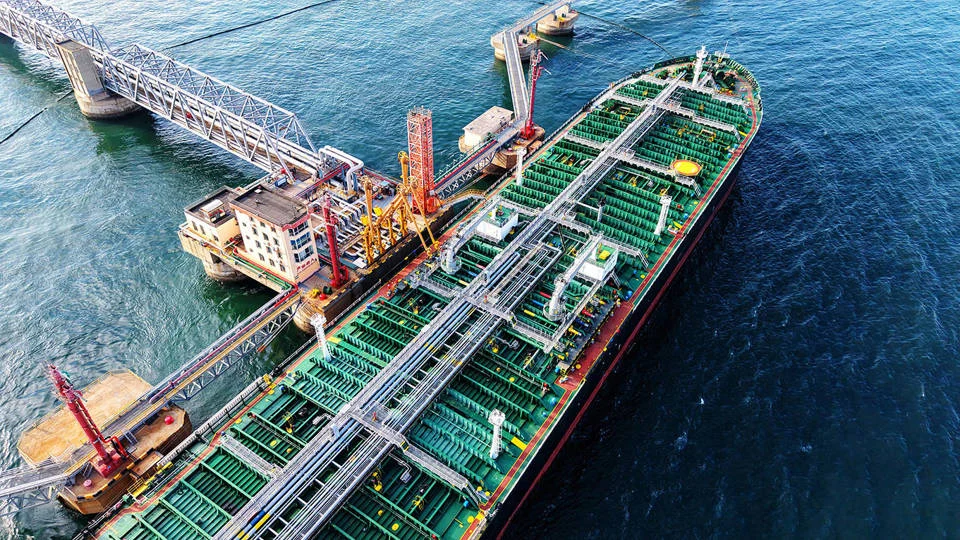
- Sino-Iranian Oil Flows: Despite years of U.S. sanctions, Iran has consistently exported between 1.2 million and 1.5 million barrels of oil per day, with the vast majority destined for independent refiners in the People’s Republic of China.
- The Renminbi Share: According to trade data from intelligence platforms tracking dark-fleet and sanctioned commodity movements, upwards of 70% to 80% of Sino-Iranian bilateral energy transactions are now settled in renminbi rather than U.S. dollars.
- Bypassing SWIFT: Transactions are increasingly cleared through bilateral channels, specialized escrow accounts in local currencies, or alternative messaging frameworks such as China’s Cross-Border Interbank Payment System (CIPS), bypassing Western-dominated clearing hubs altogether.
- Target Vulnerability Asymmetry: While major Chinese state-owned banks remain sensitive to secondary U.S. sanctions due to their reliance on dollar-clearing access, the niche, localized, and regional Chinese financial institutions servicing the Iranian trade often maintain zero exposure to Wall Street or the U.S. Federal Reserve system, rendering traditional Treasury blacklists toothless.
Official Responses
The unveiling of Operation Economic Outcast has prompted sharp rhetoric and guarded diplomatic maneuvers across Washington, Beijing, and Tehran.
Washington’s Stance
The U.S. Treasury Department remains adamant that the financial offensive will succeed through tightening enforcement nets. In his late August address, Secretary Scott Bessent framed the initiative as a historic necessity to curb regional instability and force Tehran back to the negotiating table.
"We are marshaling the single greatest financial offensive ever marshaled against an adversary," Bessent declared. "There will be no safe harbor for those who choose to underwrite the Iranian regime’s destabilizing activities."
Administration officials have insisted that secondary sanctions will be aggressively expanded to target any institution—regardless of geography—that facilitates illicit Iranian commerce, signaling that Washington is prepared to test diplomatic relations with Beijing if necessary.
Beijing’s Stance
Beijing has responded with its characteristic diplomatic cool, rejecting unilateral U.S. sanctions as illegitimate violations of international law. Representatives from the Chinese Ministry of Foreign Affairs have repeatedly emphasized that China’s normal economic, trade, and energy cooperation with Iran is transparent, lawful, and must be respected.
Chinese state media and economic commentators have used the occasion of Operation Economic Outcast to further highlight what they frame as the inherent risks of relying on a U.S. dollar-centric global financial system. Beijing continues to advocate for multipolar financial architecture, asserting that sovereign nations have the right to choose their settlement currencies free from extraterritorial coercion.
Tehran’s Stance
Tehran has dismissed the latest U.S. campaign as psychological warfare disguised as economics. Iranian officials have pointed to the resilience of their non-dollar trade networks, asserting that years of economic siege have successfully "sanction-proofed" their primary budget lifelines. Iranian central bank representatives have maintained that trade ties with Asian partners remain stable and immune to Washington’s latest ultimatums.
Implications
The structural reality highlighted by Operation Economic Outcast extends far beyond the immediate geopolitical struggle between Washington and Tehran. It touches upon the foundational pillars of global economic governance.
1. The Erosion of Secondary Sanctions
Secondary sanctions derive their power from a simple premise: access to the U.S. dollar is indispensable for international commerce. Because virtually every major global bank must clear dollar transactions through New York, the threat of being cut off from this system is an existential one.
However, the Iran-China energy trade demonstrates that when an economic superpower (China) provides alternative plumbing (renminbi clearing and localized banking networks), target states can establish a "sanction-evasion equilibrium." If Washington cannot compel Beijing to shut down these channels without triggering a catastrophic trade war, the utility of secondary sanctions as a primary tool of U.S. foreign policy suffers a severe blow.
2. Acceleration of De-Dollarization
The tactical friction observed in Operation Economic Outcast provides a powerful incentive for other revisionist or hedging states to accelerate their de-dollarization efforts. When countries observe Tehran successfully maintaining oil revenues through non-dollar mechanisms, it validates the strategic necessity of building parallel financial infrastructure. Over the long term, this gradual fragmentation of the global payments landscape risks hollowing out the exorbitant privilege of the U.S. dollar, diluting America’s future economic statecraft capabilities.
3. A Geopolitical Paradox at Normandy’s Shadow
Using a D-Day metaphor for a campaign reliant on Beijing exposes a striking historical irony. The original D-Day operations in 1944 represented the pinnacle of Western allied coordination against fascism. Today, executing an economic D-Day against modern adversaries requires the cooperation—or at least the acquiescence—of a formidable strategic competitor that views the post-Cold War American-led order with deep skepticism.
As Washington presses forward with Operation Economic Outcast, policymakers must grapple with a sobering truth: as long as Beijing provides an economic umbrella and a renminbi-denominated lifeline, the walls of financial isolation will remain porous, revealing the hard limits of American financial hegemony in a multipolar world.