As Americans prepare to pass down an estimated $100 trillion over the next two decades in what economists have dubbed the "Great Wealth Transfer," families are increasingly confronting difficult choices regarding their legacies. At first glance, leaving an equal inheritance to one’s children feels like the epitome of fairness. Splitting everything cleanly down the middle avoids playing favorites, minimizes emotional friction, and seemingly guarantees peace.
However, estate-planning attorneys and financial advisors warn that "equal" does not automatically mean "fair." In many cases, strict mathematical equality can backfire, resulting in severe tax surprises, deep-seated resentment, and permanently shattered family relationships long after the parents are gone.
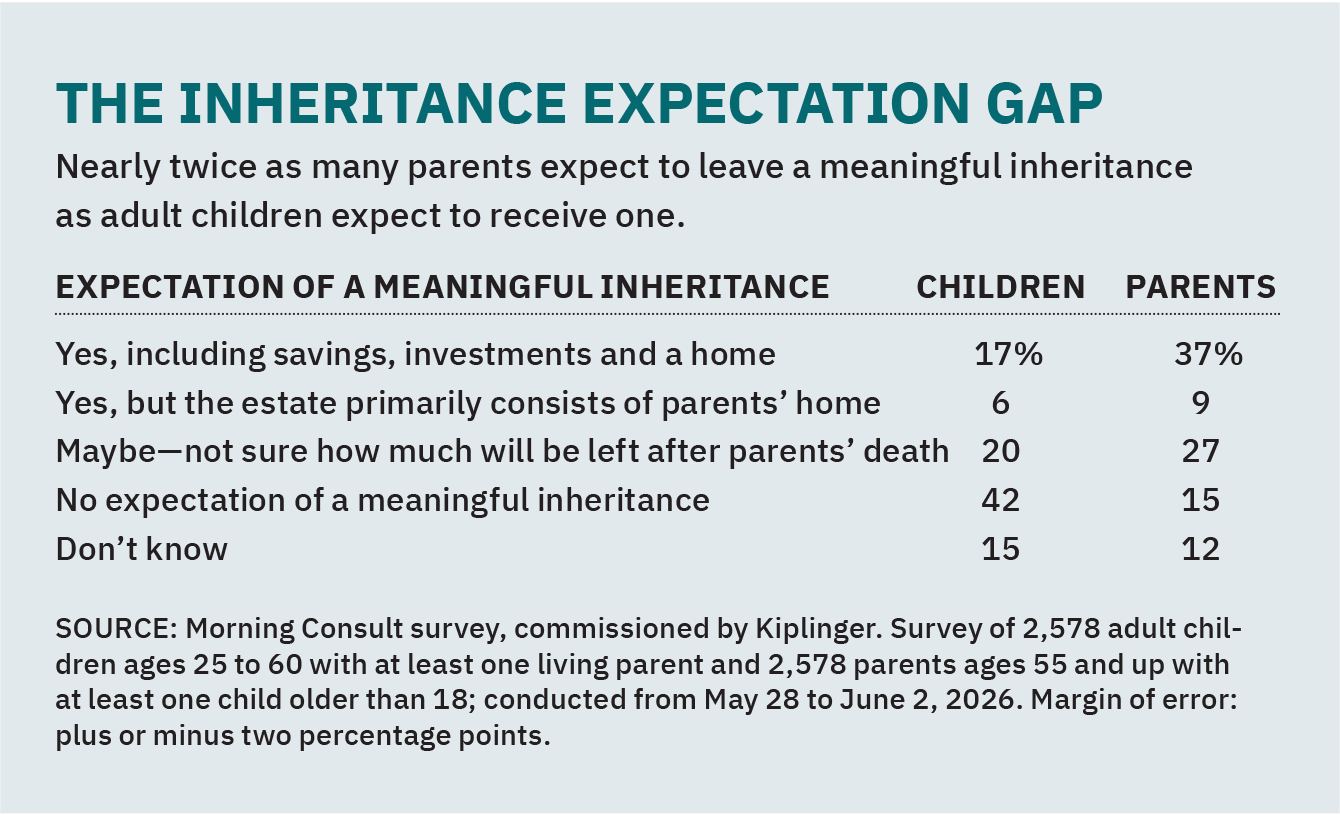
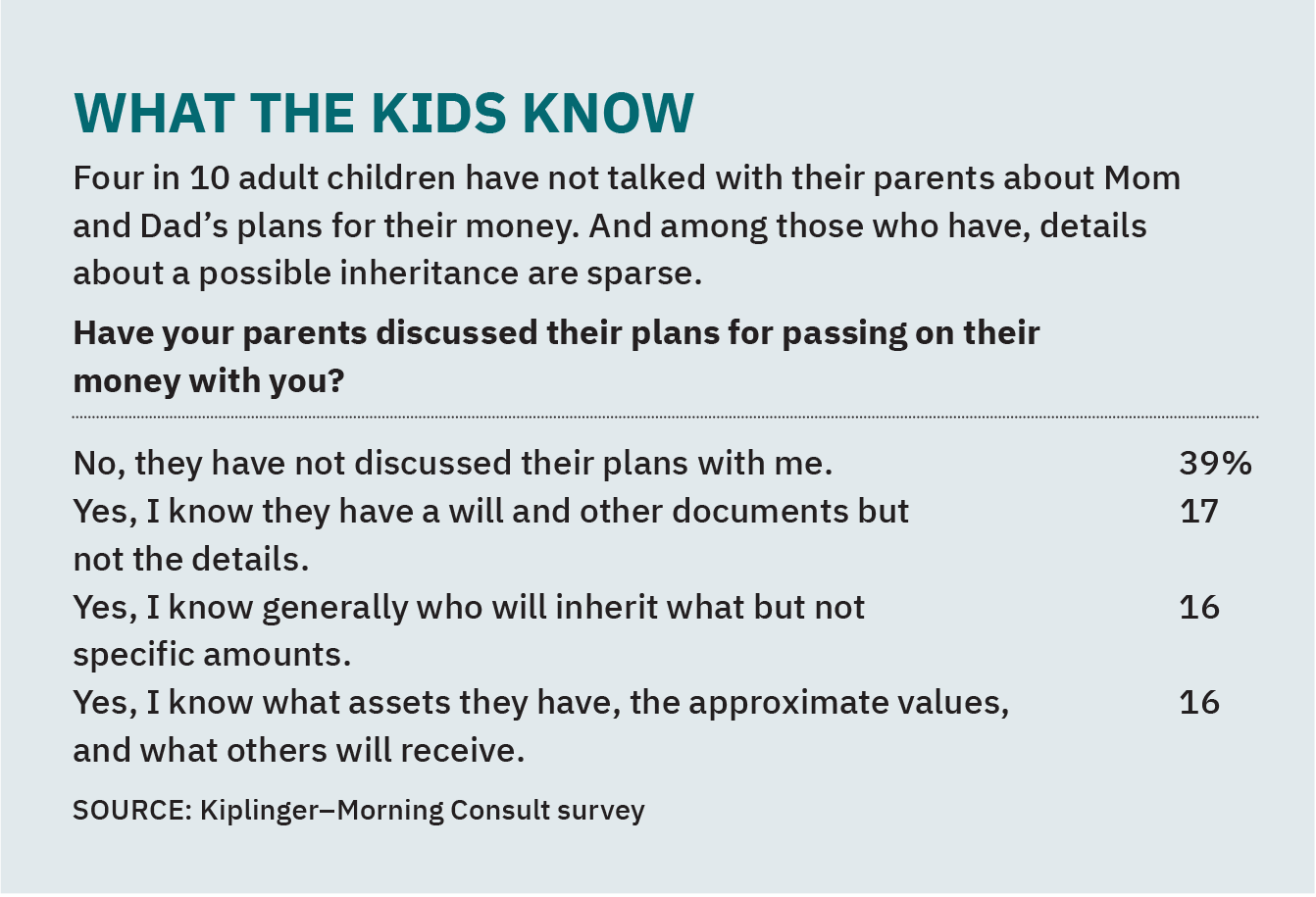
A comprehensive new survey conducted by Kiplinger and Morning Consult highlights a profound generational disconnect surrounding these expectations. Two in five families have never discussed inheritance plans, and nearly three in ten parents have no formal estate plan in place at all. Furthermore, the data reveals a stark expectation gap: parents are twice as likely to plan on leaving a meaningful inheritance as their adult children are to expect one.
Understanding the nuances of estate planning requires looking beyond simple percentages to examine how assets are structured, how past financial gifts factor into the equation, and why open communication remains the ultimate safeguard for family harmony.
Main Facts: The Myth of the Equal Split
The core dilemma of modern estate planning centers on the tension between equality and equity. While dividing an estate into identical slices feels safe, it frequently disregards the vastly different realities of children’s lives.
The Expectation Gap: Kiplinger-Morning Consult data shows that adult children favor "fair" inheritances over strictly "equal" ones by a striking 21-percentage-point margin compared to their parents.
Lack of Preparation: Approximately 30% of parents have zero formal estate planning documents, while 40% of families have never had an open conversation about what will happen to their wealth.
The Legal Default: Dying without a valid will (intestacy) means state laws dictate how property is distributed based on rigid statutory formulas, entirely ignoring personal family dynamics.
The Emotional Weight: For many heirs, an inheritance is subconsciously viewed as a measurement of parental love. Unexplained disparities—or even unadjusted equal splits—can lead to claims that "Mom and Dad loved you more."
Chronology and Evolution of Modern Estate Planning
The conversation surrounding the Great Wealth Transfer has evolved dramatically over the past several years as demographic shifts place unprecedented volumes of wealth into the hands of Millennials and Generation Z.
Phase 1: The Traditional Post-War Model (Mid-to-Late 20th Century)
For decades, traditional estate planning was straightforward. Nuclear families typically relied on simple, reciprocal wills that left 100% of assets to a surviving spouse, and upon their passing, divided the remaining estate equally among all surviving children. Assets were largely localized, consisting of primary residences, modest savings accounts, and traditional pensions. The primary objective was avoiding probate court, with little thought given to complex tax brackets, blended families, or illiquid alternative assets.
Phase 2: The Shift Toward Complex Assets (Early 2000s)
As the economy modernized, family wealth shifted away from simple bank accounts into complex vehicles: 401(k)s, IRAs, multi-member LLCs, family businesses, and high-appreciation real estate. During this period, estate planners began utilizing revocable living trusts to bypass probate. However, many families continued applying the outdated "equal split" philosophy to highly unequal modern asset classes—such as dumping a taxable traditional IRA and a tax-free Roth IRA into equal portions without calculating the resulting tax burden.
Phase 3: The Great Wealth Transfer Era (Present Day)
Today, families face the largest intergenerational wealth transfer in history. With trillions of dollars moving down the generational line, financial professionals are pushing back against the "cookie-cutter" equal split. Modern estate planning now emphasizes dynamic, customized tools—such as lifetime gifting adjustments, hotchpot clauses, and specialized trusts—to account for caregivers, struggling heirs, and volatile assets.
Supporting Data: Insights from the Kiplinger-Morning Consult Survey
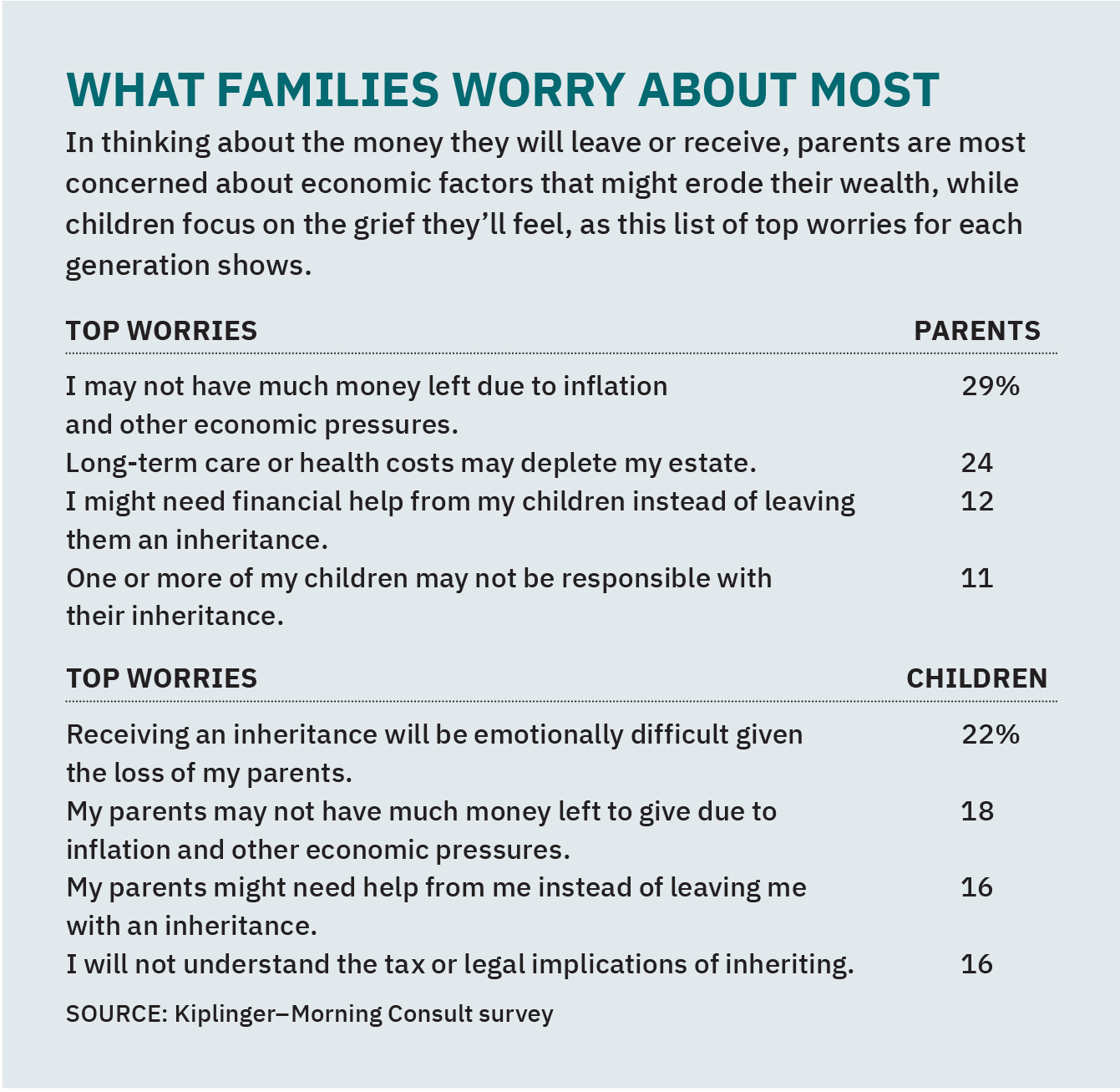
The recent survey data paints a clear picture of where families stand regarding inheritance readiness, knowledge gaps, and underlying anxieties.
Survey Metric
Percentage / Finding
Families with No Inheritance Discussions
40%
Parents with No Formal Estate Plan
30%
Adult Children Feeling Ready to Manage an Inheritance
70%
Parents Feeling Ready to Pass Down Wealth
67%
Preference Gap ("Fair" vs. "Equal")
Children favor "fair" over "equal" by a 21-percentage-point margin compared to parents.
The data emphasizes that while a majority of parents and children feel administratively "ready" to handle wealth transfer, emotional and logistical preparedness lags severely behind.
Official Responses and Expert Perspectives
Industry leaders and legal experts caution that treating children identically when their life circumstances are fundamentally different can poison family dynamics.
The Danger of Punishing Success or Rewarding Failure
Ryan Skinner, president of Apex Retirement Services, advocates for a balanced initial approach. "The best starting point is to plan to divide the inheritance equally while keeping your options open," Skinner explains. "Successful children should not be punished for succeeding, and children who have made poor decisions should not automatically be rewarded for failing."
Fairness vs. Equality
Phil Reed, an estate and asset protection attorney at Reed Law, PLC, emphasizes that mathematical simplicity is rarely the best metric.
"Inevitably, fairness is always the first concern. But fairness and equality are not the same thing, and having simplified math isn’t always the best choice when determining the percentage of a distribution."
Reed points to common scenarios where equal splits fail:
Caregiver Sacrifices: If one child spends years acting as the primary caregiver for aging parents—managing medications, driving to appointments, and sacrificing career advancement—an equal split can feel deeply unjust to that child.
Family Business Involvement: A child actively running a family enterprise alongside parents may require a higher ownership stake to maintain business continuity, whereas uninvolved siblings could force an untimely sale.
Modernizing the Toolkit
Evan Mills, a financial advisor at Scholar Advising, highlights the logistical nightmare of splitting illiquid assets like real estate. Without proper corporate or trust structures, a family home can become a flashpoint for conflict over who pays for a new roof or property taxes.
Furthermore, legal icons have weighed heavily on the topic. When estate lawyer Marvin Blum asked legendary investors Warren Buffett and Charlie Munger about unequal inheritances during the 2022 Berkshire Hathaway annual meeting, Munger offered a blunt warning: "If you’re going to treat them unequally, that is poison." Yet, as legal experts note, failing to account for lifetime gifts made to one child over another can produce the exact same resentment.
Implications: How to Build a Better Estate Plan
To avoid the traps of the Great Wealth Transfer, families must transition away from rigid, uncommunicated formulas and adopt a comprehensive, strategic approach.
1. Account for Lifetime Gifting (Hotchpot Clauses)
It is common for parents to assist one child with a college education or a house down payment while helping another through a medical emergency. Without an adjustment in the estate plan—often managed through a hotchpot clause—an equal final distribution actually magnifies past disparities, leaving the child who received less during your lifetime feeling shortchanged.
2. Communicate Before It’s Too Late
The single most effective safeguard against probate litigation and family feuds is transparency. Writing a detailed letter of intent to accompany estate planning documents allows parents to explain their reasoning directly. Transparency dispels the harmful "Mom loved you more" narrative.
3. Protect Vulnerable or Spendthrift Heirs
Not all adult children possess the same financial discipline. Utilizing trusts with spendthrift provisions ensures that inheritances are protected from poor decision-making, creditor claims, or impulsive spending, providing long-term security rather than short-term windfalls.
4. Consult Professionals
Working with certified financial planners, estate attorneys, and professional trustees ensures that non-probate assets, retirement accounts, and life insurance proceeds are distributed with full awareness of their tax implications.
Ultimately, navigating the Great Wealth Transfer successfully requires moving past the illusion that an identical split equals a fair legacy. By matching estate plans to the unique needs of each child—and communicating those choices openly—families can protect their wealth, honor individual sacrifices, and preserve relationships for generations to come.