The Interest Rate Paradox: Navigating Real Estate in an Era of Persistent Volatility
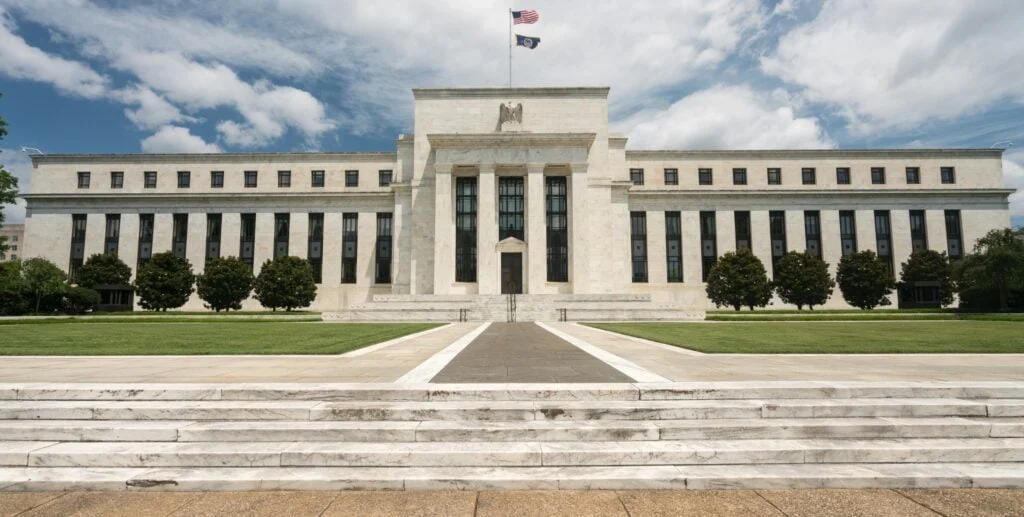
As Al Pacino’s Michael Corleone famously lamented in The Godfather Part III, "Just when I thought I was out, they pull me back in!" For the American real estate investor, this cinematic sentiment has become the defining theme of the mid-2020s. Just as the market began to reconcile with the plateauing of borrowing costs, the Federal Reserve’s latest quarter-percentage-point rate hike has sent shockwaves through the sector, forcing investors back into a defensive posture reminiscent of the 2022 market cooling.
The New Reality: Main Facts and Economic Context
The recent decision by the Federal Reserve to implement a 0.25% rate hike—the first in three years—comes amidst a complex geopolitical and domestic backdrop. Primarily fueled by inflationary pressures exacerbated by the conflict in Iran and subsequent global supply chain anxieties, the Fed has signaled that its battle against inflation is far from over.
For the average investor, this move acts as a secondary blow. With mortgage rates already hovering above the 7% threshold, the Fed’s tightening of the federal funds rate serves to keep borrowing costs elevated, effectively locking many retail buyers out of the market. While the Fed does not set mortgage rates directly—those are dictated by the 10-year Treasury yield, bond market sentiment, and mortgage-backed security demand—the central bank’s posture exerts significant upward pressure on the cost of capital.
A Chronology of Uncertainty: From Powell to Warsh
The current landscape is a sequel of a story we have seen played out multiple times with shifting leadership. The narrative began with the Jerome Powell-Joe Biden era, transitioned through the Powell-Trump dynamic, and has now arrived at the tenure of the Fed’s newly appointed chair, Kevin Warsh.
Despite the revolving door of political and monetary leadership, the script remains stubbornly consistent. The primary challenge for investors—securing cash flow on leveraged assets or qualifying for acquisition financing—persists. The market has shifted from a post-pandemic frenzy to a protracted period of "wait and see."
For many, the dream of a quick pivot to lower rates has been deferred. Investors who banked on a rapid normalization of the yield curve are now forced to recalibrate their models, moving away from the "growth at all costs" mentality toward a more rigorous, cash-flow-centric approach.
Data Analysis: The Geographical Divide
A common mistake in analyzing the current climate is treating the U.S. housing market as a monolith. Data from Realtor.com highlights a fractured recovery that varies significantly by region.
- The Midwest: Showing signs of cooling, with pending sales down 4.3% year-over-year. This region offers a "hunter’s market" where low competition allows savvy investors to negotiate aggressively.
- The West: Pending sales have contracted by 3.3%, with over 20% of listings currently undergoing price reductions.
- The South and Northeast: Counter-intuitively, these regions have seen growth in pending sales (up 1.8% and 1.1%, respectively).
This disparity underscores that successful investing today is a state-by-state, and often neighborhood-by-neighborhood, endeavor. While national headlines scream of a housing slump, the micro-market reality offers pockets of opportunity for those who look past the aggregate data.
Official Perspectives and Expert Insight
The consensus among industry leaders is that the current rate environment acts as a natural filter for the market. Beau Keenan, broker-owner of Dickson Realty, notes that the move from 6.75% to 7% is not just a statistical increase—it is a barrier that removes a massive swath of potential owner-occupant buyers.
"Historically, these rates aren’t extreme," Keenan stated in a recent HousingWire report, "but when you layer them on top of record-high property prices, the math stops working for a large segment of the population."
Conversely, there is a silver lining for the institutional or well-capitalized private investor. Benjamin Cohen, a mortgage executive, suggests that the lack of urgency in the market is an asset for those with the liquidity to act. "For buyers, a slower market can actually create opportunity," Cohen told Realtor.com. "There is more time to make a decision, more negotiating power, and potentially more flexibility from sellers who are feeling the squeeze."
The "C.R.E.A.M." Principle: Cash as King
The hip-hop mantra "Cash Rules Everything Around Me" has transitioned from a cultural touchstone to an essential investment strategy. In an era where debt is expensive and credit standards are tightening, cash-ready buyers are finding themselves in the driver’s seat.
Anna-Marie Ellison, vice president of sales at John R. Wood Properties, observes that the most successful investors today are those insulated by equity. "A lot of our buyers are coming in with equity from a home they just sold, or they’re paying cash outright, so a hike isn’t going to keep them away," she notes.
For those without massive cash reserves, the strategy must shift. Investors are increasingly looking at:
- Seller Financing: Negotiating terms directly with sellers who are desperate to exit a property.
- Private Money Partnerships: Leveraging relationships with private lenders who are seeking higher yields than the stagnant bond market.
- Portfolio Optimization: Selling underperforming assets to consolidate capital into higher-yielding, low-maintenance properties.
Implications for Rental Demand
Perhaps the most resilient aspect of the current market is rental demand. As the Fed’s actions keep potential homebuyers in the rental pool, vacancy rates in many urban and suburban centers remain at historic lows. Data from the Federal Reserve Bank of New York indicates that rent growth remains firm, even as consumer inflation expectations fluctuate.
For landlords, this creates a unique stability. While your cost of debt may be higher, the demand for your product is equally high. This allows for steady rent increases that, in many cases, can offset the impact of higher interest rates on new acquisitions.
Strategic Recommendations: How to Survive and Thrive
For property owners with established portfolios, the temptation to expand is always present. However, in this volatile cycle, "stacking doors" may be a dangerous strategy.
1. Prioritize Stabilization Over Expansion
Instead of chasing new, high-rate deals, focus on the operational efficiency of your existing portfolio. Investing in capital improvements that increase tenant retention or justify rent bumps is currently a safer bet than taking on new debt at 7% or higher.
2. Audit Your Portfolio
If you are struggling to maintain cash flow on specific properties, do not be afraid to exit. Taking a "haircut" now to shed a liability can prevent a long-term liquidity crisis. A smaller, healthier portfolio is infinitely more valuable than a large, distressed one.
3. Focus on Long-Term Debt
For those who must borrow, prioritize long-term, fixed-rate instruments. Avoid the allure of short-term ARMs (Adjustable Rate Mortgages) that leave you exposed to the Fed’s future decisions. If you cannot make the numbers work with a fixed-rate loan, the deal is likely not worth the risk in the current climate.
Final Thoughts
The Federal Reserve’s latest move is a reminder that the real estate market is subject to macroeconomic forces far beyond our control. However, it is also a reminder that fortunes are rarely made during periods of "easy" money; they are built by those who can navigate the turbulence when others are sidelined.
While the "nightmarish fever dream" of high interest rates persists, it is not a permanent state of existence. History shows that markets eventually stabilize, and those who maintained discipline, preserved their cash, and focused on fundamental property performance will be the ones to capitalize when the pendulum finally swings back. In the race to build wealth, the objective is not just to reach the finish line—it is to remain in the game long enough to enjoy the victory.