Beyond the Beltway: How Community-Owned Thermal Energy is Reshaping Neighborhood Resilience
By [Your Name/Journalistic Staff]
For years, the conventional wisdom among climate advocates was clear: the path to a green transition in the United States ran directly through Washington, D.C. The assumption was that federal policy—subsidies, mandates, and broad infrastructure bills—would serve as the primary engine for energy democracy.
However, a growing movement of community organizers and technologists has reached a different, more radical conclusion. They argue that waiting for federal machinery to shift is no longer a viable strategy for communities facing the immediate, compounding crises of climate change, energy poverty, and economic instability. At the center of this paradigm shift is the OakTREE Initiative in Oakland, California, a project that is proving that when communities stop waiting for the state to act, they can build their own power—literally and figuratively.
The Reckoning: When "Reasonable" Strategies Stalled
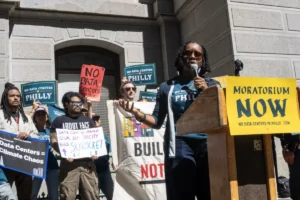
The genesis of the OakTREE Initiative began in a moment of professional disillusionment. Crystal Huang, a long-time community organizer and founder of the Energy Democracy Project, had spent years lobbying and organizing to align disparate voices from indigenous, rural, and urban communities behind a unified vision of energy justice.
Following the arrival of the Biden administration, there was a palpable sense of hope. Proponents of energy democracy felt that large-scale federal infrastructure investment was imminent. Yet, after an exhausting, high-stakes briefing with a Washington lobbyist, the reality set in. The lobbyist, delivering a blunt assessment, reminded Huang that even with federal support, her movement was only at the beginning of a "long slog."
"That was the moment I knew something had to change," Huang reflects. "We were operating on the reasonable assumption that federal policy was the critical lever. We realized that while federal policy matters, our current political moment demands a more immediate, localized approach."
This realization brought her together with Mark Miles, a technology innovator who had spent a decade developing thermal energy systems. While Huang approached the energy crisis from the perspective of community empowerment, Miles approached it from the perspective of industrial efficiency. When the two met, they realized they had both been thinking too small. By merging Huang’s grassroots mobilization with Miles’s technological expertise, they founded the OakTREE Initiative, moving away from national lobbying toward a model of localized, block-scale energy sovereignty.
Thermal Energy Networks: The Under-the-Radar Solution
At the heart of the OakTREE model are Thermal Energy Networks (TENs). Unlike rooftop solar or individual household heat pumps, which often place the financial burden of installation on the individual homeowner, TENs are neighborhood-scale infrastructure.
These systems utilize a shared network of underground pipes to move heat in and out of buildings using heat pumps. By leveraging geothermal heat, solar thermal systems, or even waste heat reclaimed from municipal sewage systems, these networks provide a reliable, clean, and significantly more affordable way to heat and cool large swaths of a city.
The technical ingenuity of the system is secondary to its sociopolitical impact. Because TENs are not currently classified as traditional utilities in many jurisdictions, they occupy a regulatory "gray zone" that creates a unique window of opportunity. This space allows for community ownership, meaning the infrastructure can be managed by local nonprofits or community cooperatives rather than profit-driven investor-owned utilities.
"Thermal energy networks are an attractive proposition for private developers," Miles explains. "But they are also the most viable path toward giving communities control over their own thermal security. If we don’t move now, these networks will be captured by private interests, and the potential for community wealth-building will be lost."
Building the Ecosystem: The Oakland Model
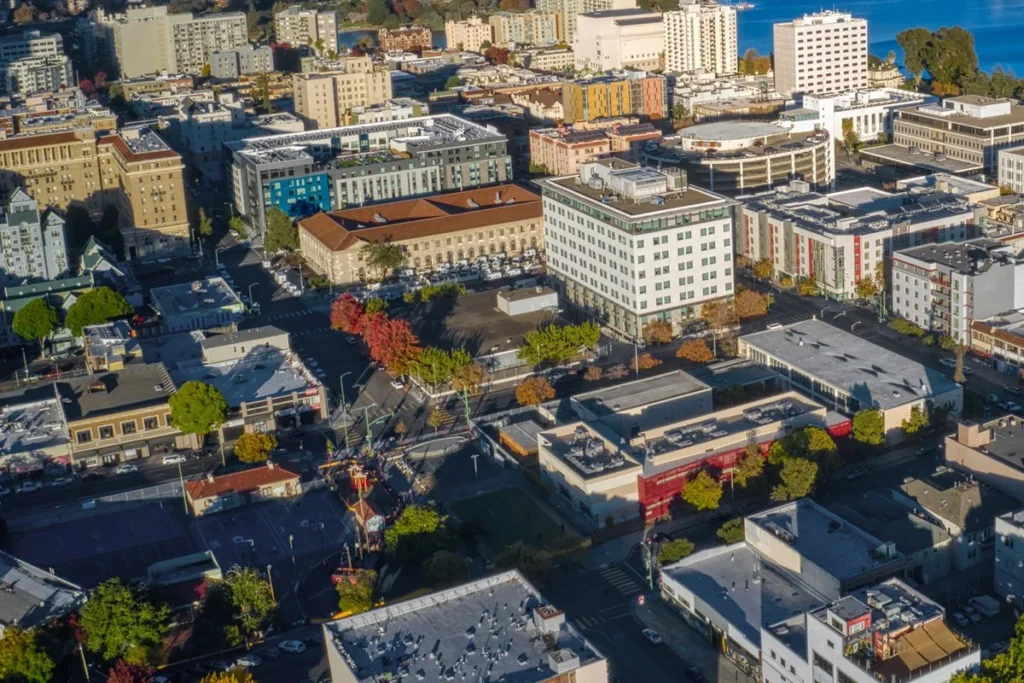
The OakTREE Initiative is not merely installing pipes; it is creating a closed-loop economic ecosystem. In Oakland, the project connects residential blocks to a centralized thermal grid. But the innovation goes further: the system is integrated with local greenhouses. These greenhouses act as thermal exchangers, absorbing excess heat from the grid to facilitate year-round urban farming, while simultaneously providing fresh produce to the community.
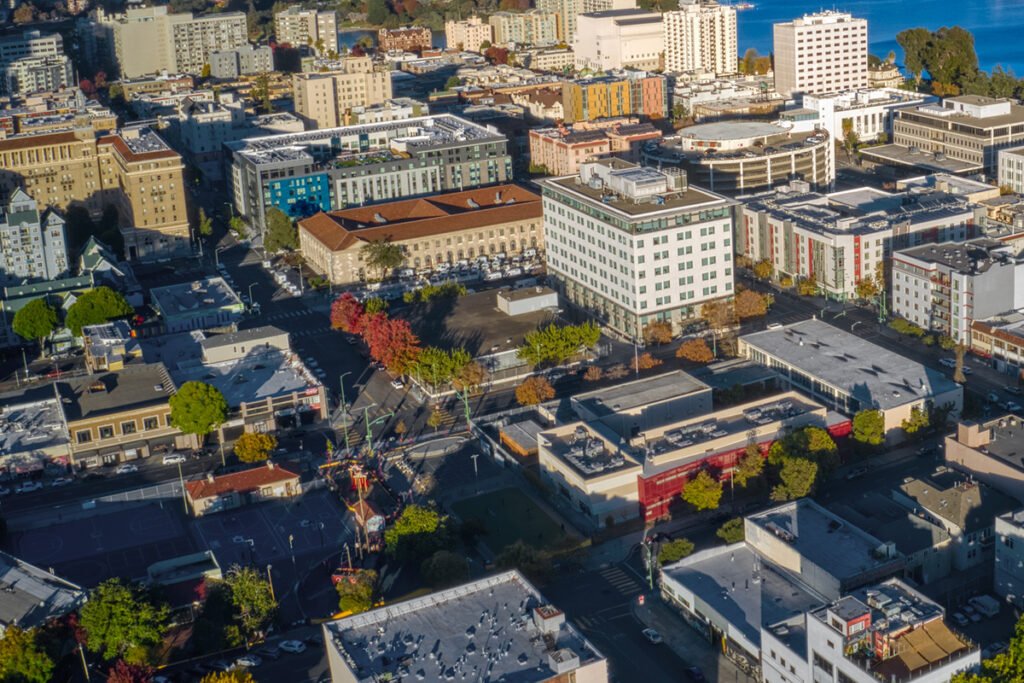
This design creates a system of "interdependency and accountability." Revenue generated from the sale of excess energy is reinvested into the community, funding local jobs for maintenance, operation, and deployment of the infrastructure.
Key Project Projections (10-Year Horizon):
- Employment: Creation of approximately 100 permanent local jobs.
- Environmental Impact: Annual abatement of 8,000 tons of CO2.
- Economic Relief: Estimated energy savings of $300 per year for roughly 14,440 households.
These projections, while impressive, are viewed by the founders as conservative. They argue that as communities become stewards of their own energy, the secondary benefits—increased social cohesion, improved health outcomes from better air quality, and local economic resilience—will far exceed the initial data points.
Voices from the Field: The Human Element
The success of such a project hinges on local buy-in. Keneda Gibson, an East Oakland resident and mutual aid organizer, notes that the fatigue of traditional activism is a major hurdle.
"I’ve seen firsthand how easily communities burn out when they are forced to rely on borrowed equipment, temporary solutions, and goodwill alone," Gibson says. "OakTREE represents something more enduring. It creates infrastructure that strengthens the work neighbors are already doing. It gives resilience a permanent home. To me, that is the difference between simply surviving and building lasting power."
For Gibson and other residents, the project is a testament to the idea that co-governance works when roles are clear, impact is visible, and there is a direct, honest dialogue between the organizers and the community.
Implications: A Shift in Nonprofit Strategy
For other nonprofit organizers and activists, the OakTREE trajectory offers several critical lessons on how to navigate a volatile political and environmental landscape.
1. Stewardship Over Consumption
The current energy paradigm is extractive; it positions the resident as a passive consumer who pays a bill and receives a service. The OakTREE model shifts this, inviting residents into a role of stewardship. When the community owns the infrastructure, the relationship with energy producers changes from one of exploitation to one of mutual accountability.
2. Technology as a Tool for Equity
There is often a deep-seated, well-founded skepticism in marginalized communities regarding new technologies. Often, new "solutions" are rolled out alongside extractive business models. OakTREE demonstrates that when innovation is harnessed with a community-first mandate, it can serve as a vehicle for wealth retention within the neighborhood, rather than wealth extraction.
3. The Urgency of Local Action
While national advocacy remains a vital component of the broader climate movement, the speed of local organizing is currently proving to be more effective at the grassroots level. By focusing on block-scale implementation, organizations can pivot more quickly, test new technologies, and adapt to community needs without waiting for federal authorization.
Conclusion: A New Reservoir of Hope
As scholar and activist Angela Y. Davis once famously noted, "It is in collectivities that we find reservoirs of hope and optimism." The OakTREE Initiative is a living laboratory for this sentiment. By creating new ways for everyday people to engage with the physical infrastructure that sustains their lives, they are proving that energy democracy is not a distant, utopian goal—it is a tangible, buildable reality.
The lobbyist mentioned in the opening of this account was right: the congressional briefing was only the start of the work. But the "work" has moved from the corridors of power in Washington to the streets and blocks of Oakland. It is a transition from begging for change to building it—one pipe, one heat pump, and one neighborhood at a time. The window for this shift is narrow, but for those willing to seize it, the potential to redefine community life is limitless.