The Myth of the Schoolhouse: Why American Education is Failing Our Democracy
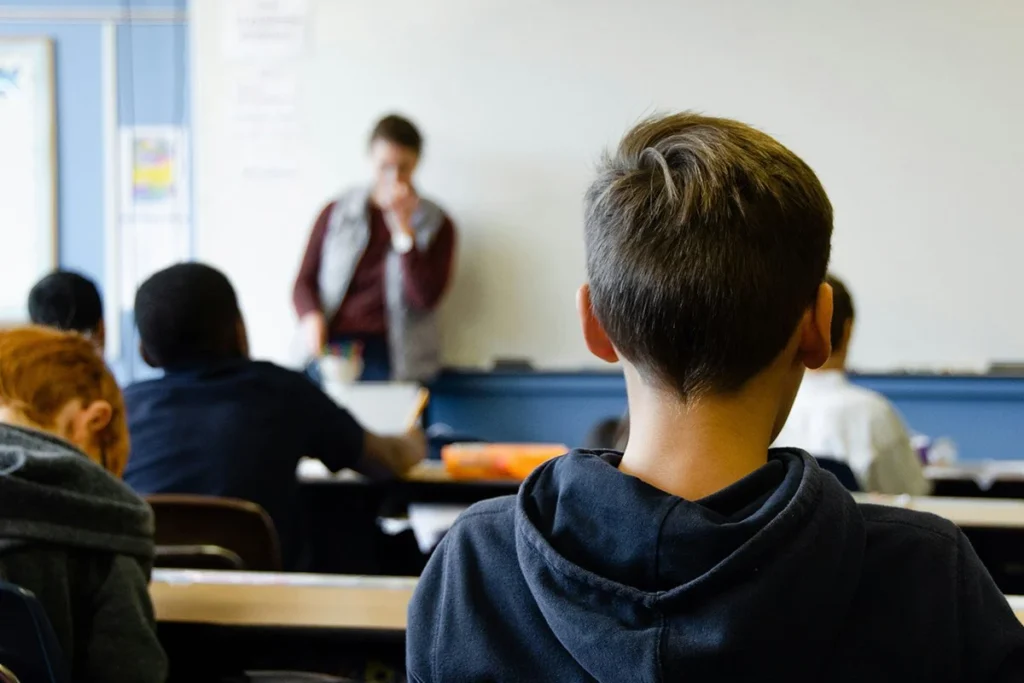
In an era marked by rising authoritarianism and the erosion of civic norms, the American public has long clung to a comforting, almost sacred narrative: that our public schools are the bedrock of our democracy. We are told that education produces an informed electorate, that schools serve as the "balance wheel" of our social machinery, and that the health of our democracy is directly proportional to the quality of our classrooms.
But as the United States marks the 250th anniversary of its founding, this foundational belief is increasingly under siege. Critics argue that the contemporary relationship between "democracy" and "education" has become a hollow, performative gesture—a rhetorical shell game that masks a system structurally designed to exclude the very democratic participation it claims to foster. To look at the state of American public education today is to confront a system that is not only failing to cultivate democratic citizens but is, in many respects, profoundly undemocratic at its core.
The Illusion of the Informed Electorate
The prevailing "common sense" regarding American education posits that more schooling equals more democracy. Proponents of this view, ranging from Horace Mann in the 19th century to modern political scientists, argue that literacy, critical thinking, and civic instruction are the prerequisites for a functioning republic. John Dewey, the preeminent philosopher of education, famously argued that democracy and education are conceptually synonymous—the continuous, shared deliberation of interests.
Recent empirical data offers some support for this optimism. Studies suggest that college graduates are approximately 10 percent more likely to vote, and global indices frequently show a positive correlation between years of schooling and democratic participation. Furthermore, the institution of the local school board is often touted as the "purest" form of democracy: hyper-local, nonpartisan, and driven by community engagement.
Yet, this reliance on voter turnout as a proxy for democratic health ignores a structural reality: education is increasingly becoming a mechanism for social stratification rather than a tool for civic empowerment. If our current educational model merely trains individuals to navigate a pre-existing, unequal bureaucracy, it is not teaching democracy—it is teaching compliance.
A Chronology of Exclusion: The Roots of "Dumbocracy"
To understand why the American educational system feels increasingly disconnected from the democratic ideal, one must examine its origins. The structure of the American school district was not born from a desire to maximize public participation. In 1650, early settlers, despite their rhetoric, struggled to integrate educational administration into the direct, town-hall-style democracy they utilized for other civic affairs. Instead, they opted for an exclusionary committee-based structure. This "separate" administrative architecture for schools became entrenched long before the U.S. Constitution was written.
The 20th century further codified this disconnect. In the landmark 1973 case San Antonio Independent School District v. Rodriguez, the U.S. Supreme Court effectively absolved the federal government of the responsibility to ensure equitable education, noting that the word "education" does not appear in the federal Constitution. This set a precedent that allowed for vast, state-sanctioned disparities in school quality based on local tax bases.
By the 1974 Milliken v. Bradley decision, which limited the ability to desegregate schools across district lines, the courts cemented the school district as a tool for socioeconomic and racial separation. In 2018, the struggle for educational equity reached a breaking point when Detroit residents sued the federal government, arguing that the chronic underfunding of their schools violated their constitutional right to participate in a democracy, as they were being denied the literacy required to function as informed voters.
The Financialization of the Classroom: Supporting Data
The most damning evidence against the current model lies in the way schools are financed. Since the late 19th century, public education funding has been inextricably tied to local property values. Because property taxes are the primary revenue stream for schools, the quality of a child’s education is directly determined by the wealth of their zip code.
This system creates a self-perpetuating cycle of inequality. Wealthy districts flourish, while working-class and impoverished districts are forced to rely on sales taxes or, increasingly, "bondage"—the practice of selling school infrastructure projects as commodities on Wall Street.
According to reports from organizations like Inequality.org, school districts are now forced to answer to anonymous bondholders who demand interest payments before educational programs can be funded. This shifts the focus of school boards from pedagogy to credit ratings. When a district’s primary concern becomes its bond rating and local property values, the "democratic" mission of the school is sacrificed. The result is a system that treats education as a real-estate amenity rather than a fundamental public good.
Implications: Can Education be Reclaimed?
If we accept that the current educational structure is "bass ackwards," what is the alternative? If democracy is not an end in itself, but a means to ensure that people can survive and thrive, then our schools must begin teaching the skills necessary for collective economic and social control.
The most compelling alternative models focus on democratic ownership. The Basque country’s experience during the Franco regime provides a blueprint: Don Jose Maria Arizmendiarrieta, a priest who sought to empower his community, founded a school that taught students how to manage their own means of production. This led to the creation of the Mondragon Cooperatives, one of the most successful worker-owned business models in history.
In the United States, small islands of this philosophy exist. The HB Woodlawn High School in Virginia, for instance, involves students in the budgetary process, teaching them to grapple with the complexities of resource allocation. Similarly, at the university level, cooperative dorms at schools like Stanford and Evergreen College teach students to share the labor of daily life—cooking, cleaning, and administration—creating a lived experience of democracy.
The Path Forward: Moving Beyond the "Shell"
The implication of this critique is clear: Education is not a magic bullet that creates democracy; rather, democracy is a muscle that must be exercised through the control of one’s own life. If adults in a society are not living democratically, no amount of civic-minded curriculum will save the next generation.
True "education for democracy" requires a radical shift in focus. It demands that we:
- Decouple funding from property taxes: Remove the "real estate veil" that ensures only high-value people receive high-value education.
- Implement polytechnic models: Teach students not just how to be employees, but how to be co-owners, deliberators, and administrators of their economic environment.
- Prioritize care-work: Recognize that education is the maintenance of social relations. If those relations are built on hierarchy and competition, the school will reflect those values, not democratic ones.
We are currently witnessing a "dumbocracy"—a system that uses the language of democracy to maintain a status quo of inequality. Breaking this cycle requires more than incremental policy shifts; it requires a fundamental re-imagining of why we educate. If we want a society that is truly democratic, we must teach our children how to build institutions where they can share, deliberate, and govern their own survival. Anything less is merely training for the status quo.