The $750 Billion Gamble: JPMorgan Chase’s Massive Bet on the Future of American Housing
As the American housing market navigates a period of profound uncertainty, characterized by stubborn inflation, fluctuating interest rates, and cooling summer sales, a titan of the financial world has made a definitive move. JPMorgan Chase, the nation’s largest bank, has announced a staggering $750 billion commitment to housing, signaling an institutional belief that despite current headwinds, the residential real estate sector remains a bedrock of long-term economic value.
This massive capital allocation arrives at a paradoxical moment. While the average prospective homebuyer is sidelined by high costs and many analysts warn of a potential market peak in 2026, JPMorgan’s strategy suggests a contrarian outlook. For the savvy investor, this massive liquidity injection is not just a headline—it is a signal.
The State of the Market: A Cooling Summer
To understand the significance of JPMorgan’s investment, one must first look at the current volatility. July data revealed a softening in home sales, a traditional indicator that the high-octane summer buying season is beginning to lose momentum. As consumer sentiment wavers, the central question remains: Have we reached the peak of the current market cycle?
While mainstream media focuses on the decline in sales volume, there is a distinct, often overlooked trend emerging: the surprising resilience of "ugly" or distressed properties. While the market for pristine, turn-key flips has slowed, outdated and neglected homes are still moving quickly. This indicates that investors—both institutional and retail—are shifting their focus from high-end aesthetic value to fundamental structural value.
The "Big Five" Framework: Protecting Your Investment
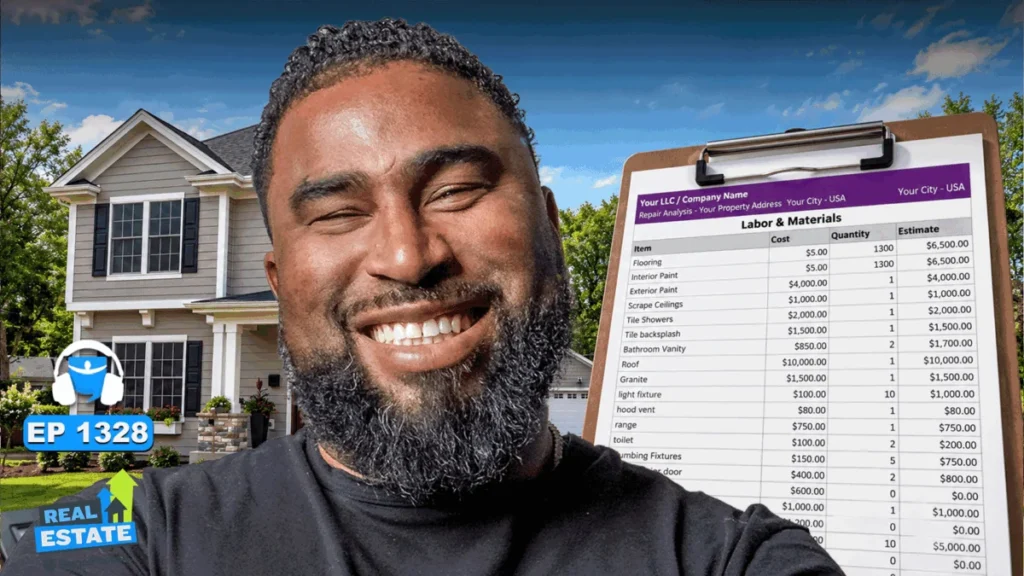
For the individual investor, this climate demands a higher level of discipline. Following the insights shared on the On the Market podcast by seasoned investor Henry Washington, the secret to success in this market is not just finding a property, but mastering the "Big Five" structural components.
When capital is expensive, the risk of "hidden" costs becomes a potential deal-breaker. Investors who ignore the state of a home’s core systems often find their profit margins erased by unexpected repairs. The Big Five—Roofing, Foundations, Plumbing, Electrical, and HVAC—are the pillars of any property’s longevity.
1. The Roof: The First Line of Defense
A roof is more than just shingles; it is the primary protector of an asset’s equity. Investors must distinguish between the three-tab shingle, the industry-standard architectural shingle, and the premium metal roof.
When evaluating a roof, look for the "gritty" texture of the asphalt. If the surface appears smoothed out, the protective lifespan is likely near its end. Furthermore, waviness in the roofline is a red flag suggesting compromised decking, which significantly inflates repair costs. For investors, the rule is simple: if the roof is currently preventing water ingress, a cosmetic upgrade may not be necessary. However, if the roof shows signs of water leakage or missing shingles, the cost of replacement—ranging from $8,000 for standard shingles to $30,000 for metal—must be factored into the purchase offer immediately.
2. The Foundation: The Silent Killer
The stigma surrounding foundation issues is well-earned. As the most expensive item in the Big Five, a structural failure can transform a profitable flip into a total loss.
Investors should look for "visual cues" of shifting: floors that feel sloped, doors that stick or have been "handyman-modified" to fit warped frames, and large, jagged cracks in the drywall. Crucially, investors should resist the urge to estimate these repairs themselves. The volatility in foundation repair quotes is extreme; bringing in multiple licensed specialists is the only way to mitigate risk.
3. Plumbing: Hidden Corrosion
Plumbing issues are often buried behind walls or beneath the ground, making them difficult to detect. Key indicators include low water pressure, discolored or brown water, and the presence of galvanized steel pipes, which are prone to internal corrosion. Under-sink inspection is vital: look for signs of previous leaks, mildew, or the dreaded wavy cabinetry that signals a history of moisture. While a full home re-plumbing can cost between $7,000 and $15,000, it is a "capped" expense, providing a clearer budget threshold than foundation work.
4. Electrical Systems: Safety and Compliance
Outdated electrical systems, particularly those using fuse boxes rather than modern breakers, present both an insurance hurdle and a genuine fire risk. During a walk-through, look for two-prong outlets and flickering lights. If the panel shows signs of "double-tapping" (multiple wires in one breaker) or corrosion, a full rewire may be necessary. Budgeting between $4,000 and $15,000 is standard for a full system upgrade. Given the life-safety implications, this is an area where cutting corners is never an option.
5. HVAC: The Climate Variable
The heating and cooling system is the heart of the home’s comfort. An old condenser unit, identified by its physical condition and age, is a ticking clock. If a home lacks central air and ductwork, the cost to install it can skyrocket from $10,000 to $25,000. For an investor, understanding whether a home has existing ductwork is the most important factor in determining the viability of the HVAC budget.
Macroeconomic Implications: The Fed and Inflation
While investors focus on the Big Five, the broader economic stage remains dominated by the Federal Reserve. Recent Consumer Price Index (CPI) updates suggest that while inflation is beginning to stay in check, the question of whether the Fed will maintain high interest rates remains a point of contention.
JPMorgan’s $750 billion commitment is a bold statement against the prevailing anxiety. By leaning into the housing market, they are essentially betting that the long-term demand for housing in the United States will outweigh the short-term pain of high borrowing costs. Whether this proves to be a masterstroke or a miscalculation, it signals that the largest institutions are positioning themselves for a future where housing remains the primary vehicle for wealth preservation.
Strategic Takeaways for the Modern Investor
The current environment is not for the faint of heart, but it is one of the most lucrative for those who understand how to calculate risk. The convergence of institutional capital and the necessity of structural due diligence creates a unique opportunity.
- Don’t Fear the "Ugly" House: Distressed properties often provide the best margins if the Big Five are evaluated correctly.
- Bring in the Pros: When it comes to foundations and HVAC, DIY estimation is a trap. Trust the experts and get multiple bids.
- Adjust the Offer: Every repairable defect has a dollar value. If a property has a $15,000 plumbing issue, your offer should reflect that cost directly.
- Leverage Inspections: Never let a desire to "win" a deal override the need for a professional inspection. A few hundred dollars spent on an inspector can save tens of thousands in structural remediation.
Conclusion: Looking Ahead
As we head into the final months of 2026, the housing market remains in a state of flux. While retail buyers may be waiting for a "better time" to enter, the smart money is already moving. Whether JPMorgan Chase is right about the timing remains to be seen, but their confidence in the underlying value of real estate is a strong indicator that the market is far from dead.
By focusing on the fundamental health of a property, conducting rigorous due diligence on the Big Five, and remaining disciplined in your offers, you can navigate the cooling summer and build a portfolio capable of weathering the storm. The market is cooling, but for those who know what to look for, the opportunity is heating up.