The Distillation Debate: Garry Tan Challenges the Silicon Valley Consensus on AI Sovereignty
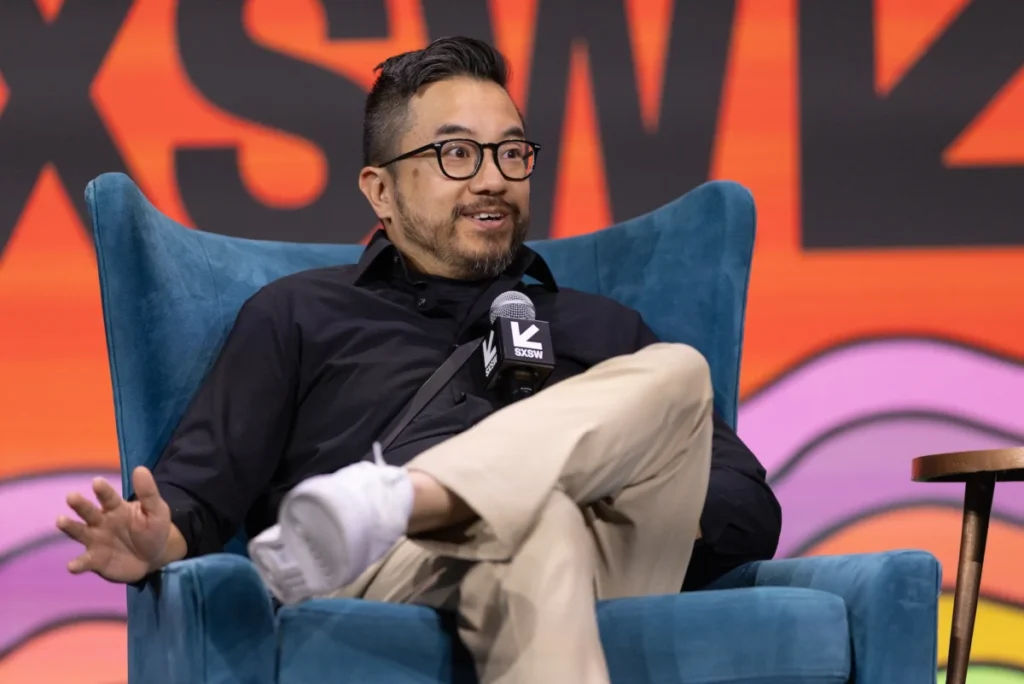
In the high-stakes arena of artificial intelligence, a quiet but potent technical practice known as "model distillation" has emerged as the latest flashpoint for geopolitical tension and industry regulation. While frontier AI labs—the titans of the industry—are calling for legislative barriers to prevent foreign entities from "stealing" their intelligence, Y Combinator CEO Garry Tan is charting a contrarian course. He argues that rather than restricting the practice, the United States should embrace a robust, domestic "distillation regime" to foster competition and prevent the rise of a dangerous, monolithic AI monopoly.
The Core Conflict: What is Distillation?
At its simplest, distillation is a training technique where a smaller, more efficient AI model is trained to replicate the behavior, reasoning, and outputs of a larger, "frontier" model. By prompting a powerful model extensively and observing its responses, developers can "distill" its underlying knowledge into a more compact, open-weight version.
While this process is a legitimate pillar of modern AI development, it has become a lightning rod for controversy. Frontier labs, led by companies like Anthropic, argue that foreign actors—particularly state-backed labs in China—are using illicit distillation to bypass years of R&D, utilizing stolen credentials and fraudulent API access to "clone" the capabilities of the world’s most advanced models.
Chronology of the Distillation Controversy
The debate over the ethics and legality of distillation has accelerated rapidly throughout 2026:
- Early 2026: As AI performance gaps widened, concerns grew within the U.S. national security apparatus regarding the ease with which Chinese firms were reportedly "harvesting" frontier model logic via API endpoints.
- March 2026: Garry Tan, a prominent Silicon Valley figure and CEO of Y Combinator, openly discussed his deep immersion in AI workflows, fueling his public stance that AI access is a fundamental necessity for innovation.
- July 2026: A landmark $1.5 billion copyright settlement involving Anthropic set a legal precedent, highlighting the tension between the massive data ingestion required to build frontier models and the intellectual property rights of human creators.
- September 2026: Anthropic released its second comprehensive threat intelligence report, explicitly alleging that Chinese labs are conducting "illicit distillation attacks." This sparked renewed calls from Anthropic CEO Dario Amodei for U.S. regulators to clamp down on the practice.
- Mid-September 2026: Garry Tan publicly pushed back against the calls for regulation in an interview with CNBC, arguing that the industry should "do nothing" to stifle distillation and instead promote it as a tool for American competitiveness.
The Case for Open-Weight Sovereignty
Garry Tan’s argument against restrictive regulation is grounded in his vision for a decentralized, competitive AI ecosystem. His perspective is twofold: moral consistency and strategic necessity.
Moral Consistency: The "Pot Calling the Kettle Black"
Tan points to the foundational hypocrisy of frontier labs demanding protection for their models. These same companies, he notes, built their multi-billion dollar empires by vacuuming up the sum total of human knowledge—much of it copyrighted—without asking for permission or providing compensation to the original creators.
"They didn’t ask permission when they ingested the internet," Tan argues. He posits that if frontier models are allowed to train on public and proprietary data as a form of "fair use" to drive innovation, then the outputs of those models should be accessible to those who pay for API access. To Tan, restricting how users employ those API outputs feels like a blatant "overreach" by companies that benefited from a lack of regulation during their own formative years.
Strategic Necessity: Preventing the "Monolithic Nightmare"
Tan’s most compelling argument is that the true "doomer scenario" is not the proliferation of open-weight models, but the consolidation of power. If frontier labs succeed in lobbying for regulations that outlaw distillation, they effectively pull the ladder up behind them.
"The nightmare scenario… is that there’s just one company," Tan told CNBC. "It has the best access to capital. It has the best AI researchers. It runs away with it, and suddenly there’s one company that’s monolithic."
By encouraging American labs to distill and compete, Tan believes the U.S. can create a more resilient, pluralistic landscape. He advocates for a "distillation regime" that allows smaller American labs to stand on the shoulders of the giants, ensuring that no single entity holds a monopoly on the intelligence that will define the coming decades.
Official Responses and Industry Perspectives
The divide in Silicon Valley is stark. On one side are the frontier labs—Anthropic, OpenAI, and their cohorts—who view their models as proprietary assets that must be defended against "data theft." Their argument centers on national security; they contend that if Chinese entities can distill the "secret sauce" of American frontier models, the geopolitical advantage of the U.S. will evaporate.
On the other side are the proponents of the "open ecosystem," including figures like Tan. They argue that the security of the U.S. AI sector is best served by acceleration, not insulation. They believe that American open-weight models, if allowed to flourish, would act as a democratic check on the power of closed-source labs.
The regulatory bodies in Washington remain caught in the middle. While there is a strong appetite to restrict Chinese access to U.S. hardware and software, the line between "illicit theft" and "legitimate research" is becoming increasingly blurred.
Implications: The Future of AI Regulation
The distillation debate is a microcosm of a much larger struggle: how do we regulate a technology that is simultaneously a commercial product, a national security asset, and a public good?
1. The Legalization of "API Usage"
If regulators follow the path favored by Tan, we may see new legal frameworks that explicitly define what a customer can do with API-returned information. This would likely move away from restrictive Terms of Service (ToS) and toward a model where intelligence is viewed as a utility, similar to public electricity or water, albeit with tiered access.
2. The Rise of the "Distillation Industry"
If distillation is normalized, it will likely give rise to a new tier of AI companies that specialize in "distilling-as-a-service." These companies would act as intermediaries, turning the brute-force intelligence of frontier models into specialized, efficient, and locally-run models tailored for specific industries, such as healthcare, law, or engineering.
3. Geopolitical Fragmentation
Regardless of the U.S. stance, the genie is out of the bottle. If the U.S. attempts to criminalize distillation, it may simply drive the practice into "black box" jurisdictions. By creating a transparent, regulated, and open-weight market, the U.S. might actually maintain more control than it would through prohibition.
4. The "Cyber Psychosis" of Innovation
Tan’s self-described "cyber psychosis"—his total immersion in the capabilities of these tools—is reflective of a new generation of leaders who view AI not as a product to be managed, but as an environment to be inhabited. For this group, the idea of limiting the flow of information is antithetical to the nature of the medium itself.
Conclusion
The debate sparked by Garry Tan is far from over. As Anthropic continues to lobby for stricter controls on how its models are accessed and used, the tech industry is being forced to reckon with a fundamental question: Who owns intelligence?
If the answer is "the companies that build the models," we are heading toward a future of corporate consolidation. If the answer is "the users who drive the innovation," then we are looking at a future defined by competition and open access. For the moment, the Y Combinator approach suggests that the best way to win the AI arms race is not by building walls, but by building a more competitive, robust, and open-weight infrastructure that allows the U.S. to stay at the cutting edge of global intelligence.