Global Markets in Turmoil: U.S.-Iran Conflict Escalates into Major Regional Conflagration
The Breaking Point: A Second Chokepoint Engulfed
The geopolitical landscape of the Middle East has spiraled into a state of acute volatility as the five-month-old conflict between the United States and Iran expanded this week to encompass the Bab el-Mandeb strait. Following a series of aggressive maneuvers by Iranian-backed Houthi forces in Yemen, U.S. President Donald Trump has authorized a campaign of "major military punishment," leading to widespread missile strikes across Iranian territory—reaching as far north as the Caspian coast.
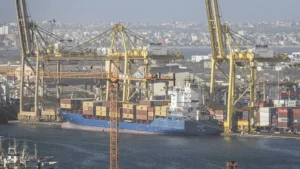
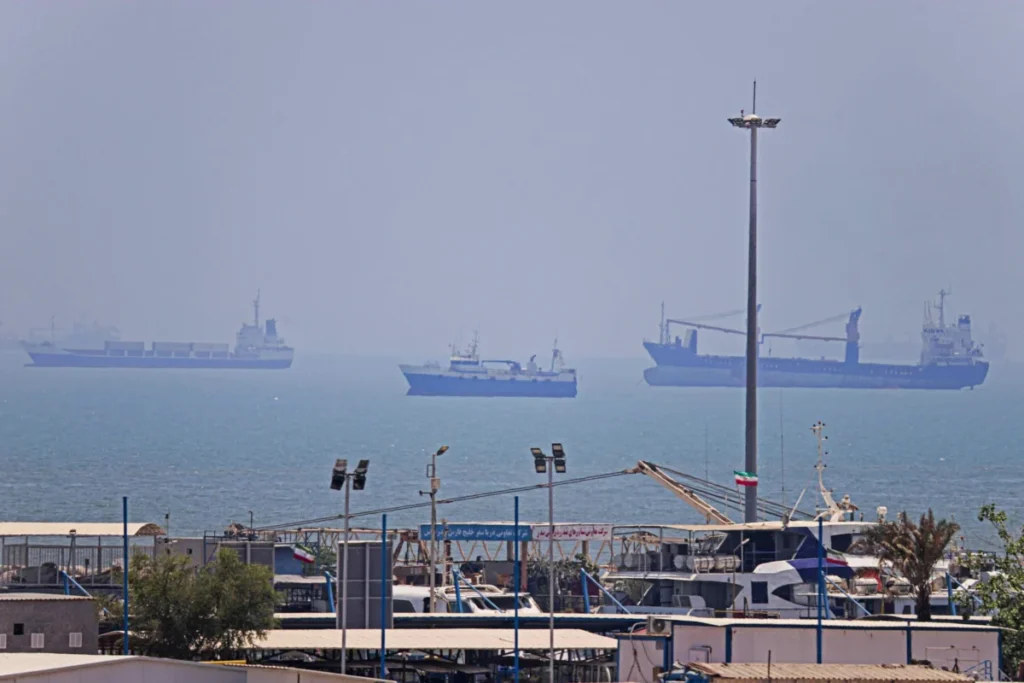
The collapse of an interim truce two weeks ago has effectively dismantled diplomatic guardrails, transforming the region into an active theater of kinetic warfare. With the Strait of Hormuz already experiencing a near-total blockade, the Houthi movement’s recent focus on the Red Sea has created a double-choke effect on global energy supplies, sending shockwaves through international markets and intensifying fears of a protracted economic downturn.
Chronology of Escalation: From Diplomacy to Direct Conflict
The current cycle of violence represents a significant deviation from the sporadic skirmishes that characterized the early months of the year.
- Thursday: Houthi fighters successfully targeted two Saudi Arabian oil tankers within the Bab el-Mandeb strait. This strategic strike served as a catalyst for a 7% surge in crude oil prices, breaching the $100-per-barrel psychological threshold. Simultaneously, the Iranian Revolutionary Guard Corps (IRGC) initiated a series of strikes on U.S. military installations across the Gulf, including Camp Buehring and Camp Arifjan in Kuwait, as well as a surveillance hub in Bahrain.
- Friday Morning (0530 GMT): U.S. forces launched a series of retaliatory airstrikes. Targets included the town of Piranshahr near the Iraqi border and the IRGC Navy headquarters in the Ziba Kenar region of the Caspian Sea. Provincial authorities in Gilan confirmed that projectiles also struck the port city of Bandar Anzali.
- Friday Afternoon: The conflict claimed civilian lives in the Iranian city of Ahvaz, where a U.S. missile strike resulted in four deaths and five injuries. In response, the IRGC issued a chilling directive to civilians residing in Gulf states, urging them to evacuate areas within a 500-meter radius of any buildings suspected of harboring U.S. military personnel, signaling an intent to broaden the targeting of non-military urban infrastructure.
Supporting Data: Economic Shockwaves and Supply Chain Fragility
The logistical disruption caused by the blockade of two vital maritime arteries has begun to manifest in the daily lives of global consumers.
The Energy Market
The vulnerability of global oil transit has been laid bare. Before the recent attacks, Saudi Arabia had attempted to mitigate the impact of the Hormuz blockade by redirecting millions of barrels of oil daily via pipelines to the Red Sea. The Houthi decision to target that specific transit route has effectively nullified this contingency plan. While Brent crude futures saw a slight easing to $98 per barrel on Friday, the weekly gain remains in excess of 10%. Shipping insurance premiums for vessels traversing the southern Red Sea have doubled, and many tankers have been forced to abandon the Suez Canal route, opting for the significantly longer and more costly journey around the Cape of Good Hope.
Industrial and Consumer Impact
The supply chain crisis is no longer confined to the energy sector. Multinational corporations are struggling to maintain price stability. Notably, Coca-Cola has implemented a 10% price hike for Diet Coke in India, citing severe supply chain bottlenecks for aluminum cans—a direct consequence of the regional maritime instability. This serves as a bellwether for broader inflationary pressures expected to ripple through global markets if the current impasse continues.
Official Responses and Political Maneuvering
The Trump Administration’s Stance
President Trump has adopted an uncompromising posture, characterizing the conflict as a matter of national accountability. In a series of social media statements, he vowed that "major military punishment will be inflicted upon Iran and, of course, the Houthis, themselves." Reports from the news outlet Axios suggest that the President is currently weighing the launch of a full-scale, sustained combat operation within Iranian borders, stating, "They haven’t received enough pain yet."
Furthermore, the administration has floated the controversial proposal of using frozen Iranian assets held in the U.S. to compensate for the economic damage caused to cargo ships, a move that legal experts and international observers fear could set a dangerous global precedent.
Tehran’s Counter-Narrative
Iranian Foreign Minister Abbas Araqchi was swift to condemn the threat of asset seizure. In a statement posted to X, Araqchi warned that the normalization of such confiscations by Western powers would invite global chaos, stating, "Ensuing chaos will not be pretty or peaceful."
The Iranian military apparatus remains defiant. Despite earlier claims by the U.S. that Iran’s military capabilities had been largely neutralized, the recent strikes against U.S. assets in Kuwait and Bahrain demonstrate a continued capacity for asymmetric warfare. Iranian state media continues to frame the U.S. actions as acts of aggression that only serve to "strengthen the resolve" of the Iranian people and their regional allies.
Implications: The Domestic and International Toll
U.S. Political Friction
The widening conflict has exacerbated political divisions within Washington. On Thursday, the Republican-led House of Representatives passed legislation aimed at compelling President Trump to cease military operations in Iran, invoking Congress’s constitutional authority to declare war. However, this legislative check has proved largely symbolic; the Senate subsequently moved to block a similar measure, leaving the executive branch with a free hand to continue its military campaign. The looming midterm elections in November add a layer of domestic urgency, as Republican incumbents grapple with the political fallout of soaring inflation linked to high energy costs.
The Spectre of External Involvement
Intelligence officials are increasingly concerned about the potential for external actors to leverage the chaos. Four sources familiar with U.S. intelligence briefings have indicated that the U.S. is investigating whether Russia has provided Iran with advanced targeting information or drone technology to facilitate strikes against CIA-related assets. While the Kremlin has formally declined to comment on these allegations, the possibility of a proxy-technology exchange adds a volatile layer of complexity to an already combustible situation.
The Path Forward
As the conflict enters its next phase, the prospect of a diplomatic resolution appears increasingly remote. The dual-track strategy of maritime blockage and targeted airstrikes has created a feedback loop of destruction that shows no signs of abating. With shipping lanes obstructed, global inflation mounting, and the potential for the conflict to spill over into neighboring Gulf states, the international community faces a precarious reality. The events of this week have underscored that in a globalized economy, a regional war in the Middle East is, in effect, a global crisis—one that currently lacks a clear exit strategy.