Navigating the Boom: Balancing FOMO with Financial Prudence in an Age of Exuberance
Main Facts: The Perilous Peaks of Bull Markets
Investing during periods of economic expansion and surging asset prices presents a unique paradox for market participants. The intoxicating allure of a booming market, characterized by rapid gains and widespread optimism, clashes directly with the inherent fear of an inevitable downturn. This fundamental tension is encapsulated by two powerful psychological forces: the Fear of Missing Out (FOMO) and deep-seated loss aversion. Investors find themselves caught between the desire to capitalize on every upward swing and the understanding that, as the timeless adage reminds us, "trees don’t grow to the sky." Every boom, historically, has been followed by a bust, or at least a significant correction, making the balancing act between staying invested and protecting capital a perpetual challenge.
This dilemma is a central theme in contemporary financial discourse, particularly as certain sectors experience exponential growth, drawing comparisons to past speculative frenzies. The core challenge lies in discerning genuine growth from speculative froth and ensuring that the pursuit of profit does not lead to reckless exposure. As Warren Buffett famously quipped, "You don’t find out who’s been swimming naked until the tide goes out." This principle, championed by investment luminaries like Charlie Munger who advocated for "inversion" – focusing on what not to do – serves as a crucial guiding philosophy. It suggests that during exuberant times, safeguarding against catastrophic losses by avoiding common pitfalls is often more critical than maximizing every last dollar of potential gain. The recent experiences in the South Korean AI market offer a stark and timely illustration of these very dynamics playing out with dramatic consequences.
Chronology: The Arc of Exuberance and Correction in South Korea
The current era has seen technological breakthroughs, particularly in artificial intelligence, ignite speculative fervor across global markets. This phenomenon has been particularly pronounced in South Korea, where the AI trade has generated an extraordinary level of FOMO and subsequent market volatility.
The Genesis of a Boom: The narrative began with the promise of AI revolutionizing industries, leading to an initial phase where gains seemed almost effortless. As major tech companies announced advancements and projected exponential growth, investor sentiment soared. Early participants reaped substantial rewards, fueling the belief that the rally would continue indefinitely and drawing in an ever-widening circle of new investors eager to partake in the "party."
South Korea’s AI Surge: At the epicenter of this regional boom were technology giants like SK Hynix and Samsung, critical players in the global semiconductor and memory chip industries, which are foundational to AI development. These two behemoths collectively account for approximately 50% of South Korea’s stock market capitalization. Their shares experienced a parabolic ascent, driving the overall market to unprecedented heights. Over a remarkable 12-month period, the South Korean stock market soared by more than 130%, reflecting the intense investor optimism surrounding the AI sector. This rapid appreciation created a perception of easy wealth, further drawing in retail investors, many of whom were new to the complexities of market dynamics.
The Inevitable Turn: However, as history consistently demonstrates, such unsustainable growth trajectories are invariably followed by periods of correction. The South Korean market, after its spectacular rise, experienced a swift and brutal reversal. Within approximately a month, the market plummeted by as much as 25%. This sharp pullback, while perhaps predictable to seasoned observers given the preceding gains, caught many by surprise, particularly those who had entered the market at its peak. Such corrections, though painful, serve a critical function: they expose underlying vulnerabilities and irrational exuberance that accumulate during periods of unchecked optimism.
The Unveiling of Leverage: It was during this sudden downturn that Warren Buffett’s "swimming naked" analogy became starkly real for a significant segment of South Korean investors. The correction revealed a widespread and alarming reliance on excessive leverage. Margin debt had exploded to all-time highs, indicating that many investors were borrowing heavily to amplify their market positions. The use of leveraged Exchange Traded Funds (ETFs), designed to multiply daily returns (and losses), was also rampant, turning uncomfortable market losses into potentially ruinous margin calls. This over-reliance on borrowed capital amplified both the initial gains and the subsequent losses, creating a domino effect as positions were forcibly liquidated.
A Cautionary Tale: Lee Seung-ho: The human cost of this speculative fervor was poignantly captured in stories like that of Lee Seung-ho, a 24-year-old university student in Seoul. Lee’s journey epitomized the extreme risks taken by many retail investors. Starting with 20 million won (approximately $13,500 USD) saved during his mandatory military service, he rapidly built a trading fortune of nearly 300 million won ($202,515 USD) in a short span. His secret? Tapping a "tiny circle button" on his trading app that instantly unlocked five-times leverage, effectively allowing him to control 500% more capital than he owned. This extraordinary amplification transformed his initial investment into a 15-fold windfall.
However, when the market turned, the same leverage that propelled his gains became his undoing. Violent swings in South Korean stocks triggered a cascade of forced liquidations by his brokerage, wiping out all his profits and, critically, eroding his initial investment. "I literally could not breathe," Lee recounted, describing the intense stress of watching his fortune evaporate within just four weeks in May. Despite this devastating experience, Lee’s resolve to continue with margin loans highlighted a pervasive psychological trap: "Since stocks are volatile assets, that volatility, if it moves upward, allows for rapid wealth creation," he stated, adding, "If I add five times leverage, I can build wealth five times faster than others." His story serves as a chilling micro-chronology of the dangers inherent in confusing luck with skill and underestimating the brutal efficiency of market corrections when coupled with excessive leverage.
Supporting Data: Quantifying Risk and Speculation
The data from the South Korean market provides a compelling illustration of the risks inherent in concentrated, leveraged speculation during boom times.
Market Concentration & Volatility:
- Dominance of Tech Giants: SK Hynix and Samsung Electronics, key players in the global semiconductor industry, collectively represent approximately 50% of the South Korean stock market’s capitalization. This high concentration means that the performance of these few companies disproportionately influences the entire market.
- Parabolic Ascent and Swift Descent: The market’s gain of over 130% in the 12 months leading up to the peak showcased extreme bullish sentiment. The subsequent fall of up to 25% in roughly a month underscored the inherent volatility and fragility of such rapid, concentrated rallies. These figures vividly demonstrate the amplification effect in a market driven by a narrow set of assets.
The Leverage Epidemic:
- All-Time High Margin Debt: Reports indicated that margin debt among South Korean investors had reached unprecedented levels. This metric is a crucial indicator of speculative activity, as investors borrow against their existing assets to buy more stocks, hoping to magnify returns. When markets turn, these loans often trigger margin calls, forcing investors to either inject more capital or sell their holdings at a loss, exacerbating the downward spiral.
- Rampant Leveraged ETFs: The widespread use of leveraged ETFs further amplified risk. These financial instruments are designed to deliver multiples of the daily return of an underlying index or asset. While they can magnify gains during upswings, they also accelerate losses during downturns and can suffer from decay over longer periods due to daily rebalancing. Their prevalence signified a market environment where investors were actively seeking to amplify their exposure, often without fully appreciating the compounded risks.
Lee Seung-ho’s Financial Journey:
- Initial Investment: 20 million won (approx. $13,500 USD) saved from military service.
- Peak Fortune: Nearly 300 million won (approx. $202,515 USD), representing a 15-fold increase.
- Leverage Factor: A staggering 500% margin loan, or 5-times leverage, obtained with the click of a button.
- Consequence of Downturn: Complete evaporation of gains and erosion of initial capital, leading to "forced liquidations." His account fell below his initial investment, causing immense psychological distress.
- Unchanged Conviction: Despite the loss, Lee remained committed to using margin loans, believing "volatility, if it moves upward, allows for rapid wealth creation," and "If I add five times leverage, I can build wealth five times faster than others." This illustrates the powerful hold of speculative mindset even after severe losses.
Broader Market Context:
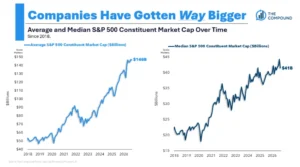
- Global Tech Concentration: Beyond South Korea, technology stocks, particularly those related to AI, have come to represent an increasingly large share of major global indices like the S&P 500. This concentration raises questions about the true diversification of many seemingly broad-market portfolios, as a significant portion of their performance is tied to a few dominant players.
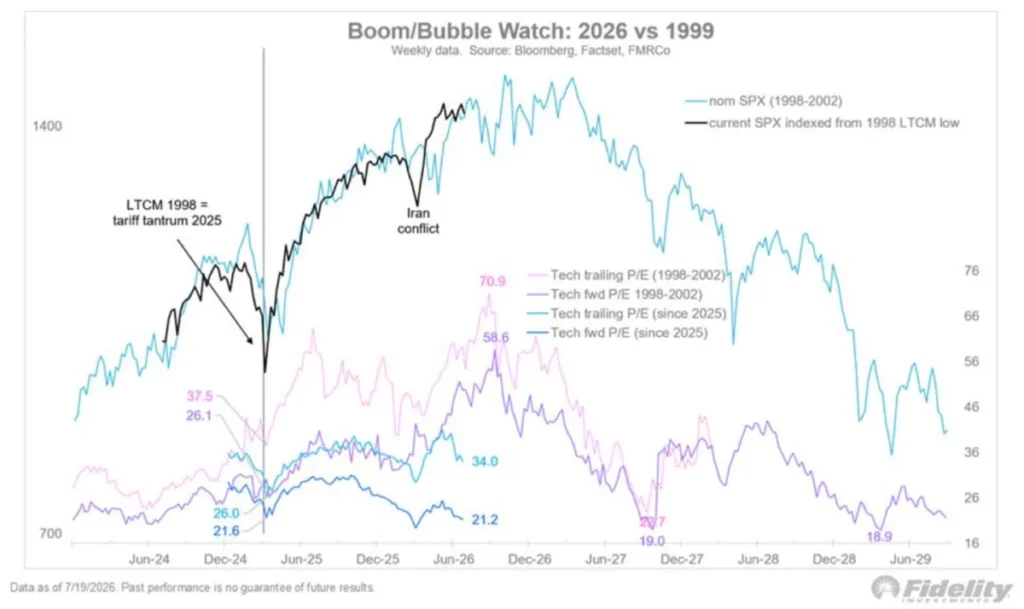
- Historical Parallels: The patterns observed in South Korea echo those seen in past periods of irrational exuberance, such as the Dot-com bubble of the late 1990s or the housing market boom leading up to the 2008 financial crisis. In both instances, excessive speculation, fueled by new technologies or asset classes and amplified by leverage, ultimately led to significant market corrections and widespread financial distress. These historical precedents serve as powerful reminders that while the specific assets may change, the underlying human psychology and financial risks remain remarkably consistent.
Official Responses and Expert Insights: Guiding Principles for Prudent Investing
In the face of escalating speculative activity and the subsequent market volatility, official bodies and seasoned financial experts have offered both regulatory interventions and timeless wisdom to guide investors.
Regulatory Intervention:
South Korean regulators, observing the explosion of margin debt and the rampant use of leveraged ETFs, took decisive action to cool the overheated market and mitigate systemic risk. They tripled the margin requirements for certain investments. This measure effectively made it more expensive and difficult for investors to borrow large sums to fund their speculative trades. The intent was clear: to rein in excessive leverage, reduce the potential for cascading forced liquidations, and protect the stability of the financial system from the destabilizing effects of unchecked speculation. Such interventions, while sometimes criticized for interfering with market freedom, are often deemed necessary to prevent broader economic contagion when risk-taking reaches extreme levels.
The Wisdom of Investment Gurus:
- Charlie Munger’s Inversion Principle: The late Charlie Munger, Warren Buffett’s long-time partner, famously advocated for "inversion" as a problem-solving technique. Instead of trying to figure out what to do to succeed, one should consider what not to do to fail. In the context of boom markets, this means identifying and rigorously avoiding the behaviors and risks that typically lead to ruin. This includes shunning excessive leverage, avoiding highly concentrated bets, and resisting the urge to chase fleeting trends.
- Warren Buffett’s "Naked Swimmers" Analogy: Buffett’s iconic quote, "You don’t find out who’s been swimming naked until the tide goes out," perfectly encapsulates the danger of hidden risks. During a bull market, virtually all investments may appear profitable, masking underlying vulnerabilities, poor fundamentals, or excessive debt. It is only when the market tide recedes, during a correction or downturn, that the true extent of reckless risk-taking becomes painfully apparent. The South Korean case, with its widespread margin calls, served as a vivid contemporary example of this timeless truth.
The Author’s Perspective and Practical Frameworks:
The author of the original article, reflecting on these dynamics, notes that investing is fundamentally a balancing act, a theme explored in his book, Risk & Reward. He outlines several critical questions and principles for navigating a boom:
- Rule #1: Avoid Becoming a Forced Seller: This is paramount. Investors must ensure they have sufficient liquidity and diversified assets so that they are never compelled to sell their holdings at an unfavorable time to meet obligations or cover losses. Forced selling locks in losses and prevents participation in any subsequent recovery.
- The Power of Diversification: While tech stocks may dominate headlines and market performance, prudent investors recognize the importance of diversification. This means spreading investments across different sectors, industries, geographies, and even asset classes (e.g., bonds, real estate, commodities, alternative investments). Diversification acts as a natural hedge, reducing the impact of a downturn in any single asset or sector, especially against the backdrop of highly concentrated market rallies like the AI trade.
- The Imperative of a Pre-defined Plan: Emotional decision-making is the bane of successful investing. A robust investment plan, established before market volatility hits, removes the guesswork. This involves setting clear guidelines: "If A happens, I’ll do B. If X comes out of nowhere, I’ll do Y." Such a plan might dictate rebalancing strategies, entry/exit points based on specific criteria, or simply a commitment to "do nothing" during certain market movements. Having rules in place, whether the boom continues or turns into a bust, fosters discipline and leads to more rational decision-making.
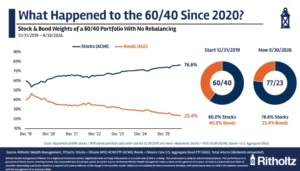
- Proactive Risk Assessment: Boom times, counter-intuitively, are the ideal moments to reassess one’s risk appetite and asset allocation. A prolonged bull market can subtly shift a portfolio’s composition. For example, a carefully constructed 60% equity/40% bond portfolio might, after a significant equity run, morph into a 75% equity/25% bond allocation without active rebalancing. Investors must ask themselves: "Am I taking too much risk? Can I truly handle this much exposure during a bear market?" Answering these questions while stock prices are high, rather than in the midst of a panic, allows for calm, rational adjustments.
- Cultivating Emotional Balance and Humility: Jurrien Timmer, a respected financial strategist, succinctly articulated the psychological challenge: "The first topic regarding the paradox of profiting from a boom while protecting from a bubble is of course an existential one and reflects the duality of the profit seeking polarity juxtaposed against loss aversion." He emphasizes that while hindsight makes market turns seem obvious, it is "almost impossible to figure out how long the boom times will last when you are in them." This underscores the need for humility. Accepting that one cannot perfectly time the market or predict its precise turning points fosters a more measured and resilient investment approach.
Implications: Lessons for Future Market Cycles
The South Korean AI boom and its subsequent correction offer invaluable lessons, not just for the specific market involved, but for global investors navigating an increasingly interconnected and often volatile financial landscape. The implications extend to individual investors, market stability, and the enduring nature of economic cycles.
For the Individual Investor:
- The Perils of Leverage: Lee Seung-ho’s story serves as a potent, cautionary tale. It unequivocally demonstrates that while leverage can amplify gains rapidly, it equally amplifies losses, often leading to total capital destruction and severe psychological distress. For most retail investors, particularly those without deep pockets or sophisticated risk management tools, the use of significant margin loans or highly leveraged products is a recipe for financial ruin. The primary implication is a reinforcement of financial prudence: invest what you can afford to lose, and avoid the temptation of "getting rich quick" schemes that rely on excessive borrowing.
- The Primacy of a Long-Term Strategy: Sustained wealth creation is rarely the result of chasing the hottest trend or making speculative bets. Instead, it is built on a foundation of discipline, diversification, a clear investment plan, and a long-term perspective. Investors who focus on fundamental value, maintain a diversified portfolio, and regularly rebalance are better positioned to weather market storms and capture long-term growth, rather than being whipsawed by short-term volatility.
- Psychological Resilience and Self-Awareness: The boom-bust cycle is as much a psychological phenomenon as it is an economic one. Understanding cognitive biases such as FOMO, loss aversion, and confirmation bias is crucial. Investors who cultivate self-awareness and emotional discipline are better equipped to resist herd mentality, stick to their plan during market euphoria, and avoid panic selling during corrections. Humility, in acknowledging the inherent unpredictability of markets, is a powerful antidote to overconfidence.
For Market Health and Stability:
- Systemic Risk from Concentration: The South Korean example highlights how extreme market concentration in a few dominant companies or sectors, even if those companies are fundamentally strong, can create systemic vulnerabilities. If those few leaders face headwinds, the ripple effect on the broader market can be substantial. Regulators and investors alike need to monitor such concentrations, as they can lead to fragility rather than robust growth.
- The Role of Regulation in Curbing Excess: The swift action by South Korean regulators to triple margin requirements underscores the vital role of oversight bodies in maintaining financial stability. While markets thrive on freedom, unchecked speculation, particularly through excessive leverage, can pose a threat to the entire financial system. Regulatory interventions, though sometimes seen as intrusive, are often necessary circuit breakers to prevent localized exuberance from spiraling into broader economic crises.
- Global Interconnectedness: In today’s globalized financial system, market trends and risks are rarely isolated. While the South Korean AI boom was a regional phenomenon, the underlying drivers (AI enthusiasm) and risks (leverage) are universal. A significant correction in one major market can send ripples across borders, affecting investor sentiment and capital flows elsewhere.
The Enduring Nature of Market Cycles:
Ultimately, the lessons from the South Korean AI boom are a powerful reaffirmation of an enduring truth: financial markets operate in cycles. Booms and busts, periods of irrational exuberance and painful corrections, are inherent features of capitalism. The specific triggers and assets may evolve – from tulips to railway shares, from dot-coms to AI chips – but the underlying human psychology of greed and fear remains constant.
The central implication is a perennial call for prudence and preparedness. Rather than attempting the impossible task of perfectly timing the market, investors should focus on building resilient portfolios, understanding their own risk tolerance, and adhering to sound, long-term investment principles. The time to assess risk, diversify holdings, and formulate a robust plan is during the boom, when emotions are calm and options are plentiful, not when the tide has gone out and the market reveals those who have been swimming naked. A little humility, coupled with a disciplined approach, goes a long way in navigating the exhilarating but often treacherous peaks of bull markets.