Oversight Crisis: Sen. Warren Demands GAO Probe into "Staggering" Staffing Cuts at CFTC
By [Your Name/Journalistic Staff]
July 24, 2026
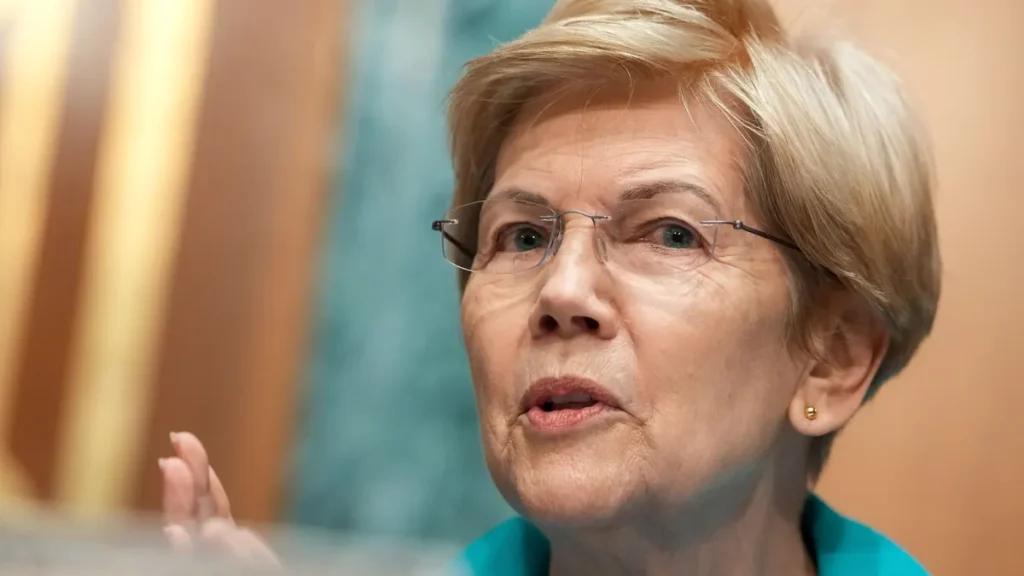
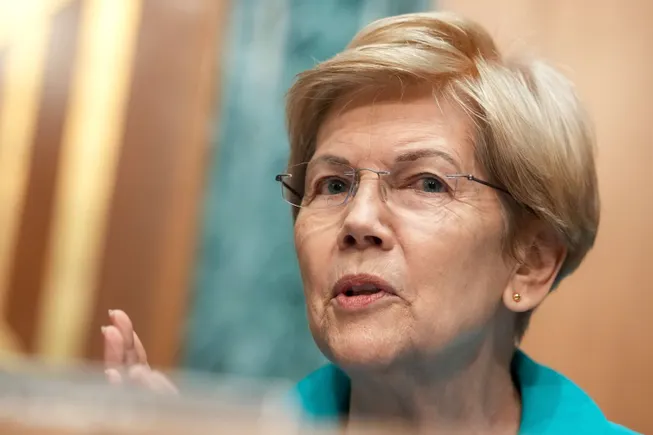
WASHINGTON — A deepening rift between federal oversight bodies and the Commodity Futures Trading Commission (CFTC) has erupted into a formal congressional inquiry. Sen. Elizabeth Warren (D-MA) has officially petitioned the Government Accountability Office (GAO) to launch a comprehensive investigation into the internal operations of the CFTC, citing a "precipitous" decline in enforcement activity and a massive exodus of personnel that she claims is compromising the integrity of America’s derivatives markets.
The request, sent Tuesday to Acting Comptroller Orice Williams Brown, strikes at the heart of the current administration’s regulatory philosophy. As the agency charged with governing the multi-trillion-dollar futures, options, and swaps markets, the CFTC’s ability to act as a watchdog is being called into question. Warren’s letter suggests that the current staffing crisis is not merely a bureaucratic byproduct of shifting administrations, but a calculated retreat that may be serving private industry interests at the expense of public protection.
The Core Facts: A Regulatory Vacuum
At the center of the controversy is a 25% reduction in the CFTC’s workforce since President Donald Trump assumed office in January 2025. Despite public assertions by CFTC Chairman Michael Selig that the agency is in a hiring phase, internal documents and reports from outlets such as Politico indicate that the agency was actively offering voluntary buyouts and early retirement packages as recently as June 2026.
This contraction in human capital has occurred in parallel with a sharp downturn in the agency’s litigation output. The contrast in statistics is stark: In 2024, the CFTC flexed its regulatory muscle by bringing 58 enforcement actions and securing $17.1 billion in monetary relief. By contrast, the 12-month period leading up to January 2026 saw that number crater to just 11 enforcement actions, resulting in a mere $1 billion in total relief.
For critics of the current administration, these numbers are not a coincidence. They represent a "hollowing out" of an agency that has, since the 2010 Dodd-Frank Act, served as a vital bulwark against systemic financial instability.
Chronology of the Decline
The trajectory of the CFTC’s current state can be traced through a series of key milestones over the last 18 months:
- January 2025: Following the inauguration of President Trump, the agency undergoes a significant pivot in leadership and operational focus.
- Spring 2025: Initial reports of "reorganization" begin to surface, leading to early attrition among senior enforcement attorneys and market analysts.
- Late 2025: Regulatory activity begins to slow noticeably. Market participants observe fewer subpoenas and a lower frequency of open investigations.
- January 2026: Data released confirms a near-total collapse in enforcement yield compared to the previous year, sparking alarm among progressive lawmakers.
- April 2026: The CFTC asserts exclusive jurisdiction over prediction markets, a move that theoretically expands its workload even as its internal resources remain severely depleted.
- June 2026: Reports emerge that the agency is still pursuing aggressive buyout programs for remaining staff.
- July 2026: Senator Warren formalizes her concerns, requesting a GAO audit to determine if the cuts violated federal law or regulatory mandates.
Supporting Data: By the Numbers
The statistics cited in Sen. Warren’s request provide a damning indictment of the current operational tempo at the commission.
Enforcement Yield Comparison
| Year | Enforcement Actions | Monetary Relief |
|---|---|---|
| 2024 | 58 | $17.1 Billion |
| 2025-26 (Trailing) | 11 | $1 Billion |
The delta between these two periods suggests that the CFTC is effectively "out of commission" regarding major market manipulation cases. Beyond the raw numbers, the complexity of the modern financial landscape exacerbates the danger of this decline. The emergence of high-frequency trading, increasingly volatile crypto-asset derivatives, and the expansion into prediction markets require a sophisticated, well-staffed regulatory apparatus. When the agency lacks the manpower to analyze these markets, the risk of fraud, "flash crashes," and systemic abuse rises exponentially.
Official Responses and Standoff
The reaction from the GAO has been measured but confirmed. A spokesperson for the watchdog organization acknowledged receipt of the letter, stating, "GAO has a process it goes through to determine whether we do work and when, which we are working through right now." This is standard protocol for the GAO, which must weigh the resource intensity of such an audit against its existing commitments.

The CFTC, however, has remained largely silent. A request for comment sent to the commission’s press office went unanswered at the time of publication. This silence is particularly conspicuous given Chairman Michael Selig’s recent attempts to frame the agency’s status as a "hiring" environment on social media platforms. The discrepancy between the Chairman’s narrative and the reality of ongoing buyout offers remains a primary point of contention for congressional oversight committees.
Implications: The Future of Market Integrity
The implications of a weakened CFTC extend far beyond the Beltway. If the nation’s primary derivatives regulator is effectively neutralized, the consequences for the broader economy could be severe.
1. The "Regulatory Capture" Allegation
Senator Warren explicitly noted that some of the recent staffing cuts "may have aligned with industry interests." In Washington parlance, this is a thinly veiled accusation of regulatory capture—where an agency, intended to act in the public interest, instead advances the commercial or political concerns of the special interest groups it is charged with regulating. If the GAO audit finds evidence that staffing decisions were influenced by industry pressure, it would constitute a major scandal in federal oversight.
2. Emerging Market Risks
The CFTC is currently navigating a period of unprecedented expansion in its mandate. As legislation regarding crypto-market structure winds its way through Congress, the burden on the CFTC is expected to grow. If the agency is incapable of handling its current load—as evidenced by the lack of enforcement in traditional futures and swaps—the prospect of it successfully overseeing the volatile, decentralized world of digital assets is slim. Warren warns that without immediate corrective action, the agency will be unable to implement future legislative requirements, leaving the crypto market as a "wild west" of unchecked speculation.
3. Erosion of Deterrence
The most significant impact of a hollowed-out regulator is the loss of the "deterrence effect." When bad actors in the financial sector believe that the probability of being caught is low, and the probability of being fined is even lower, the incentive to engage in fraudulent or abusive practices increases. By shrinking the enforcement division, the CFTC may be inadvertently inviting a rise in market abuse, the costs of which will eventually be borne by retail investors and the stability of the U.S. economy.

Conclusion: A Call for Accountability
The GAO audit requested by Senator Warren is not merely a request for a personnel report; it is a fundamental challenge to the current administration’s approach to financial oversight. The investigation is slated to look at three critical areas:
- Legal Compliance: Did the staffing cuts adhere to federal statutes governing the executive branch?
- Operational Capacity: Has the attrition rendered the CFTC incapable of fulfilling its statutory mandate?
- Public Integrity: To what degree have these changes fostered an environment conducive to fraud, waste, and abuse?
As the GAO deliberates on whether to open the probe, the financial community remains in a state of uncertainty. For the advocates of strong regulation, the survival of the CFTC as an independent, robust watchdog is non-negotiable. For the agency’s leadership, the coming weeks will likely involve intense scrutiny as they attempt to justify a strategy that has left them with fewer hands on deck during one of the most volatile periods in modern market history.
The question remains: Is the CFTC undergoing a necessary evolution, or is it being systematically dismantled from within? The answer, if the GAO accepts the case, may soon become a matter of public record.