The Cost of Inequality: Why Fair Taxation and Reparations Are Essential to Democracy
In the mid-20th century, the "American Dream" was often distilled into a singular, compelling narrative: a story of grit, ingenuity, and the bootstrapping spirit of immigrants. For the family of the author—who spent decades building the Save Mart supermarket chain from a single rural California farm store into an empire of over 200 locations—this narrative felt like absolute truth. Yet, as the second and third generations took the helm, that narrative began to crack under the weight of historical scrutiny and raw economic data.
The realization was stark: the compounding wealth of the Save Mart empire was not merely the result of hard work. It was the beneficiary of a structural head start—access to capital, tax breaks, and antitrust leniency—that was systemically denied to Black entrepreneurs and families during the same era. This internal reckoning serves as a microcosm for a broader, national conversation: the intersection of fair taxation, the necessity of reparations, and the survival of American democracy.
The Myth of the Level Playing Field: A Chronology of Exclusion
To understand the current wealth gap, one must trace the timeline of American economic policy. Following World War II, the United States entered an era of unprecedented growth. However, this growth was not equitable.
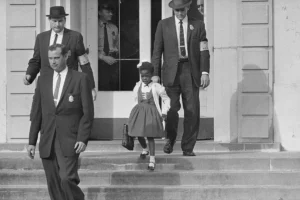
- The Post-War Era (1945–1960s): While white families were able to secure FHA-backed loans to purchase homes in burgeoning suburbs, Black families were largely excluded through the practice of "redlining." This denied millions the primary engine of middle-class wealth creation: home equity.
- The Reagan Revolution (1980s): The shift toward supply-side economics introduced sweeping tax breaks for corporations and the wealthy. While these policies accelerated the growth of businesses like Save Mart, they simultaneously hollowed out the social safety net, exacerbating the divide between capital owners and laborers.
- The Modern Era (2010s–Present): Today, the disparity is calcified. Current data indicates that only eight percent of Black families inherit any wealth, compared to 26 percent of white families. This is not a failure of individual effort, but a legacy of policy choices that favored the accumulation of capital over the stability of the workforce.
Supporting Data: The Math of Inequality
The economic data surrounding wealth concentration is sobering. When a business model is predicated on "managing labor as an expense" rather than a primary stakeholder, the result is a workforce that contributes to the success of the company while remaining unable to meet its own basic needs.
During an audit of internal data at the aforementioned family business, a disturbing trend emerged: many employees, despite earning union wages, were reliant on public benefits—such as SNAP (food stamps)—to survive. This highlights a structural absurdity: taxpayers were effectively subsidizing the payrolls of profitable corporations by providing a safety net for workers whose wages were kept artificially low to maximize returns for shareholders.
Furthermore, the tax code itself reinforces this divide. In the United States, "passive income"—money made through investments, dividends, and capital gains—is frequently taxed at a lower rate than "earned income" (wages). This creates an economic system where the act of working is penalized, while the act of owning is incentivized. According to recent research from the Institute for New Economic Thinking, this widening chasm between the haves and the have-nots is one of the primary predictors of democratic erosion. When a segment of the population feels that the system is rigged against their survival, the social contract begins to fray.
Official Perspectives: Democracy vs. Oligarchy
The tension between concentrated wealth and democratic governance is not a new concern. Over a century ago, Supreme Court Justice Louis Brandeis offered a prescient warning that remains the cornerstone of modern critiques of inequality: "We may have democracy, or we may have wealth concentrated in the hands of a few, but we can’t have both."
Vanessa Williamson, a scholar of tax politics, notes that the resistance to fair taxation by the ultra-wealthy is rooted in a fundamental fear: that an empowered, well-funded government threatens private power. This fear has historical roots in the defense of chattel slavery, where slaveholders feared that an elected government might use its power to tax the institution of slavery out of existence. Today, that same impulse manifests as an intense lobbying effort to maintain low tax rates on capital and passive income, ensuring that the levers of power remain in private hands.
The Dual Path: Reparations and Taxation
A critical distinction must be made between fair taxation and reparations. While the two are linked, they serve different functions in the healing of the American body politic.
Fair Taxation as an Economic Reset
Fair taxation is a tool for modern stabilization. By taxing income more equitably—regardless of how it is earned—the government can generate the revenue necessary to invest in infrastructure, education, and healthcare. This shifts the focus from wealth extraction to wealth circulation, fostering a more resilient economy where the gains of growth are shared by those who produce them.
Reparations as a Moral and Structural Reckoning
Reparations, however, address the "founding harms" that taxation alone cannot touch. As defined by advocates, reparations are not merely a financial transaction; they are a formal, state-led process of reckoning. This includes:
- Acknowledgment: The state must formally document and admit to the specific policies of exclusion and extraction that built modern wealth disparities.
- Accountability: The government must take tangible steps to address the loss of generational wealth among Black families who were denied access to capital, homeownership, and educational opportunities.
- Restoration: Implementing policies that provide a path for those families to finally access the foundational capital they were historically denied.
Implications for the Next 250 Years
The survival of the American experiment depends on our ability to address these systemic failures. Critics often label the call for higher taxes and reparations as "government overreach." However, this perspective ignores the reality that our current economic system is itself an act of government intervention—an intervention that has spent decades tilting the scales in favor of capital.
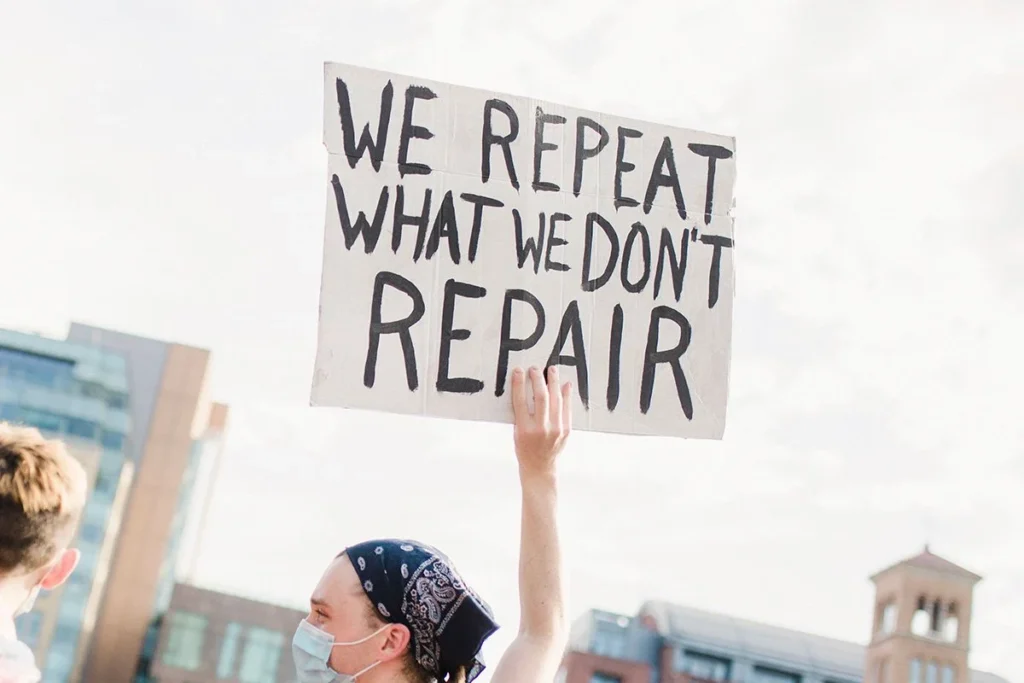
If we continue to ignore the wound, the infection will only deepen. Taxing the rich without repairing the founding harms of slavery and systemic exclusion is a temporary bandage on a chronic condition. To build a nation that truly works for all, we must pursue a dual-track strategy:
- Investment in the People: By ensuring that working families earn a share of the gains they help create, we can grow the economy by trillions of dollars.
- Investment in Democracy: By curbing the influence of concentrated wealth, we reclaim the "governing power of the many" that Justice Brandeis argued was essential to self-government.
The choice before us is clear. We can continue to protect the concentrated wealth of the few, watching as our democratic institutions erode under the pressure of inequality. Or, we can choose to invest in a future where the American Dream is not a myth afforded to the lucky few, but a reality accessible to all. Healing the past through reparations and accelerating progress through fair taxation are not sacrifices—they are the necessary investments required to secure the next two centuries of democracy.