Strategic Synergy: ServiceNow Bets $40 Million on Indian Fintech Firm BusinessNext to Reshape Global Banking AI
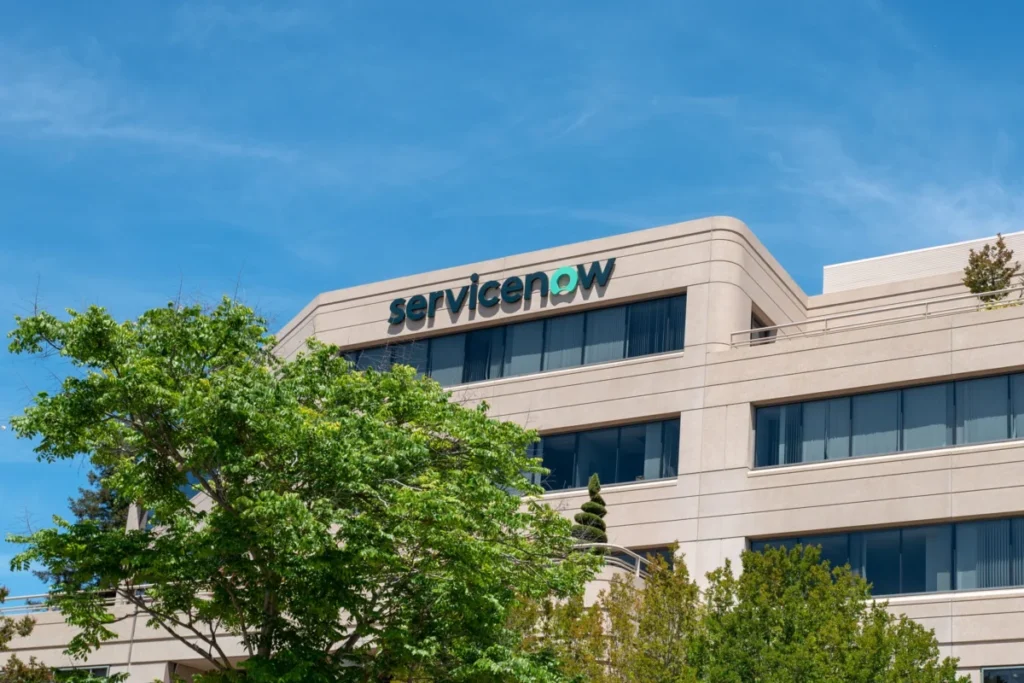
In a move that signals a significant pivot toward vertical-specific artificial intelligence, U.S. enterprise software giant ServiceNow has announced a strategic $40 million investment in BusinessNext, an Indian banking software specialist. The deal, which values the 24-year-old Noida-based firm at approximately $700 million, grants ServiceNow a roughly 5% equity stake. More importantly, it secures a powerful partnership designed to integrate specialized banking automation with global enterprise workflow infrastructure.
This investment serves as a clear indication that global software leaders are no longer content with horizontal, one-size-fits-all SaaS solutions. Instead, they are actively seeking "AI-native" regional players that possess deep, domain-specific expertise to solve the complex regulatory and operational hurdles facing modern financial institutions.
The Core Facts: Bridging Enterprise Workflow and Banking Intelligence
The partnership is structured as a symbiotic relationship. ServiceNow, renowned for its dominance in IT service management (ITSM) and broad enterprise workflow automation, gains a foothold in the complex, high-stakes world of banking technology. Conversely, BusinessNext gains access to ServiceNow’s expansive global sales "machinery"—a massive infrastructure of reach that would take any independent firm years, if not decades, to cultivate.
For BusinessNext, this is more than just a capital injection; it is a strategic alignment. Founder and CEO Nishant Singh emphasized that the company chose a strategic partner over traditional financial investors to catalyze its global expansion. By combining BusinessNext’s customer-facing banking workflows with ServiceNow’s robust back-office and workflow automation capabilities, the two companies plan to offer an end-to-end suite for global financial institutions.
A Chronology of Growth: From CRMNext to Autonomous Banking
The evolution of BusinessNext provides a roadmap for how Indian SaaS firms are transitioning from regional providers to global players.
- 2002: The company is founded as CRMNext, focusing on customer relationship management solutions tailored for the unique complexities of the Indian banking sector.
- 2010–2020: The firm solidifies its presence, becoming the go-to provider for major institutions, including the Reserve Bank of India, State Bank of India, and HDFC Bank.
- 2021: BusinessNext reaches a valuation of $181 million, according to data from Tracxn, backed by investors like Avataar Ventures, Norwest Venture Partners, and Ascent Capital.
- 2022: A pivotal year for the company, marked by a rebranding from CRMNext to BusinessNext. The name change signaled a broader shift from traditional CRM to a focus on "autonomous banking."
- 2024: The company finalizes its strategic partnership and $40 million investment deal with ServiceNow, valuing the entity at $700 million.
Throughout this timeline, the company has remained remarkably lean and profitable, reporting approximately $32 million in revenue for its most recent fiscal year. Notably, the company claims that AI was not an afterthought; it was woven into the architectural fabric of their platform during its re-engineering phase, ensuring that private AI infrastructure remains compliant with the stringent data privacy laws required by global banks.
Supporting Data and Market Positioning
The financial health and market reach of BusinessNext provide the rationale for ServiceNow’s interest. Currently, the company supports over 70 banks across India, Southeast Asia, the Middle East, and the United States.
Key Performance Indicators:
- Revenue Distribution: Roughly 50% of the company’s revenue is generated outside of India, a testament to its successful international expansion.
- Workforce: The firm employs over 1,300 professionals, primarily concentrated on engineering and deep-domain financial expertise.
- Funding History: Having raised over $60 million in external funding prior to this deal, the company has maintained a disciplined growth trajectory compared to many of its cash-burning peers in the SaaS ecosystem.
The decision to focus on "autonomous banking"—where AI agents handle complex workflows while keeping sensitive data on private, localized infrastructure—aligns with the "inflection point" described by ServiceNow’s leadership. As banks move away from digital experimentation and toward full-scale, AI-led operations, the demand for platforms that can balance innovation with regulatory compliance has reached an all-time high.
Official Perspectives: The Synergy of Vision
The partnership has been framed by both leadership teams as a response to the changing needs of the financial sector.
ServiceNow’s View
Kulmeet Bawa, ServiceNow’s Group Vice President and Managing Director for India and SAARC, noted that the financial services sector is undergoing a profound transformation. "Institutions are moving from digital experimentation to full-scale AI-led operations," Bawa stated. He emphasized that the partnership combines ServiceNow’s enterprise-grade platform with the "banking DNA" of BusinessNext, creating a combination that is uniquely suited to modernize legacy financial architecture.
BusinessNext’s View
Nishant Singh, the architect of BusinessNext’s growth, framed the deal as a move to bypass the hurdles of global expansion. By "borrowing" the sales infrastructure of a U.S. titan, BusinessNext can accelerate its entry into markets where its footprint is currently minimal. "Think of it as a strategic partnership, which is cemented with funding," Singh remarked. He highlighted that while his firm manages the high-touch, customer-facing side of banking, ServiceNow excels at the heavy lifting of back-office automation—a "perfect fit" that solves a common pain point for their shared clients.
Implications: The Future of Enterprise SaaS
The implications of this deal extend far beyond the balance sheets of the two companies involved. It points to several emerging trends in the technology sector:
1. The Death of the "Generalist" SaaS Model
We are witnessing a shift where traditional, horizontal SaaS platforms (like standard CRM or IT helpdesks) are losing their luster. Enterprise clients are increasingly demanding AI-native, vertical-specific solutions that understand the nuances of their industry—whether it is banking, healthcare, or manufacturing. ServiceNow’s investment is an admission that acquiring or partnering with these niche experts is faster and more effective than attempting to build deep industry-specific knowledge from scratch.
2. Regulatory Compliance as a Competitive Moat
BusinessNext’s focus on keeping sensitive banking data on "private AI infrastructure" is a direct response to the global anxiety surrounding AI and data sovereignty. As banks face stricter oversight regarding where and how their data is processed, companies that can promise AI efficiency without compromising on privacy will likely command premium valuations.
3. The "Platformization" of Indian SaaS
This deal validates the maturity of the Indian software product ecosystem. BusinessNext is not merely an outsourcing hub or a service provider; it is an intellectual property powerhouse that has successfully exported its technology stack to the U.S. and beyond. The ability of an Indian-born firm to command a $700 million valuation and partner with a Silicon Valley giant indicates that Indian SaaS is graduating from cost-arbitrage to high-value innovation.
4. Pressure on Traditional Software Vendors
For legacy enterprise software vendors, the rise of AI-native alternatives poses an existential threat. Customers are increasingly questioning the value of traditional SaaS subscriptions. By embedding BusinessNext’s AI agents into its workflow, ServiceNow is effectively "future-proofing" its offerings, ensuring it remains an essential utility for banks rather than an optional expense.
Conclusion: A New Blueprint for Enterprise Growth
The $40 million investment by ServiceNow into BusinessNext is a masterclass in modern corporate strategy. It addresses the need for rapid AI integration while mitigating the risks associated with building from the ground up.
As the financial sector continues to digitize at an accelerated pace, the partnership will likely serve as a blueprint for other global technology firms looking to capture market share in specialized industries. By leveraging the agility of an Indian fintech innovator and the scale of a global enterprise platform, the duo is well-positioned to dominate the next era of banking technology. For BusinessNext, the road ahead is one of rapid international scaling; for ServiceNow, it is a strategic deepening of its capabilities in one of the world’s most lucrative and complex markets.