A Crisis of Credibility: The High-Stakes Clash Between Taylor Farms and Federal Regulators
Introduction: A Public Health Standoff
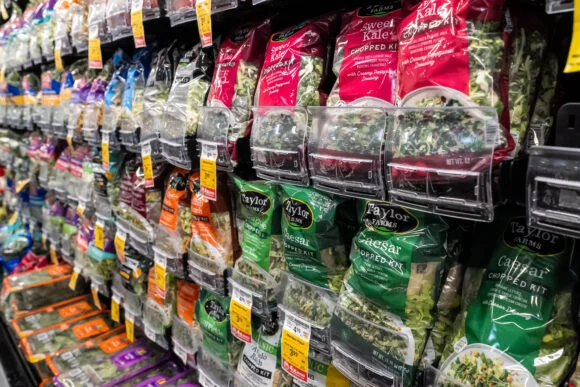
In the landscape of American food safety, the relationship between federal regulators and industry titans is built on a delicate foundation of cooperation and transparency. However, a recent, severe outbreak of cyclosporiasis—a gastrointestinal illness caused by a microscopic parasite—has ruptured that foundation, transforming a public health emergency into a high-stakes standoff between the U.S. Food and Drug Administration (FDA) and Taylor Farms, one of the world’s largest producers of fresh-cut salads.
The crisis, which has sickened thousands and resulted in over 300 hospitalizations, has been marked by missed deadlines, White House intervention, and a war of words over laboratory results. As the FDA pushes for a definitive public health response, Taylor Farms has engaged in a defensive strategy that critics describe as obstructive, leading to widespread consumer confusion and renewed scrutiny regarding the intersection of corporate political influence and federal oversight.
The Chronology of an Outbreak
The timeline of the outbreak reveals a series of critical delays that hampered the government’s ability to alert the public effectively.
Initial Signals and Industry Resistance
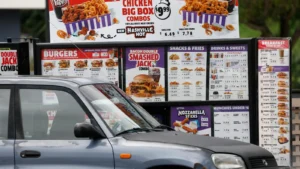
Last Wednesday, officials from the Centers for Disease Control and Prevention (CDC) and the FDA identified a glaring pattern: a significant number of victims across the Midwest reported consuming meals at Taco Bell locations shortly before falling ill. Epidemiological evidence pointed toward a common ingredient—iceberg lettuce—supplied to the fast-food chain from Taylor Farms’ operations in central Mexico.
The federal government issued an ultimatum to Taylor Farms: initiate a voluntary recall by Thursday at noon. That deadline passed without action. According to a U.S. official familiar with the situation, the company’s hesitation was driven by a desire to avoid the reputational damage associated with a product recall linked to a widespread parasitic outbreak.
The White House Enters the Fray
As the deadline lapsed, the situation escalated into the political sphere. The White House, reportedly pressured by the company’s high-level political connections—including a $1 million contribution by the company to a pro-administration PAC—convened calls between FDA and CDC officials and White House aides.
For 60 hours, the public was left in the dark as federal scientists were forced to defend their data to political appointees. While the White House eventually approved the release of public health warnings, the initial statements notably omitted the name of Taylor Farms, focusing only on the retail point of contact: Taco Bell.
The Recall and the Social Media Blunder
It was not until Friday afternoon, following a wave of media reports naming the company, that Taylor Farms issued a statement confirming they would "voluntarily remove" iceberg lettuce sourced from central Mexico. However, the initial announcement was ambiguous, failing to classify the action as an "official recall" and omitting details on which specific products were affected.
The situation deteriorated further over the weekend. In a brazen attempt to clear its name, Taylor Farms posted on X (formerly Twitter) claiming the FDA had apologized for a false-positive lab result. By July 21, that post was deleted following a sharp rebuke from the FDA, which denied the apology and maintained that the false positive was an isolated incident that did not negate the broader epidemiological evidence.
Supporting Data and the Science of Uncertainty
Cyclosporiasis is a notoriously difficult pathogen to trace. The parasite, Cyclospora cayetanensis, causes severe, prolonged gastrointestinal distress. Because it often exists in low concentrations on produce and is difficult to detect in laboratory settings, false positives are a recurring challenge in food safety investigations.
The Lab Result Controversy
The conflict intensified when an FDA lab test appeared to link a specific shipment of Taylor Farms lettuce to the outbreak. When federal scientists later conceded that the test was a false positive, Taylor Farms seized the opportunity to frame the agency as incompetent.
"We were informed that FDA made a mistake, and this was a false positive," the company stated. "To be clear, at this moment, FDA has not identified a single positive product test result for Cyclospora."
Federal health officials, however, argue that this is a dangerous distraction. According to the FDA, the recall is based on "overwhelming epidemiological data" and traceback investigations that "continue to converge" on the company’s central Mexican facilities. Experts in the field, such as former FDA official Susan Mayne, have characterized the company’s communication strategy as "the most obtuse recall notice" they have ever witnessed.
Official Responses and Regulatory Friction
The FDA’s response to the company’s public relations campaign has been uncharacteristically blunt. In a statement, Health and Human Services spokesperson Emily Hilliard clarified that the agency never apologized to Taylor Farms.
"The corrected result didn’t change the agency’s determination," Hilliard stated. The FDA emphasized that the company’s communications have been "confusing" and have actively hindered the goal of keeping the public informed.
The company’s own internal history complicates its current position. Taylor Farms, which prides itself on the "SmartWash" anti-contamination system and helped launch the Center for Produce Safety, has faced similar crises before. Only in 2024, the company was linked to a deadly E. coli outbreak involving onions. This pattern of high-profile outbreaks has led observers to question whether the company’s self-marketed "gold standard" of food safety is failing under the pressure of mass-scale production.
Implications for Public Health and Corporate Accountability
The fallout from this incident extends far beyond the immediate health crisis. It raises fundamental questions about the role of the White House in regulatory science and the power of massive agribusiness conglomerates to delay life-saving information.
The Cost of Confusion
The lack of clarity regarding the recall—including a confusing list of affected brands and retailers—led to a situation where major suppliers, such as Walmart and Sysco, were left to interpret the company’s shifting directives. This resulted in a fragmented response where some products were pulled, while others remained on shelves, leaving consumers to navigate a minefield of potential infection.
A Breach of Trust
Public health experts warn that the erosion of trust in federal agencies, spurred by political interference and corporate obfuscation, is a long-term threat. When a company with 20,000 employees and a massive market share engages in a public battle with the FDA, the entity that loses most is the consumer.
"I have not seen this amount of misinformation about an outbreak in my time at the FDA," said Susan Mayne. The combination of the FDA’s own internal struggles to communicate during a holiday weekend and Taylor Farms’ aggressive, misleading messaging created a "perfect storm" of public confusion.
Conclusion: The Path Forward
As the investigation continues, the focus remains on whether the current measures are sufficient to stop the spread of Cyclospora. For Taylor Farms, the challenge is no longer just about the safety of their produce, but about the survival of their reputation.
The incident serves as a stark reminder that in the interconnected world of modern food supply chains, transparency is the only effective tool for managing public health crises. When that transparency is traded for legal defense strategies and political maneuvering, the entire food safety system is compromised. As regulators and industry leaders move to address the current outbreak, the public remains the primary stakeholder, left waiting for definitive answers in an environment defined by ambiguity and corporate defense.
The FDA’s insistence that the epidemiological data is "overwhelming" suggests that the recall will likely expand. Whether Taylor Farms will adopt a more cooperative stance moving forward remains to be seen, but the events of the past week have undoubtedly set a new, concerning precedent for how food safety emergencies are handled in the United States.