Restoring the Light: Science Corporation’s Path to Commercializing Bionic Vision
In a landmark achievement for neurotechnology, Science Corporation—a startup founded by Neuralink co-founder Max Hodak—has secured European regulatory approval to market its PRIMA vision-restoration device. The CE Mark clearance marks a pivotal transition for the company, moving it from the experimental phase of brain-computer interface (BCI) development into the complex, high-stakes realm of medical device commercialization.
The PRIMA system, which restores functional vision to patients suffering from age-related macular degeneration (AMD), represents a tangible breakthrough in a field often characterized by speculative, long-term research. As the company prepares for its first commercial procedures in Germany, the move signals a shift in the BCI industry’s strategy: prioritizing sustainable, revenue-generating medical applications to fund more ambitious, futuristic neural technologies.
The PRIMA System: How It Works
Age-related macular degeneration (AMD) is a progressive condition that erodes the macula, the central portion of the retina responsible for sharp, detailed vision. For millions globally, the disease manifests as a gradual loss of the ability to recognize faces, read, or perform fine motor tasks.
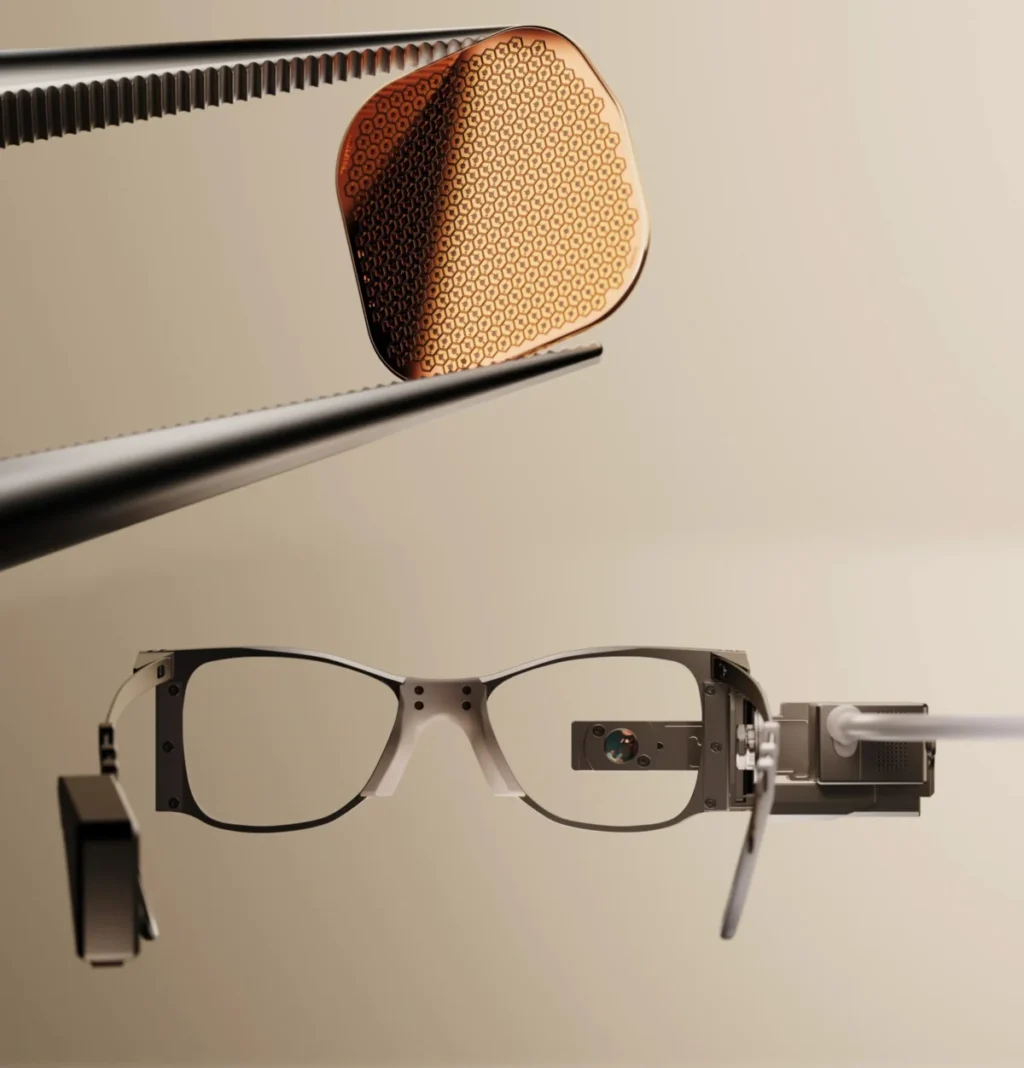
The PRIMA device functions as a sub-retinal prosthesis. The process begins with a one-hour outpatient surgical procedure, during which a tiny, wireless photovoltaic chip is implanted beneath the retina. The patient then wears a pair of specially designed, camera-equipped glasses. These glasses capture the visual field and transmit the data via infrared light to the chip implanted in the eye. The chip converts this light into electrical signals, which stimulate the remaining retinal cells, sending visual information to the brain.
The results, according to company leadership, are transformative. CEO Max Hodak has shared accounts of patients in France who have regained the ability to read novels, complete crossword puzzles, and even produce detailed sketches of landmarks like the Sydney Opera House. By bypassing the damaged photoreceptors, PRIMA effectively acts as a bridge, restoring a degree of functional independence that was previously considered lost.
A Strategic Pivot: From Pixium to Science Corporation
The road to this approval was not entirely built from scratch by Science Corporation. In 2024, the company acquired Pixium Vision, the French firm that originally developed the PRIMA technology. While Pixium had the underlying innovation, Science Corporation provided the operational rigor and regulatory expertise necessary to navigate the complex pathways to market.
For Hodak, the acquisition was a calculated strategic move. Having co-founded Neuralink alongside Elon Musk, Hodak was intimately familiar with the "valley of death" that often plagues high-tech startups—the period where a company burns through venture capital while struggling to find a viable, scalable business model.
"The thing that the space needs is a company making $100 million a year of revenue," Hodak explained in a recent interview. By securing the rights to PRIMA and refining its regulatory documentation, Science Corporation is positioning itself to be that entity. This commercial success is not just a goal in itself; it is the financial engine that will support the company’s long-term research into bio-hybrid brain sensors.
Chronology of Development and Regulatory Milestones
The trajectory of the PRIMA device reflects a decade of progress in the medical device sector:
- 2010s (The Pixium Era): Pixium Vision begins the foundational work on sub-retinal implants in France, conducting early-stage clinical trials to test the safety and efficacy of the photovoltaic chip technology.
- 2021: Max Hodak departs Neuralink and founds Science Corporation, with the explicit goal of developing bio-hybrid BCIs that combine silicon with living biological tissue.
- 2024: Science Corporation completes the acquisition of Pixium Vision, inheriting the PRIMA platform. The company immediately begins optimizing the product’s regulatory filing and manufacturing processes.
- Mid-2026: Science Corporation announces that it has secured the CE Mark for PRIMA, permitting commercial sales in Europe.
- Current Status: The company is currently engaged in discussions with European healthcare providers regarding reimbursement schemes. Simultaneously, it has received a designation from the U.S. Food and Drug Administration (FDA) that facilitates an expedited regulatory review for treating two rare forms of blindness in the American market.
- September 2026 (Projected): The first commercial procedures using the refined PRIMA system are expected to take place in Germany, where the bulk of the initial clinical data was gathered.
Supporting Data and Technical Implications
The challenges of the PRIMA system are significant, particularly regarding power consumption and data processing. Currently, the glasses require a battery pack to function, and the "compute" required to translate real-world imagery into signals compatible with the human eye is immense.
Science Corporation is already working on the next iteration of the hardware. The goal is to evolve the glasses into a form factor comparable to modern augmented reality (AR) headsets. However, the engineering hurdles are steep. As Hodak noted, "the power and compute requirements for PRIMA are more significant" than standard AR, because the device must interface directly with the biological architecture of the human nervous system.
Financially, the product is positioned as a high-end medical intervention. With a price point projected in the "hundreds of thousands of dollars," the commercial viability depends heavily on insurance coverage and public health reimbursement policies. By focusing first on Germany, a country with a robust framework for reimbursing medical innovation, Science Corporation is creating a blueprint for global expansion.
Official Perspectives and Industry Strategy
The broader mission of Science Corporation remains the development of direct brain-computer interfaces. To that end, the company has partnered with Dr. Murat Günel, chair of Yale Medical School’s Department of Neurosurgery, to initiate human trials for a proprietary bio-hybrid sensor.
However, Hodak is adamant that this "bio-hybrid stuff" cannot be rushed. He believes that the industry is currently at risk of entering a "winter"—a period of diminished investor interest following the initial hype surrounding BCI startups. To avoid this, Science Corporation is intentionally diversifying its risk.
"We don’t get to do the bio-hybrid stuff long-term if you don’t have a great vision business," Hodak said. "That’s what’s really financing the rest of it—that’s the thing that investors know how to build spreadsheets around."
This pragmatic approach distinguishes Science Corporation from many of its peers. By tethering futuristic research to a proven, revenue-generating medical device, the company is demonstrating a level of business maturity that is rare in the speculative world of neurotechnology.
Implications for the Future of BCI
The success of PRIMA carries profound implications for the BCI field. If Science Corporation can prove that it can sell a complex, surgically implanted device at scale, it will lower the barrier to entry for other neural technologies.
- Normalization of BCI: As more patients regain functional vision through these implants, the social and medical stigma surrounding brain and neural implants may decrease.
- Regulatory Pathing: By successfully navigating both the European CE Mark and the U.S. FDA’s expedited review, Science Corporation is providing a roadmap for other startups to follow.
- Sustainable Innovation: The model of "earning to build" serves as a counter-narrative to the "grow at all costs" mentality of the late 2010s. It suggests that the future of deep-tech will be driven by companies that solve immediate human problems before attempting to solve the existential ones.
Conclusion
As the first commercial procedures for the PRIMA device approach, the eyes of the medical and technology sectors are fixed on Science Corporation. What began as an acquisition of a struggling French firm has become the cornerstone of a potentially industry-defining business.
Max Hodak’s vision for the company is clear: use the proceeds from the PRIMA vision-restoration business to fund the next generation of bio-hybrid sensors. In doing so, he is not only aiming to restore sight to the blind but also to provide a stable, profitable model for the future of brain-computer interfaces. Whether or not the company can achieve the required revenue scale remains to be seen, but with regulatory hurdles clearing and patients already reading books thanks to their technology, the transition from science fiction to scientific reality is well underway.