The State of Real Estate: Navigating a "New Normal" in the Q3 2026 Market
As we move through the second half of 2026, the residential real estate investment landscape is characterized by a paradox: while the broader sentiment among investors continues a slow, steady descent, the appetite for growth remains surprisingly robust. According to the latest BiggerPockets Pulse survey for Q3 2026, the community of over 3 million investors is settling into a "wait-and-see" approach, prioritizing long-term durability over the speculative optimism that defined previous market cycles.
The Pulse Index: A Measured Decline
The overarching sentiment in the real estate sector is currently trending downward, though it has not yet slipped into pessimistic territory. The BiggerPockets Pulse Index, a proprietary metric tracking investor confidence, has experienced a consistent contraction throughout the year. Starting the year at 108 points in Q1, the index dipped to 102 in Q2, and currently sits at 96.
While a score of 96 remains firmly in the "neutral" zone, the downward trajectory is undeniable. This shift is not driven by a singular event, but rather a culmination of systemic pressures: the persistent difficulty in sourcing viable deals, a tightening capital environment, and the compounding weight of rising operational costs, including skyrocketing insurance premiums and property taxes.
Chronology of Market Sentiment: From Optimism to Endurance
To understand where we are, we must look at the transition of investor outlooks over the last nine months.
- Q1 2026: Investors were hopeful for a "pivot" in monetary policy. High mortgage rates were viewed as a temporary hurdle, and there was a strong expectation that a shift in Federal Reserve policy would unlock new opportunities.
- Q2 2026: The optimism began to fray. Investors shifted their focus toward navigating high interest rates rather than waiting for them to drop. The sentiment score moved to 102 as the "hard-to-find-deals" narrative gained traction.
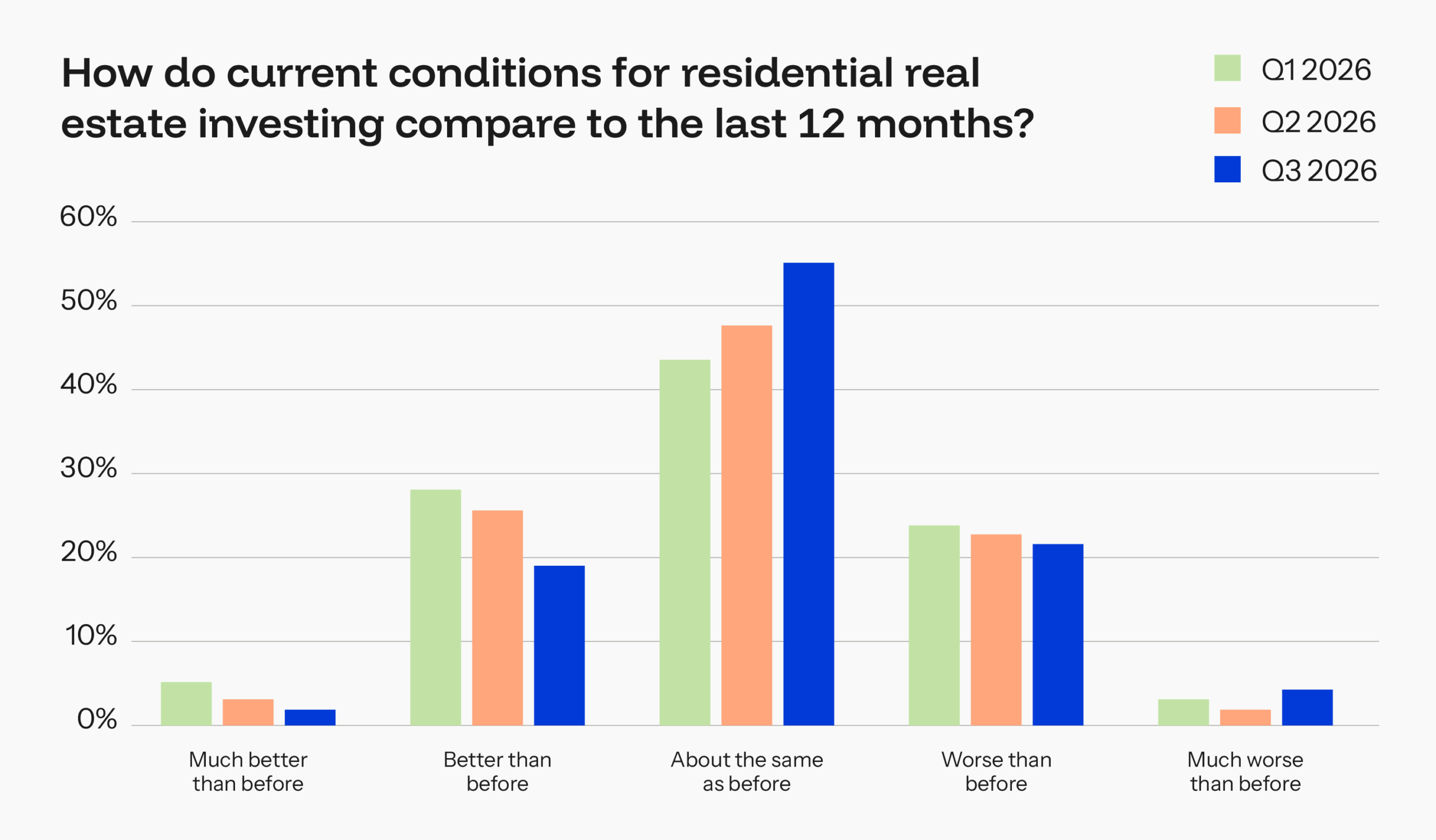
- Q3 2026: The current state is defined by realism. The narrative has shifted from "waiting for the market to fix itself" to "learning to operate within the current constraints." The majority of investors now view the current market conditions as the "new normal," with 55% of respondents stating that conditions are "about the same" as they were 12 months ago.
Supporting Data: The Strategic Pivot
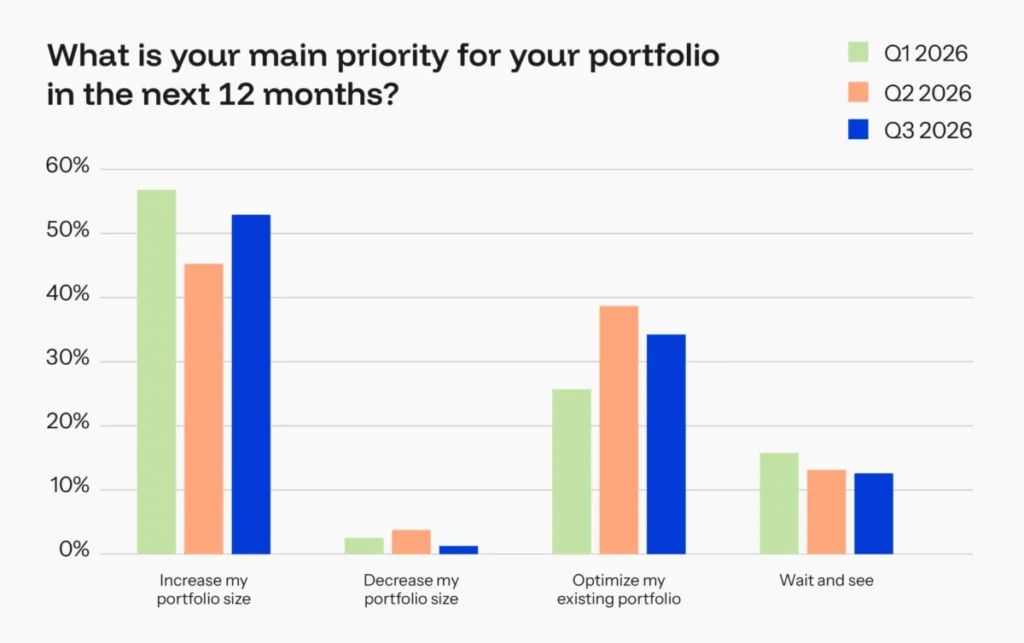
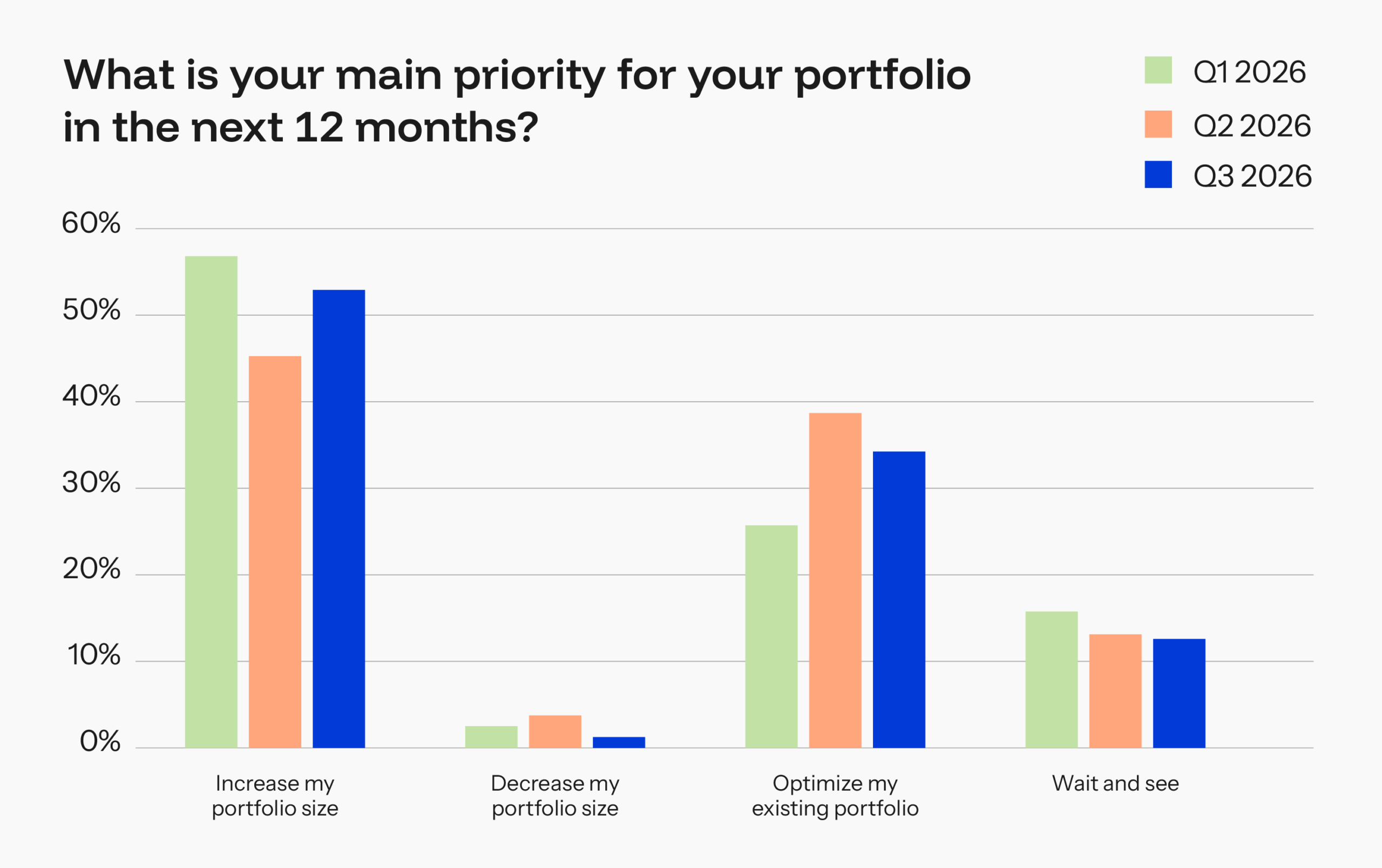
Despite the cooling sentiment, the behavior of the average investor remains remarkably active. When asked about their primary portfolio goals for the next 12 months, 53% of investors indicated they are focused on expansion—a significant rebound from the 45% recorded in Q2.
Portfolio Strategies for a Cautious Era
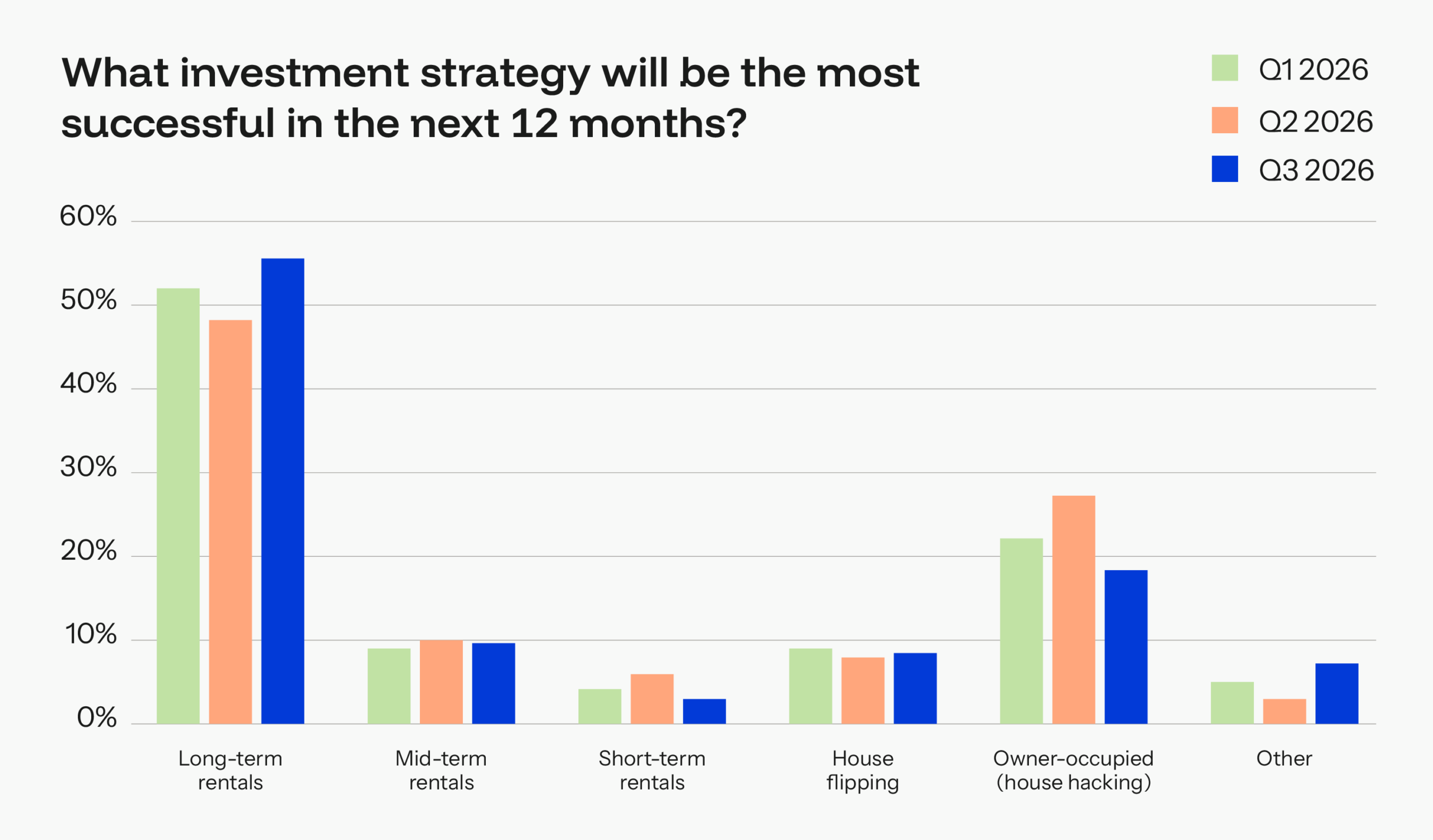
Investors are retreating to the "tried and true" methods of wealth preservation and cash flow. Long-term rentals have regained their status as the gold standard for investment, with 55% of survey respondents identifying them as the most successful strategy for the upcoming year. This preference for stability highlights a move away from the high-velocity, high-risk strategies that flourished during the low-interest-rate era.

Owner-occupied house hacking remains the runner-up at 18%, suggesting that even in a difficult rate environment, investors are leveraging personal residence to offset rising costs. Meanwhile, short-term rentals have seen their popularity wane, capturing only 3% of investor confidence—a clear reflection of market saturation and regulatory concerns in the vacation rental space.
The Triple-Threat Challenge: Deals, Capital, and Costs
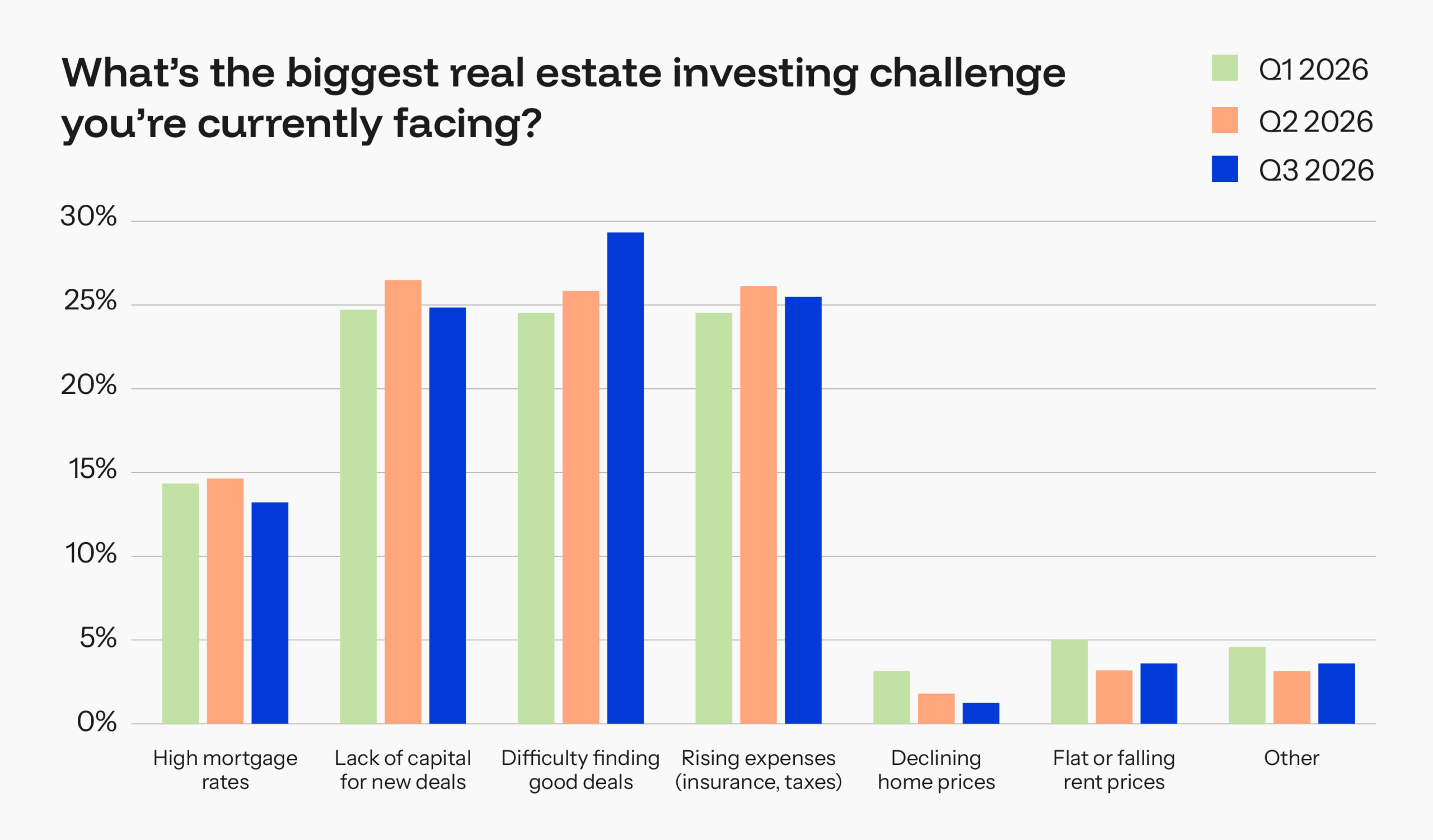
The survey results highlight a "triple-threat" scenario that is currently hindering deal flow.
- Deal Sourcing: Nearly 30% of investors cite the lack of high-quality inventory as their primary obstacle. The market is experiencing a liquidity freeze where sellers remain anchored to historical price expectations, while buyers are forced to adhere to strict underwriting standards.
- Rising Operational Expenses: Roughly 25% of respondents pointed to the erosion of cash flow due to non-mortgage costs. Property insurance, in particular, has become a "silent killer" of deals in high-risk zones, alongside property tax hikes that catch investors off guard.
- Capital Constraints: Access to capital remains a significant barrier for 25% of the investor base. While this number is expected to improve slightly over the next year, the current reality is that lenders are more selective, demanding higher down payments and stronger debt-service coverage ratios.
Future Outlook: Expectations for the Next 12 Months
Looking ahead to 2027, the market sentiment remains remarkably flat. A significant 55% of investors anticipate that market conditions will remain largely unchanged. This "flattening of expectations" is a double-edged sword: it suggests that while investors are not bracing for a catastrophic crash, they have also abandoned hope for a rapid, V-shaped recovery.
Price and Rate Forecasts
- Home Prices: The consensus is a holding pattern. With 46% of investors expecting flat pricing, the market appears to be reaching a point of price discovery where buyers and sellers are finally reaching an equilibrium.
- Mortgage Rates: The "higher-for-longer" mantra has been fully internalized. In Q1, a large segment of investors held onto the hope of 5% interest rates. By Q3, 75% of respondents have adjusted their underwriting expectations to range between 6% and 6.99%. This indicates a professionalization of the investor base—they are no longer betting on market timing, but rather on the fundamentals of the asset.
Geopolitical and Economic Implications
The survey also captured the pulse of investors regarding broader macroeconomic and geopolitical concerns.
The Federal Reserve and Leadership
The introduction of new leadership at the Federal Reserve, specifically the discourse surrounding Kevin Warsh, has been met with a resounding "neutral." 67% of investors are taking a wait-and-see approach. This apathy toward political personalities is telling; it suggests that investors are increasingly looking inward, focusing on portfolio optimization, expense management, and localized market analysis rather than trying to predict the tea leaves of D.C. politics.
The War in Iran and Global Stability
Geopolitical shocks, which loomed large in the Q2 survey, have seen a decline in perceived impact. In Q3, 47% of investors view the conflict in Iran as having a neutral impact on domestic real estate. This suggests that the market has become resilient to international volatility, effectively "pricing in" these risks as part of the modern economic reality.
The AI Factor
Artificial Intelligence remains a wildcard in the housing market. While 49.5% of investors see the impact of AI job displacement as neutral, 37.5% view it as a net negative for rental demand. This division indicates that investors are watching the intersection of technology and labor markets closely, anticipating that if tech-sector layoffs continue to migrate toward other industries, rental demand in major hubs may see a structural shift.
Regional Focus: The Rise of the Midwest
When asked where the best investing conditions exist, the Midwest has solidified its position as the premier destination for residential real estate investors. With 45% of respondents favoring the region, the Midwest’s reputation for affordability and reliable cash flow continues to outperform the traditionally "hot" markets of the Sun Belt. This regional preference reinforces the current trend: investors are seeking "boring" but profitable markets where they can achieve positive cash flow even when interest rates remain elevated.

Implications for the Modern Investor
The Q3 2026 data presents a clear roadmap for the remainder of the year. We are currently in a period of consolidation. The investors who are succeeding are those who have stopped waiting for the "easy" market of the past and have instead mastered the mechanics of the current one.
Key takeaways for the market participant:

- Focus on Operational Efficiency: With insurance and tax costs rising, the difference between a good deal and a bad deal is often found in the expense ratio.
- Embrace Long-Termism: The market is favoring long-term rental models. Strategies that rely on quick appreciation or short-term volatility are losing ground.
- Prioritize Deal Quality over Availability: With inventory scarce, the ability to negotiate effectively (cited by 27.5% as the biggest opportunity) is the new competitive advantage.
In conclusion, while the BiggerPockets Pulse index shows a decline in overall sentiment, the underlying reality is one of mature, disciplined investing. The "resilient investor" of 2026 is one who has accepted the new reality of the interest rate environment, pivoted toward stable, cash-flowing assets, and focused on the variables within their control. The market is not stagnant; it is simply evolving, rewarding those who are prepared to play the long game.