Crisis of Capability: IRS Advisory Panel Demands Structural Reform Amid Funding Uncertainty
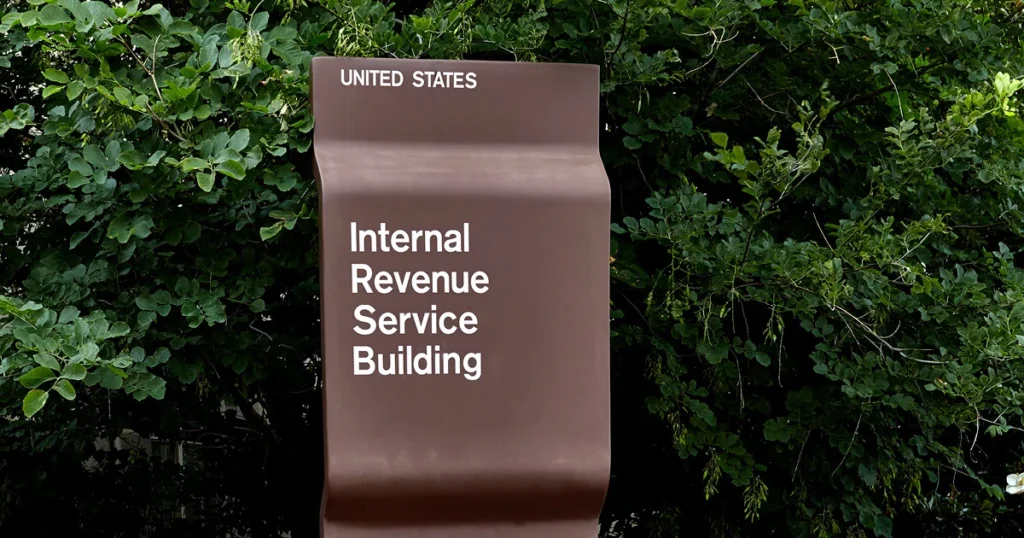
In a stark assessment of the nation’s tax administration, the IRS’s primary technology advisory panel has issued a warning that the agency is approaching a critical breaking point. The Electronic Tax Administration Advisory Committee (ETAAC), in its 2026 Annual Report to Congress, has diagnosed a widening gap between the IRS’s expanding legislative mandates and its dwindling operational capacity. The report serves as both a roadmap for digital transformation and a sobering advisory that without significant congressional intervention, the agency’s recent modernization successes could be swiftly undone.
Main Facts: The Triple Mandate for Reform
The ETAAC’s 2026 recommendations center on three pillars: stable, multiyear funding; the strategic, transparent integration of artificial intelligence; and a fundamental simplification of the tax administration process.
According to the committee, the current “stop-and-go” approach to funding—often characterized by last-minute budget renewals and dependence on short-term supplemental appropriations—is fundamentally incompatible with the complex, multi-year nature of IT infrastructure projects. As the IRS attempts to shift from legacy systems to a “digital-first” environment, the committee argues that Congress must provide a predictable fiscal baseline.
Furthermore, the committee advocates for a “human-centered” approach to AI deployment. While endorsing AI for its potential to revolutionize fraud detection and identity verification, the panel insists that this technology must be governed by rigorous transparency standards, including the creation of a public-facing dashboard to demystify how the IRS utilizes these tools to impact taxpayer outcomes.
Chronology: A Trajectory of Strain
The current fiscal predicament of the IRS is the result of a multi-year convergence of legislative expansion and budgetary contraction.
- 2022: The passage of the Inflation Reduction Act (P.L. 117-169) provided a significant, albeit finite, influx of capital intended to modernize the agency’s aging technology stack and bolster enforcement capabilities.
- 2025 (Early): The agency hit a demographic and operational wall, losing approximately one-quarter of its total workforce. This exodus occurred simultaneously with the implementation of the “One Big Beautiful Bill Act” (H.R. 1, P.L. 119-21), which added immense complexity to the tax code.
- Fiscal Year 2025–2026: The IRS experienced a 9% reduction in its budget, despite being tasked with the most significant administrative burden since the enactment of the Tax Cuts and Jobs Act.
- May 2026: The ETAAC releases its Annual Report to Congress, formalizing the alarm that the “reservoir of capacity” traditionally relied upon by Congress has been effectively depleted.
Supporting Data: The Cost of Complexity and Cuts
The committee’s report is underpinned by data that highlights the fragility of the current system. The loss of 25% of the workforce since 2025 is not merely a staffing statistic; it represents a profound loss of institutional knowledge that is difficult to replace in a specialized environment like tax administration.
The Budgetary Disconnect
The 9% budget cut for the 2026 fiscal year has created a structural deficit between expectation and execution. The committee notes that the agency has historically relied on the “heroic effort” of its staff to bridge the gap between underfunding and service requirements. However, the report is explicit: that era is over. The reliance on supplemental funding from the 2022 Inflation Reduction Act is identified as a high-risk strategy, as those funds are nearing exhaustion. Without a transition to a sustainable, long-term funding model, the committee warns of an impending degradation in core services, including taxpayer support, return processing, and enforcement fairness.
The Efficiency Paradox
The committee identifies several administrative “bottlenecks” that exacerbate the resource crunch. For example, the requirement to file extension forms that are effectively granted automatically is cited as a redundant process that consumes valuable processing time and taxpayer attention. By eliminating such administrative friction, the committee argues the IRS could redirect existing, limited resources toward more complex compliance issues.
Official Responses and Strategic Vision
Amy Miller, Chair of the ETAAC and senior director of government affairs at ADP, provided the guiding philosophy for the report. “Our recommendations reflect a consistent focus on continuing the IRS’s technology transformation through secure application programming interfaces (APIs), real-time data sharing, and modernized taxpayer and practitioner account platforms,” Miller stated.
The committee’s vision is a “Digital-First IRS.” This model moves away from the traditional, paper-heavy interactions that have plagued the agency for decades. Instead, it proposes an ecosystem where real-time data sharing with state authorities and industry partners—facilitated by secure, modern APIs—allows for a more seamless, error-free experience.
Regarding AI, the committee’s stance is one of “guarded optimism.” Recognizing that the current identity theft filters often result in high false-positive rates that unfairly delay refunds for legitimate taxpayers, the committee sees AI as a precision tool. By refining these filters with machine learning, the agency could reduce the administrative burden on its employees while simultaneously improving the experience for the taxpaying public.
Implications: The Risk of Stagnation
The implications of the committee’s findings are profound for both the legislative branch and the American taxpayer.
The Trust Deficit
The report emphasizes that tax administration is fundamentally built on trust. When taxpayers encounter outdated websites, struggle to reach human agents, or have their refunds delayed due to legacy system errors, that trust erodes. The committee’s push for a transparent AI dashboard is an attempt to preemptively address the public’s skepticism regarding the agency’s use of algorithms.
The Compliance Burden
For tax professionals, the current environment is increasingly untenable. The lack of timely, consistent guidance on new laws creates a ripple effect: practitioners are forced to spend more time interpreting ambiguous rules, which in turn leads to a higher volume of incorrect filings. The committee argues that simplification is not just a convenience—it is a compliance strategy. Clearer guidance and plain-language resources are identified as the most effective ways to ensure taxpayers meet their obligations correctly on the first attempt, thereby reducing the need for costly, downstream enforcement actions.
The Future of Modernization
The overarching theme of the 2026 report is that the IRS is currently a “hybrid” organization, struggling to function with a 21st-century mission using a 20th-century infrastructure. The modernization gains made since 2022 are described as fragile. If the “funding cliff” is not addressed through congressional action, the agency risks a return to the operational failures of the early 2020s.
The ETAAC’s recommendations provide a clear pathway forward:
- Legislative Baseline: Establish a multiyear, predictable budget that detaches the IRS from the volatility of annual political cycles.
- Technological Integration: Transition to a fully digital ecosystem where data flows freely and securely between the agency and the taxpayer.
- Governance of Innovation: Implement a rigorous framework for AI that prioritizes public trust through transparency and human-centered design.
- Administrative Minimalism: Aggressively prune redundant filing requirements to focus agency power on genuine enforcement and service needs.
As the IRS stands at this crossroads, the message from its advisory panel is unmistakable: the era of doing more with less has reached its limit. To maintain a modern, effective, and fair tax system, the agency requires not just technological tools, but the fiscal and political stability to use them effectively. The ball, as the committee suggests, is now firmly in Congress’s court.