SpaceX Starship Launch Aborted: A High-Stakes Setback for the Aerospace Giant
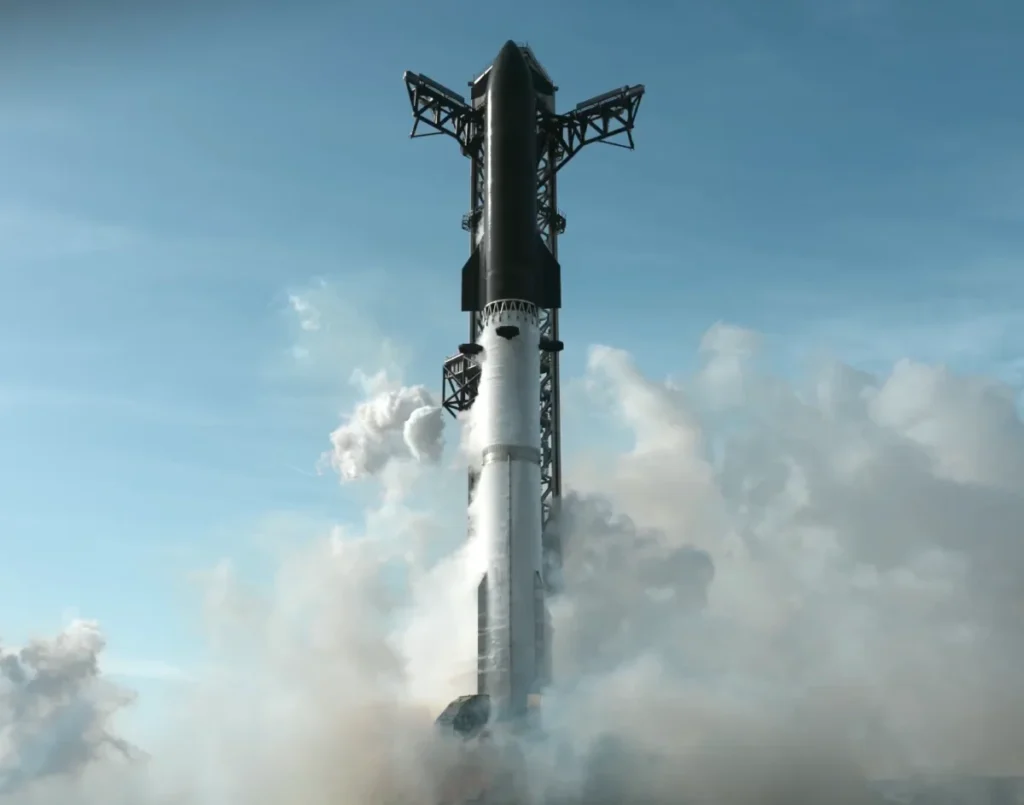
The ambitious trajectory of SpaceX hit a sudden, pressurized pause on Thursday as the company abruptly aborted the second launch attempt of its upgraded Starship V3 rocket system. Just as the gargantuan Super Heavy booster ignited at the company’s Starbase facility in South Texas, the mission control software triggered an automatic shutdown, effectively grounding the vehicle moments before it could clear the launchpad.
This latest development serves as a sobering reminder of the engineering complexities involved in the development of the world’s most powerful rocket. For a company that recently completed the largest initial public offering (IPO) in history, the aborted flight is more than a technical hiccup; it is a moment of intense scrutiny for shareholders and industry analysts alike.
The Chronology of the Abort
The countdown on Thursday was characterized by a palpable sense of anticipation. After the successful but imperfect test flight in May, expectations were high that SpaceX would demonstrate greater precision. The process appeared to be proceeding according to plan, with the exception of a brief, routine hold at T-minus one minute, which was quickly cleared.
As the clock ticked down to zero, the launchpad’s massive water deluge system—designed to dampen the acoustic energy of the Raptor engines—thundered to life. Simultaneously, the Super Heavy booster began its ignition sequence. However, within seconds, the sequence was halted.
According to telemetry and visual data from the SpaceX broadcast, the automatic abort was triggered because several of the Raptor engines failed to initiate their ignition sequence. While initial reports suggested two, subsequent analysis indicated that as many as four of the engines failed to fire. The automated safety systems, designed to prevent catastrophic failure on the pad, immediately commanded a hard shutdown.
Following the abort, the team shifted to a state of "safing," a laborious process that requires the removal of cryogenic propellant from both the Super Heavy booster and the Starship upper stage before engineers can access the propulsion hardware to diagnose the root cause.
Technical Analysis: The Engine Conundrum
The Raptor engine remains the crown jewel—and the most volatile variable—in the SpaceX ecosystem. These engines are incredibly complex, utilizing a full-flow staged combustion cycle that is pushing the boundaries of material science and fluid dynamics.
The failure to ignite on Thursday points to potential issues in the ignition controller or the propellant delivery system. CEO Elon Musk was quick to provide clarity on the social media platform X, stating, "[s]ome of the engines didn’t start, triggering an automatic launch abort." Musk confirmed that the engineering team would be replacing at least two of the engines before the next attempt, which is currently slated for sometime next week.
This technical hurdle is particularly significant because the V3 iteration of Starship is not merely a test of flight mechanics; it is a precursor to the company’s "orbital data center" initiative. SpaceX aims to use these vehicles to deploy next-generation Starlink satellites into orbit. While the satellites intended for this mission were scheduled to burn up upon re-entry—as Starship has yet to achieve the orbital velocity and stability required for long-term deployment—the mission was designed to test the deployment mechanism and the upper stage’s operational endurance.
Supporting Data: SpaceX’s Financial Headwinds
The backdrop of this launch is a volatile financial climate for SpaceX. Since the company’s historic IPO on June 12, which raised a staggering $85 billion, the market has treated the stock with a mixture of awe and caution. At the time of the offering, SpaceX briefly flirted with valuations comparable to tech titans like Amazon and Microsoft.
However, the reality of the post-IPO landscape has been less forgiving. On Thursday, SpaceX stock closed below its initial price of $135 per share. In the immediate aftermath of the aborted launch, shares sank more than 4% in after-hours trading. This volatility highlights the unique pressure SpaceX faces: unlike its private years, where development delays were internal matters, the company now answers to public markets that demand consistent, demonstrable progress.
The financial health of the company remains anchored by its Starlink division. Starlink is currently the only profitable segment of the broader SpaceX business and serves as the primary revenue generator. Consequently, the success of the Starship program is inextricably linked to the company’s long-term profitability. If Starship cannot reach orbit reliably, the expansion of the Starlink constellation—and the realization of orbital data centers—remains speculative.
Historical Context: From May to Today
To understand the weight of Thursday’s abort, one must look at the "mixed bag" that was the May test flight. That mission saw the first successful launch of the V3 configuration, a massive milestone in itself. The vehicle successfully deployed a series of Starlink simulators, proving the utility of the payload bay.
However, the flight was marred by a failure in the Super Heavy booster during the simulated landing sequence in the Gulf of Mexico. The resulting investigation necessitated an FAA-ordered review. The regulatory body only cleared the company to fly again earlier this week, after SpaceX implemented a series of corrective measures to ensure the booster could survive the stresses of high-speed descent.
Furthermore, the upper stage of the May flight lost an engine during its ascent. While it managed to complete its flight profile and perform a successful water landing, the dual-failure (booster and upper stage) underscored the fragility of the current system. SpaceX is currently operating in a "test-fail-fix" loop that is standard for R&D, but the margin for error narrows as the company moves toward commercial readiness.
Implications and Future Outlook
The implications of the aborted launch are twofold: regulatory and operational.
Regulatory Scrutiny
The FAA is currently maintaining a close watch on SpaceX’s operational procedures. Every abort, while technically a "success" of the safety systems, invites further scrutiny regarding the vehicle’s reliability. SpaceX must prove that its corrective actions are sufficient to warrant the rapid cadence of launches required to achieve its 2026-2027 roadmap.
The Quest for Orbital Data Centers
The concept of "orbital data centers"—essentially high-speed servers in space that could revolutionize latency for global connectivity—is the ultimate endgame for the Starlink/Starship pairing. If SpaceX can master the deployment of these next-generation satellites, it will fundamentally shift the economics of the telecommunications industry. However, the viability of this model rests entirely on the ability to launch heavy payloads at a fraction of the cost of traditional rockets. Thursday’s failure to launch delays the refinement of these deployment protocols.
Moving Forward
SpaceX has announced that no further attempts will be made until next week. This delay is essential, not just for the replacement of the Raptor engines, but for a thorough data review. The company’s engineers must determine if the ignition failure was an isolated incident related to specific engine hardware or a systemic issue within the launch sequence software.
As the company prepares for the next window, the eyes of the aerospace world remain fixed on South Texas. For SpaceX, the mission remains the same: to make humanity a multi-planetary species. But in the short term, the goal is far more terrestrial—to ensure that the next time the countdown hits zero, the Starship finally rises to meet the sky.
The pressure is mounting, the markets are watching, and the engineering challenge remains as daunting as ever. Whether this becomes a footnote in a triumphant success story or a sign of a slowing momentum will depend entirely on the performance of the hardware during the next attempt.