Hungary’s Eurozone Pivot: A Strategic Gamble or Economic Necessity?
By Gene Frieda
July 16, 2026
Introduction: A Shift in Budapest’s Economic Calculus
For over a decade, the relationship between Budapest and Brussels regarding the single currency has been defined by ambiguity, skepticism, and political theater. Euro adoption in Hungary has functioned primarily as a peripheral talking point, appearing in academic seminars and occasional opposition platforms, but never as a concrete pillar of national governing strategy. That era of uncertainty has come to an abrupt end.
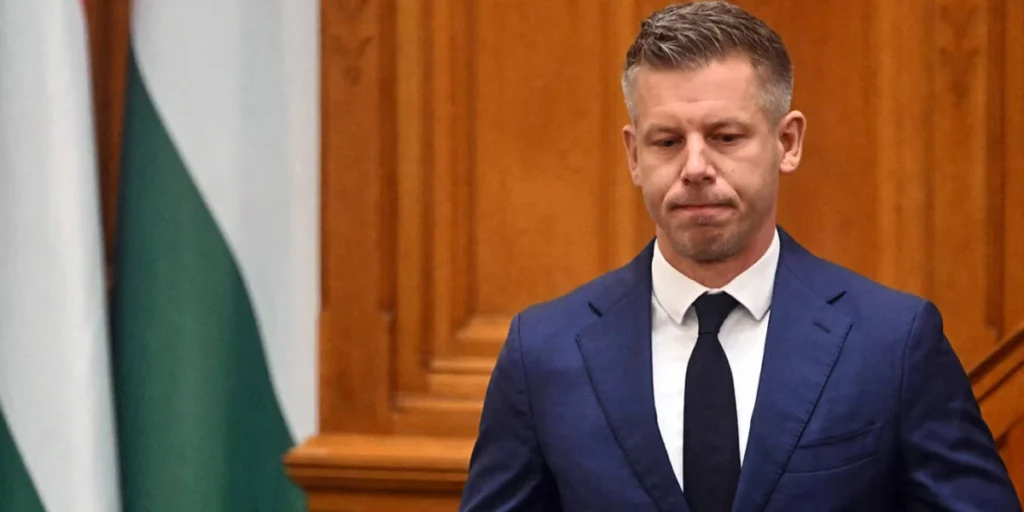
In a landmark announcement from Cannes this week, the government of Prime Minister Péter Magyar signaled a definitive shift in policy. For the first time, the Hungarian administration has committed to a tangible timeline, pledging to present a revised medium-term fiscal framework before the end of the year designed explicitly to meet the Maastricht criteria for eurozone membership. For global markets, which have long treated Hungarian euro-aspirations as a distant hypothetical, this constitutes the first credible signal that the geopolitical and economic architecture of the Central European nation is undergoing a fundamental realignment.
Chronology: From Ambivalence to Integration
To understand the significance of this pivot, one must look at the erratic history of Hungary’s engagement with the euro.
- 2014–2020: The Era of Sovereignty. Throughout the late 2010s, the prevailing narrative in Budapest was one of monetary independence. The central bank and the cabinet emphasized the necessity of maintaining the forint as a tool for economic shock absorption, despite the inherent volatility of the currency in international markets.
- 2021–2024: The Stagnation Period. As inflation surged across the European Union in the wake of post-pandemic recovery and geopolitical instability, the forint suffered significant devaluations. Public discourse began to shift as the cost of living crisis bit harder, leading to the rise of anti-establishment sentiment and the eventual election of the current administration.
- Early 2026: The Transition. Upon taking office, Prime Minister Magyar’s government focused on stabilizing the budget and repairing fractured relations with the European Commission.
- July 2026: The Cannes Announcement. The government formally confirmed that a medium-term fiscal roadmap will be unveiled in Q4 2026, marking the start of a rigorous convergence process.
Supporting Data: The Convergence Challenge
Hungary’s path to the euro is not merely a matter of political will; it is an exercise in complex macroeconomic engineering. The Maastricht criteria—which dictate price stability, sound public finances, exchange rate stability, and long-term interest rates—remain the benchmark.
Currently, Hungary faces a significant uphill battle:
- Inflationary Pressures: While headline inflation has moderated from the double-digit peaks of 2023, it remains higher than the eurozone average. The central bank’s ability to anchor inflation expectations while simultaneously managing the transition will be the defining stress test of 2027.
- Fiscal Deficits: The budget deficit, inflated by years of stimulus spending and administrative inefficiencies, must be brought under the 3% GDP threshold. Current projections suggest that the government must implement significant structural reforms to social spending and state-owned enterprise subsidies to meet this target.
- Debt-to-GDP Ratios: Hungary’s public debt, while not the highest in the region, remains above the 60% threshold required for smooth adoption. A reduction strategy is expected to be a core component of the upcoming fiscal framework.
Economists note that while market sentiment has turned favorable toward this announcement, the "real" economy remains fragile. The question is not just whether Hungary can meet these numbers, but whether it can do so without triggering a domestic recession or a collapse in public services.
Official Responses and Political Implications
The announcement has sparked a flurry of responses across the continent. In Brussels, European Commission officials have reacted with cautious optimism, welcoming the "newfound clarity" from Budapest while emphasizing that there are no "shortcuts" to the eurozone.
Domestically, Prime Minister Magyar’s coalition is walking a tightrope. His supporters view the euro as the ultimate safeguard against the populist-led financial volatility that characterized the previous decade. By tethering the forint to the euro, the government aims to lower borrowing costs for local businesses and provide a stable environment for foreign direct investment (FDI).
However, critics within the parliament warn of the "sovereignty cost." By joining the eurozone, Hungary would relinquish control over its monetary policy—a move that, during times of asymmetric economic shocks, could leave the country vulnerable if the European Central Bank’s (ECB) policies do not align with Hungary’s specific industrial needs.
The Economic Reality: Is it a Formula for Success or Failure?
Entering the eurozone with favorable market sentiment is a promising start, but it is not a panacea. The core risk, as noted by observers, is that a country might join a monetary union without first cultivating an economy that is structurally capable of functioning within it.
If Hungary forces its way into the euro by suppressing wages or cutting essential investments to meet fiscal criteria, the result could be a hollowed-out economy. This would inevitably lead to a cycle of "broken promises"—the very dynamic that the current government was elected to dismantle. If the cost of living does not stabilize, or if unemployment rises as a result of fiscal austerity, the political backlash could be severe, potentially fueling a resurgence of the very euroskepticism that this policy aims to bury.
The Structural Prerequisites
For this transition to succeed, the government must move beyond accounting tricks. Success requires:
- Labor Market Flexibility: Ensuring that the Hungarian workforce can compete with more productive eurozone counterparts.
- Institutional Transparency: Strengthening the independence of the central bank and the judiciary to satisfy the European Central Bank’s convergence requirements.
- Innovation Incentives: Moving away from a low-cost, manufacturing-dependent model toward a high-value-added service and tech-driven economy.
Implications: A New Era for Central Europe
The decision to pursue the euro is a defining moment for the "Visegrád" bloc. If Hungary succeeds, it will likely create a domino effect, pressuring other non-eurozone members like Poland and the Czech Republic to reconsider their own monetary strategies. It signals a move toward a "multi-speed" Europe, where the core of the union becomes increasingly integrated, leaving non-members at a growing competitive disadvantage.
Furthermore, this pivot suggests that Hungary is seeking a definitive "return to the West." By tying its financial future to the euro, Budapest is signaling to investors that it is moving past the era of geopolitical posturing. This is a massive bet on the stability of the European project itself.
Conclusion: A Long-Term Vision
As the Hungarian government prepares its fiscal roadmap for the coming months, the international community will be watching with bated breath. The announcement in Cannes is more than just a policy update; it is a declaration of intent to integrate fully into the European mainstream.
However, the path forward is fraught with risk. The government must balance the immediate demands of the European Commission with the long-term needs of the Hungarian citizen. If the framework they present later this year is merely a collection of austerity measures, it will fail to win the public trust required for such a fundamental transformation. If, however, it is a balanced, growth-oriented plan that addresses the structural weaknesses of the Hungarian economy, it could pave the way for a new era of prosperity.
The promise of the euro is stability and integration; the peril is the loss of policy autonomy. For Péter Magyar, the challenge will be to ensure that this transition serves the long-term interests of the Hungarian people, rather than becoming just another chapter in a long history of policy experiments that failed to deliver on their grand designs. The countdown has begun, and the eyes of the financial world are firmly fixed on Budapest.