From Sausages to Stars: How Wisconsin Became the Unlikely Epicenter of the Fusion Revolution
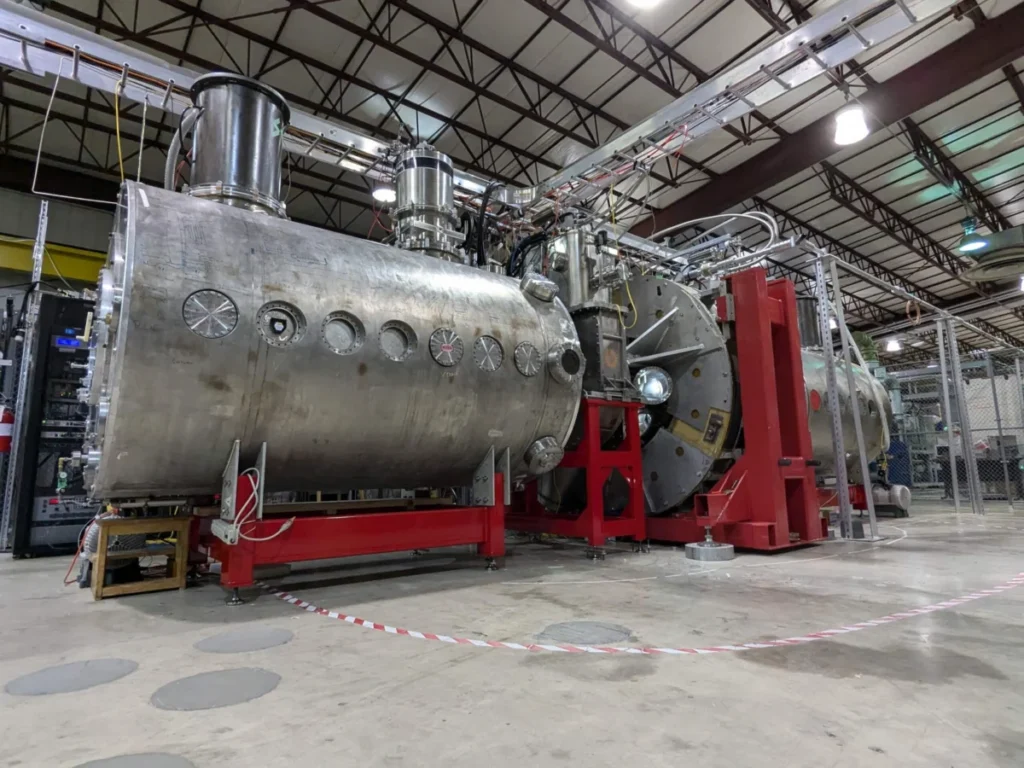
In a remarkable industrial transformation that bridges the gap between mid-century manufacturing and the cutting edge of 21st-century physics, the historic Oscar Mayer factory in Madison, Wisconsin, is set to become the cradle of a new energy era. Realta Fusion, a pioneer in the fusion energy sector, has officially announced that it will anchor its primary research and development facility—dubbed "Forge"—within the bones of the former meatpacking giant.
The transition, which CEO Kieran Furlong describes with a wry chuckle as a move "from sausages to fusion," represents more than just a real estate transaction. It signals a tectonic shift in the geography of high-tech innovation, proving that the future of clean energy may not be found exclusively on the coasts or adjacent to federal laboratories, but in the heartland of the American Midwest.
The Chronology of a Fusion Hub
The journey to the Forge facility has been a two-year odyssey of site selection, political maneuvering, and scientific validation.
- 2024: The broader Wisconsin fusion ecosystem faced a moment of uncertainty when Type One Energy, another prominent local startup, opted to relocate its operations to Tennessee. This exodus prompted soul-searching among Wisconsin policymakers regarding the state’s ability to retain high-growth climate tech firms.
- April 2026: In a rare display of legislative unity, the Wisconsin state government passed a landmark sales tax exemption for the fusion industry. This bipartisan effort, signed into law, served as the primary catalyst for Realta’s decision to commit to the state.
- June 2026: Realta Fusion made headlines by demonstrating the ability to convert energy from fusion reactions directly into electricity—a feat widely considered a "holy grail" achievement in the industry.
- Late 2026: Realta finalizes the lease for the Oscar Mayer site, leveraging its existing proximity to the University of Wisconsin-Madison and the region’s robust infrastructure.
- 2029: The projected date for the Forge facility to generate its first plasma, marking a critical milestone in the company’s roadmap toward a commercial-grade power plant.
Supporting Data: Why Wisconsin?
While the irony of transforming a food-processing plant into a fusion reactor is palpable, the decision rests on cold, hard data. Realta Fusion’s choice was dictated by a combination of logistical advantages and a uniquely supportive economic environment.
The Power of Infrastructure
The Oscar Mayer site was chosen specifically for its existing electrical infrastructure, capable of supporting the massive power demands inherent in fusion research. Fusion experiments require immense surges of energy to create the magnetic confinement necessary to hold plasma; the facility’s historical industrial capacity provided a "plug-and-play" advantage that saved years of grid-upgrading timelines.
The Talent Pipeline
The University of Wisconsin-Madison (UW-Madison) serves as a continuous engine of human capital. As the birthplace of significant fusion research—including the experiment that led to the spinning out of Realta Fusion—the university provides a steady stream of plasma physicists and specialized engineers. The presence of other firms, such as the nearby fusion company SHINE, creates a "cluster effect," where labor markets and supply chains become increasingly specialized and efficient.
The Financial Incentive Package
The state and local governments combined to offer a $55 million incentive package, a critical factor in mitigating the high capital expenditure required for fusion development. The breakdown includes:
- $37.5 million: Derived from the new state sales tax exemption for fusion-related equipment and services.
- $15 million: Allocated through enterprise zone tax credits designed to incentivize job creation and capital investment in the region.
- $2.8 million: Provided via tax increment financing (TIF) from the city of Madison to facilitate site renovations.
Official Responses and Strategic Vision
Kieran Furlong, CEO of Realta Fusion, has been vocal about the "intangible benefits" that solidified the company’s commitment to the state. In an era where many tech startups gravitate toward the venture capital density of Silicon Valley or the proximity of national labs in California or Massachusetts, Realta has chosen to lean into its status as a "state champion."
"Wisconsin really decided they want to throw their weight behind fusion," Furlong noted in an interview with TechCrunch. "It’s advantageous to be the state champion. We get the attention of people who matter, who can help us, who want to see Realta succeed and want to see Wisconsin be a major hub for fusion."
This sentiment is echoed by local officials who view the investment as a long-term play for the state’s economic future. By fostering an environment where fusion can thrive, Wisconsin is effectively branding itself as the premier destination for "hard tech"—the intersection of complex physics, industrial-scale manufacturing, and climate-positive energy production.
The Implications of the Fusion Boom
Realta’s move comes at a time when the global energy sector is undergoing a rapid, often frantic, transition. As the electrification of the economy accelerates and the energy requirements of AI data centers continue to climb, the demand for baseload, carbon-free, and dispatchable power has never been higher.
A Global Context
The fusion sector is currently in the midst of an unprecedented influx of private capital. In 2026 alone, the industry saw over $1.5 billion in funding across various startups. This growth reflects a maturing market that is shifting from purely theoretical physics toward engineering and commercialization.
Redefining Industrial Geography
The success of the Forge project will likely serve as a blueprint for other states looking to attract deep-tech firms. Traditionally, the "coastal bias" in tech has left interior states struggling to retain local innovations. However, as the energy crisis shifts from a software-based problem to a hardware-based one, the importance of available land, existing power infrastructure, and regional political support has surged.
If Wisconsin succeeds in making the Forge facility a functional, electricity-producing reactor by 2029, it will prove that local, bipartisan economic policy can effectively compete with the gravitational pull of established tech hubs.
The Path to Commercialization
The primary challenge remaining for Realta—and the industry at large—is the bridge between the laboratory and the grid. Generating "first plasma" is a critical proof of concept, but the true test will be the efficiency of energy conversion and the sustainability of the reaction. By choosing a facility with historical industrial significance, Realta is signaling that it views its product not just as a scientific experiment, but as an industrial commodity intended for the power grid.
Conclusion: A New Industrial Revolution
The transformation of the old Oscar Mayer factory into a bastion of fusion energy serves as a powerful metaphor for the broader economic evolution of the American Midwest. The region, once defined by the assembly lines of the 20th century, is now positioning itself to lead the 21st century’s most ambitious scientific endeavor.
For Realta Fusion, the challenge is clear: build a machine capable of containing a star within the walls of a former meatpacking plant. For Wisconsin, the challenge is equally significant: to build the ecosystem that sustains this vision, ensuring that the next generation of energy is not just discovered, but manufactured in the heart of the country. As the 2029 deadline approaches, the eyes of the global energy community will be fixed firmly on Madison, where the heat of a new era is already beginning to gather.