The Geopolitical Tightrope: Turkey’s Strategic Paradox in an Era of Global Instability
By Anne O. Krueger
July 15, 2026
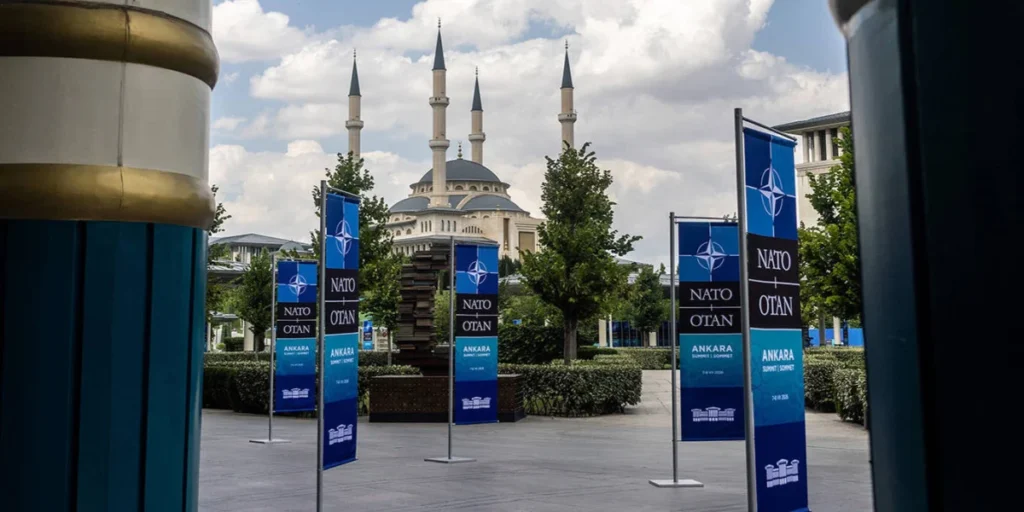
In the modern theater of international relations, few nations embody the agonizing trade-off between democratic integrity and hard-nosed strategic necessity as acutely as the Republic of Turkey. Straddling the divide between Europe and Asia, and controlling the vital maritime arteries of the Black Sea, Turkey has transformed its geographic position into a potent—if volatile—instrument of statecraft. As the global order shifts under the weight of renewed great-power competition, NATO allies are increasingly signaling a willingness to overlook the erosion of democratic institutions under President Recep Tayyip Erdoğan, prioritizing geopolitical utility over the liberal values that once formed the bedrock of the Western alliance.
The Crucible of Global Rivalry: Main Facts
The current geopolitical climate is characterized by a "triad of disruption": the rapid, assertive rise of China, the ongoing fallout from Russia’s invasion of Ukraine, and the deepening conflict involving the United States, Israel, and Iran. These forces have collectively relegated traditional economic globalization to the background, replacing it with a landscape where security imperatives dictate trade flows, supply chain logistics, and diplomatic alignments.
In this context, Turkey has emerged as an indispensable, albeit frustrating, pivot point. The country’s ability to act as a broker—or a spoiler—in these conflicts provides President Erdoğan with significant leverage. Despite widespread international criticism regarding the suppression of the Turkish judiciary, the stifling of independent media, and the centralization of executive power, Ankara’s strategic value to the Western bloc has arguably never been higher. The prevailing sentiment in Washington, Brussels, and Berlin appears to be one of reluctant pragmatism: the cost of alienating Turkey in a time of systemic instability is deemed far higher than the cost of tolerating its democratic backsliding.
A Chronology of Strategic Realignment
To understand Turkey’s current trajectory, one must examine the timeline of its shifting relationship with the West over the last decade:
- 2016–2018: The Fracture Point: Following the attempted coup in July 2016, the Turkish government initiated a widespread purge of state institutions. Western criticism intensified, leading to a period of diplomatic frostiness. The subsequent procurement of the Russian S-400 missile system by Ankara signaled a definitive departure from NATO military integration norms.
- 2022: The Ukraine Pivot: Russia’s invasion of Ukraine served as a catalyst for Turkey’s re-entry into the center of Western strategic planning. By closing the Bosporus and Dardanelles straits to warships under the Montreux Convention and brokering the Black Sea Grain Initiative, Turkey demonstrated its unique ability to influence the outcome of the war.
- 2024–2025: The Middle Eastern Flashpoint: As the conflict involving the U.S., Israel, and Iran escalated, Turkey’s position as a regional power broker became paramount. Ankara’s ability to communicate across diplomatic divides allowed it to maintain a tenuous balance, preventing the conflict from spiraling into a total regional conflagration.
- 2026: The New Normal: By mid-2026, the rhetoric surrounding Turkey’s domestic politics has noticeably softened in Western capitals. The urgent need for a stable flank in the Middle East and a reliable counterweight to Russian influence in the Black Sea has effectively silenced calls for sanctions or formal reprimands regarding the state of Turkish democracy.
Supporting Data: The Economic-Security Nexus
The economic implications of this strategic shift are profound. Data from the World Bank and the IMF suggests that Turkey’s economy, while currently grappling with persistent inflationary pressures, remains deeply integrated with European supply chains.
The "near-shoring" trend—where Western firms move production closer to their home markets to avoid the risks associated with Chinese dependency—has benefited Turkey immensely. Turkish exports to the European Union reached record levels in early 2026, driven by demand in the automotive, textile, and electronics sectors. However, this economic buoyancy is tethered to political stability. Investors remain wary of the erratic nature of Turkish monetary policy, which has often been dictated by President Erdoğan’s personal economic theories rather than conventional central banking practices.
Furthermore, military spending remains a massive portion of the national budget. Turkey’s defense industry, particularly in the domain of Unmanned Aerial Vehicles (UAVs), has gained global notoriety. The export of these systems to various conflict zones has provided Ankara with a new form of "soft power," allowing it to exert influence in Africa and the Caucasus, further complicating the calculations of its NATO partners.
Official Responses and Diplomatic Doublespeak
The diplomatic posture of the United States and the European Union toward Ankara has been characterized by a calculated ambiguity. In Washington, the administration of President Donald Trump—following a marked reversal of previous long-standing policies—has adopted a transactional approach. Officials emphasize "shared interests" over "shared values."
In a recent briefing, State Department representatives sidestepped questions regarding the imprisonment of Turkish opposition leaders, instead focusing on "Turkey’s critical role in regional stability and energy security." This shift reflects a broader trend: the de-prioritization of the "democratic agenda" in favor of realpolitik.
Conversely, European leaders have engaged in a delicate balancing act. While the European Parliament has issued several condemnations regarding human rights violations, the executive branches of major EU powers—specifically France and Germany—have maintained open channels, fearing that a total diplomatic rupture would lead to a renewed influx of migrants or a total collapse of the fragile security architecture in the Eastern Mediterranean.
Implications: A Future of Managed Discord
The implications of this trajectory are unsettling for the future of the international order. By prioritizing geopolitical necessity, the West risks legitimizing a model of "illiberal security partnerships." If Turkey can successfully navigate its domestic authoritarianism while remaining a key pillar of the Western military alliance, it creates a blueprint for other nations to follow.
The Risk of Institutional Erosion
The most immediate danger is the long-term erosion of the NATO alliance’s identity. If a member state can systematically dismantle democratic checks and balances without consequence, the alliance loses its moral standing to advocate for these values elsewhere. This creates a "values deficit" that China and Russia are all too eager to exploit in their own diplomatic messaging to the Global South.
The Economic Vulnerability
Turkey’s economy remains a house of cards. The reliance on foreign capital to sustain its current growth model, combined with the lack of judicial independence, poses a significant risk to international investors. Should the current geopolitical utility of Turkey wane—or should a new crisis render its balancing act impossible—the economic fallout could be severe, not just for Ankara, but for the regional economies that have become intertwined with its own.
The Strategic Outlook
Looking toward the remainder of 2026 and beyond, we can expect a continuation of the current "strategic drift." Turkey will likely continue to walk the razor’s edge, playing the role of the indispensable partner while simultaneously distancing itself from Western normative standards.
For the global community, the lesson is clear: the post-Cold War dream of an integrated world governed by universal democratic values has been replaced by a world of fragmented interests. In this environment, Turkey is not an anomaly; it is a harbinger of the new reality. Whether this tactical pragmatism will ultimately serve the long-term stability of the West or lead to a further unraveling of the democratic consensus remains the most significant question of our time. As the global landscape grows increasingly complex, the "Turkey model" of strategic utility may become the default setting for international relations, leaving the ideals of the past to reside solely in the archives of history.